
Domanivka. How a waterless region in Mykolaiv region is becoming energy independent «Little Copenhagen»
- Alina KvitkoReporter
-
 10000 +
Right on target! Over 10,000 visitors are interested in this content!
10000 +
Right on target! Over 10,000 visitors are interested in this content!
-
 Prefer on Google
-
10K
Right on target! Over 10,000 visitors are interested in this content!
-
Prefer on Google
For decades, Domanivka in the Mykolaiv region lived with a shortage of drinking water. It was commonplace for locals to carry canisters and barrels home because the tap water was not suitable for cooking. Due to worn-out networks, it was often brown in colour, and a stable water supply was the exception rather than the rule.
Today, the community is undergoing major changes. With the support of international partners, a new water pipeline is being built from an underground source that will be able to supply the village for decades to come. At the same time, the community is launching energy projects and building housing for displaced persons. At the beginning of the full-scale invasion, more than 5,000 internally displaced persons lived in the Domanivka community; now there are about 2,400 people left.
NikVesti visited Domanivka to see how the long-standing crisis has become a turning point for rethinking the community's development.
How Domanivka and Denmark are solving a long-standing drinking water problem
The water problem here has deep roots. Village head Viktor Vlasiuk says that the shortage was chronic long before the war, but over the past four years, the situation has worsened dramatically: due to the drop in groundwater levels, production has decreased by about 30%.
«To be honest, I've lived in Domanivka my whole life, and the water supply problem has always been there. Back when industrial enterprises were operating, it was perhaps not so noticeable. In fact, water supply has been a challenge for Domanivka from the very beginning — it is a waterless region, and we have been trying to solve this problem for years, and perhaps even decades,» says Viktor Vlasiuk.
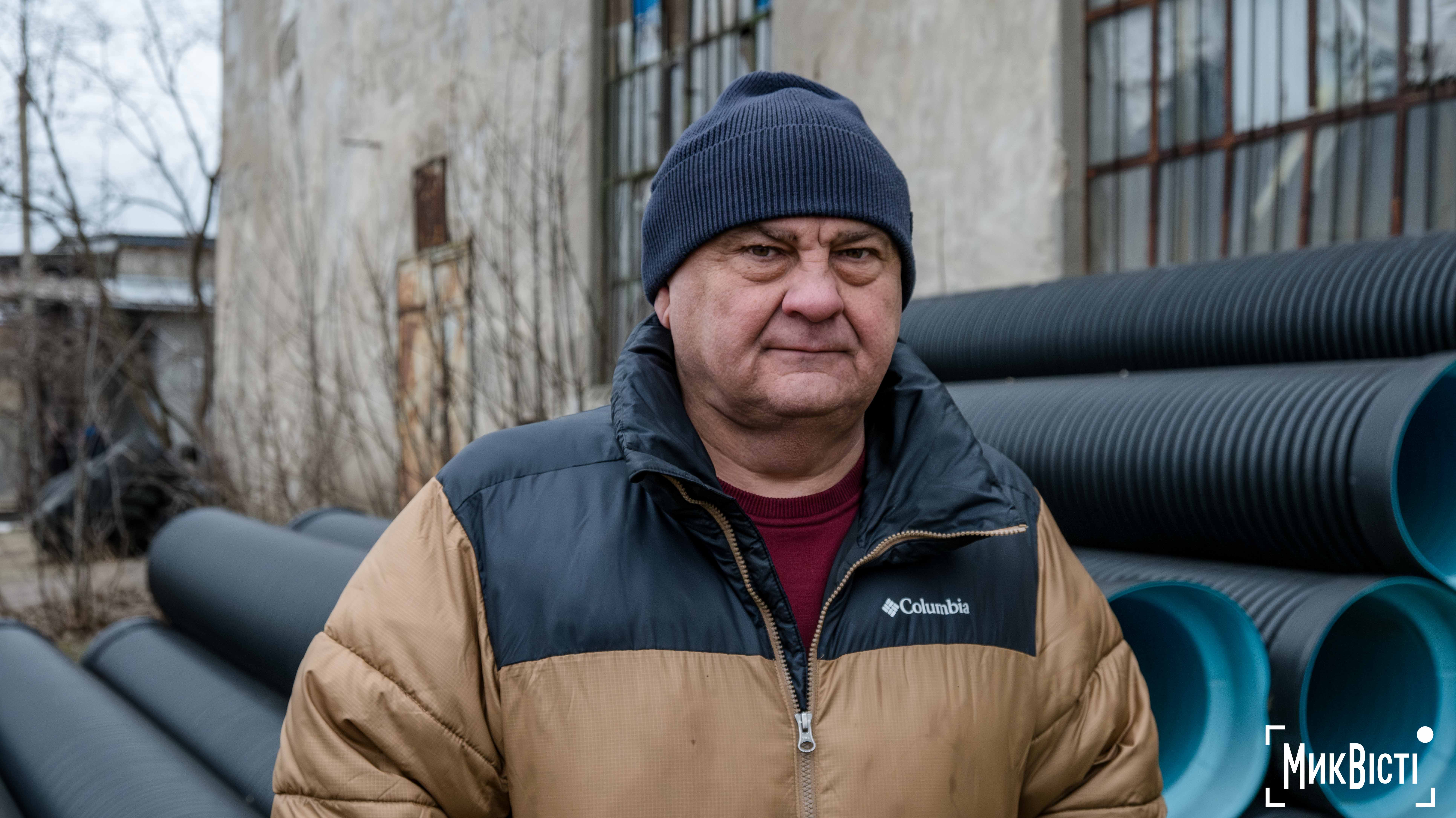 Domanivka village head Viktor Vlasiuk. Photo: NikVesti
Attempts to solve the problem were made as early as the 1980s. Vitalii Bohdan, director of the Uspikh Lyceum and former head of the village council, recalls that the water crisis worsened after the local river dried up. At that time, there were more than 40 wells operating in Domanivka, but they did not meet the needs of the population, so the unofficial symbol of the village became «the man with a canister».
A solution was sought in the development of a deposit in the neighbouring village of Zbrozhkove, where geologists discovered a unique underground lake with water from the Tertiary period.
«There are only two such sites in Europe: ours and one in Switzerland. But while the Swiss bottle their water and sell it all over the world, we have been unable to deliver it to people for decades,» notes Vitalii Bohdan.
In 1985, the community built the first water pipeline from Zbrozhkove. However, due to a design error — an attempt to use old reservoirs in the village of Zabary — the system could not withstand the pressure. Constant water hammering on the relief differences ruptured the cast iron pipes. In the end, that water pipeline did not last even a year: it was dismantled, and Domanivka was left with nothing.
The quality of water in the village still does not meet standards. According to locals, tap water is mainly used for technical needs, while drinking water is purchased or brought in from distant locations.
«You may have water at home, but you can't use it for cooking. Due to the worn-out network, it is often brown in colour. Therefore, people are forced to either buy bottled water or travel to remote extraction points,» says the director of the lyceum.
Today, nine wells barely meet the technical needs of 6,000 residents and displaced persons. According to the head of the community, only two of the nine existing facilities provide water of acceptable quality, but there is not enough of it.
The community decided not to put off the water supply problem and started taking action on its own back in 2023. However, it soon became clear that without partners, it would be tough to do the big jobs.
The first partners were UNICEF, who helped with materials — in particular, they provided about 7 kilometres of pipes. The distribution began with the most worn-out areas, where water losses were the greatest.
«We commissioned the last water supply project in 2023 and initially did not count on any support — we planned to cope on our own. The first programme to respond was UNICEF: it was thanks to them that we received about seven kilometres of pipes, which we are now laying. Work on the distribution system in Domanivka began with the most problematic areas, as water losses were enormous — the water supply system is very old and worn out. At the same time, we prepared a project and presented it to our partners. It was then that our Danish partners responded to our request for help,» says Viktor Vlasiuk, head of the Domanivka community.
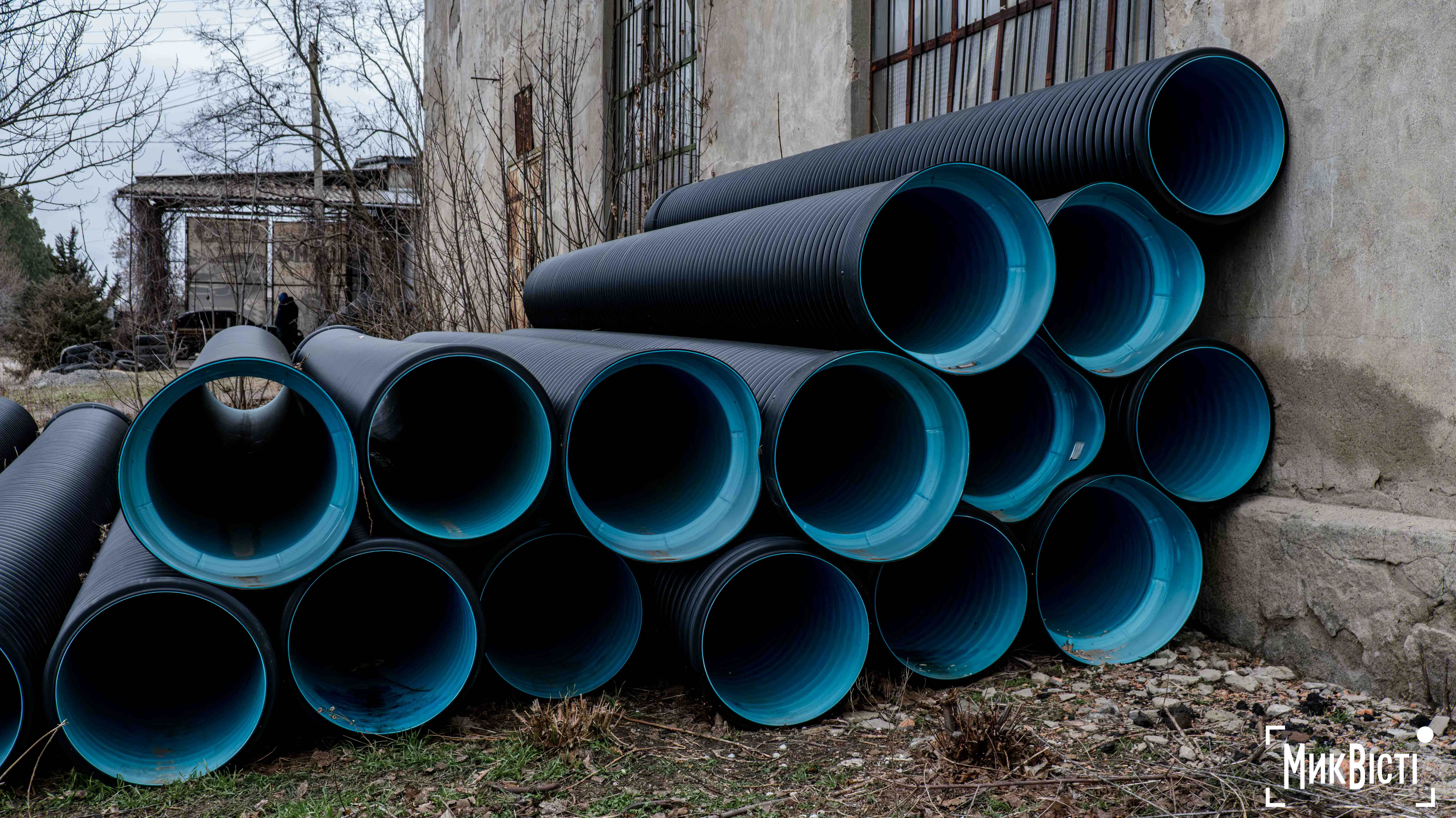 Pipes that will be used to build the water pipeline in Domanivka. Photo: MykVisi
At the same time, the community prepared a new water supply project and presented it to international donors. Denmark and the international financial organisation NEFCO joined the project. For over 1.5 years, experts studied a well in the village of Zbrozhkove, 6.5 kilometres from Domanivka — an underground source whose water meets European quality standards. According to the results of the research, its resources are sufficient to fully provide for the village even in the event of population growth.
«According to experts' calculations, this well is capable of fully supplying Domanivka even if the population grows. The flow rate is stable, and the water renewal rate meets European standards,» says Viktor Vlasiuk.
Water is planned to be supplied to Domanivka by the end of 2026
The projects are being implemented as part of a partnership between the Mykolaiv region and the Kingdom of Denmark. In February 2025, Denmark approved a €26.8 million aid package for the region. One of the key points of this package was the restoration of water supply systems in the Domanivka community.
A separate agreement for a €1.47 million grant for Domanivka was signed in July 2025 during the Ukraine Recovery Conference in Rome. The funds will be used to build a water pipeline in accordance with European standards and to implement energy-efficient solutions, including the installation of solar panels to power pumping stations.
NEFCO Managing Director Trond Mohe noted that the speed of implementation of such projects is critical in the context of war.
«This is a significant contribution that allows us to take concrete measures to support Ukrainians and strengthen resilience during the ongoing war. NEFCO is already implementing other reconstruction projects in Mykolaiv, financed by Denmark, and we have every opportunity to move forward quickly with the recently agreed initiatives,» says Trond Mohe.
The construction project has been divided into two phases. The first phase, costing €1.5 million, involves laying a transit water pipeline almost 7 kilometres long from Zbrozhkove to Domanivka. Two modern underground reservoirs and a pumping station will also be built here to maintain stable pressure in the system. The community is participating in the co-financing, allocating €200,000 from its budget surplus.
According to Viktor Vlasiuk, Danish consultants have significantly revised the initial technical solution: instead of narrow pipes, a 250-millimetre diameter pipeline with an automatic water loss control system will be laid.
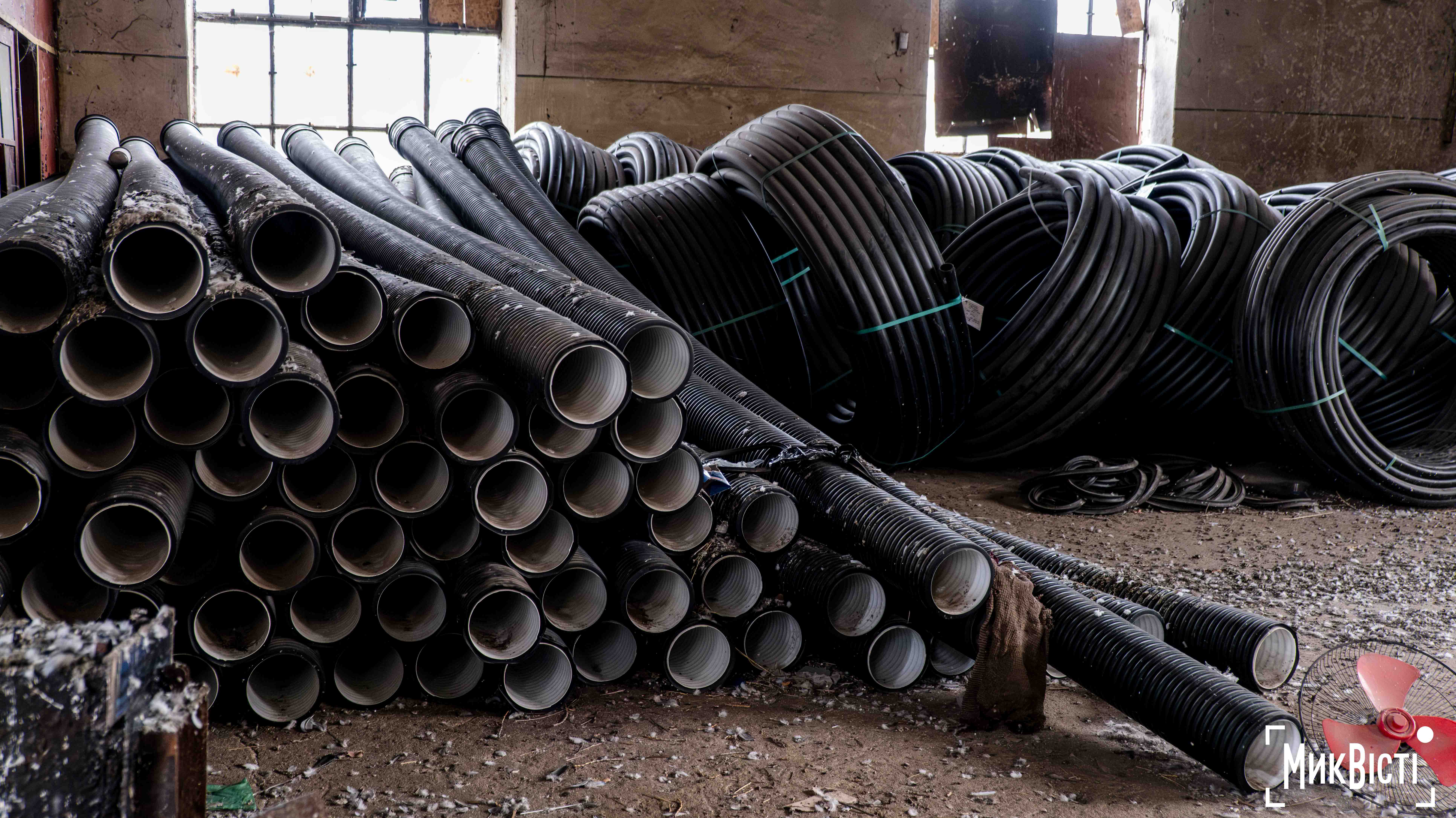 Pipes that will be used to build the water pipeline in Domanivka. Photo: NikVisti
The project pays special attention to economics. Currently, the tariff for the population is 40 hryvnias per cubic metre, and in order to avoid a sharp increase in the cost of water, solar panels are planned to be installed at the well and pumping station. This will reduce electricity costs and the cost of production.
«European consultants were surprised by our tariff — water is much more expensive in their countries. Therefore, we immediately laid down solutions that will help to curb electricity costs and prevent a sharp rise in prices,» explains Viktor Vlasiuk.
The community leader adds that the quality of the water allows for the prospect of industrial bottling, which could create new jobs.
«The water will meet drinking quality standards even without additional purification. The well's resources make it possible not only to supply the community, but also to develop production. One of the next stages also includes plans to install a reverse osmosis station,» he says.
According to the plan, construction of the first phase of the water pipeline is to begin by the end of April after the tender procedures are completed. All work on the first stage is planned to be completed by the end of 2026. The next step will be the second stage, costing around €2 million, which involves the complete modernisation of the network throughout the village. The community is counting on further support from its partners to implement this.
Social housing for displaced families: «Little Copenhagen»
The most visible result of international cooperation in Domanivka is a new residential neighbourhood for people who lost their homes due to the war. Locals have already named it «Little Copenhagen».
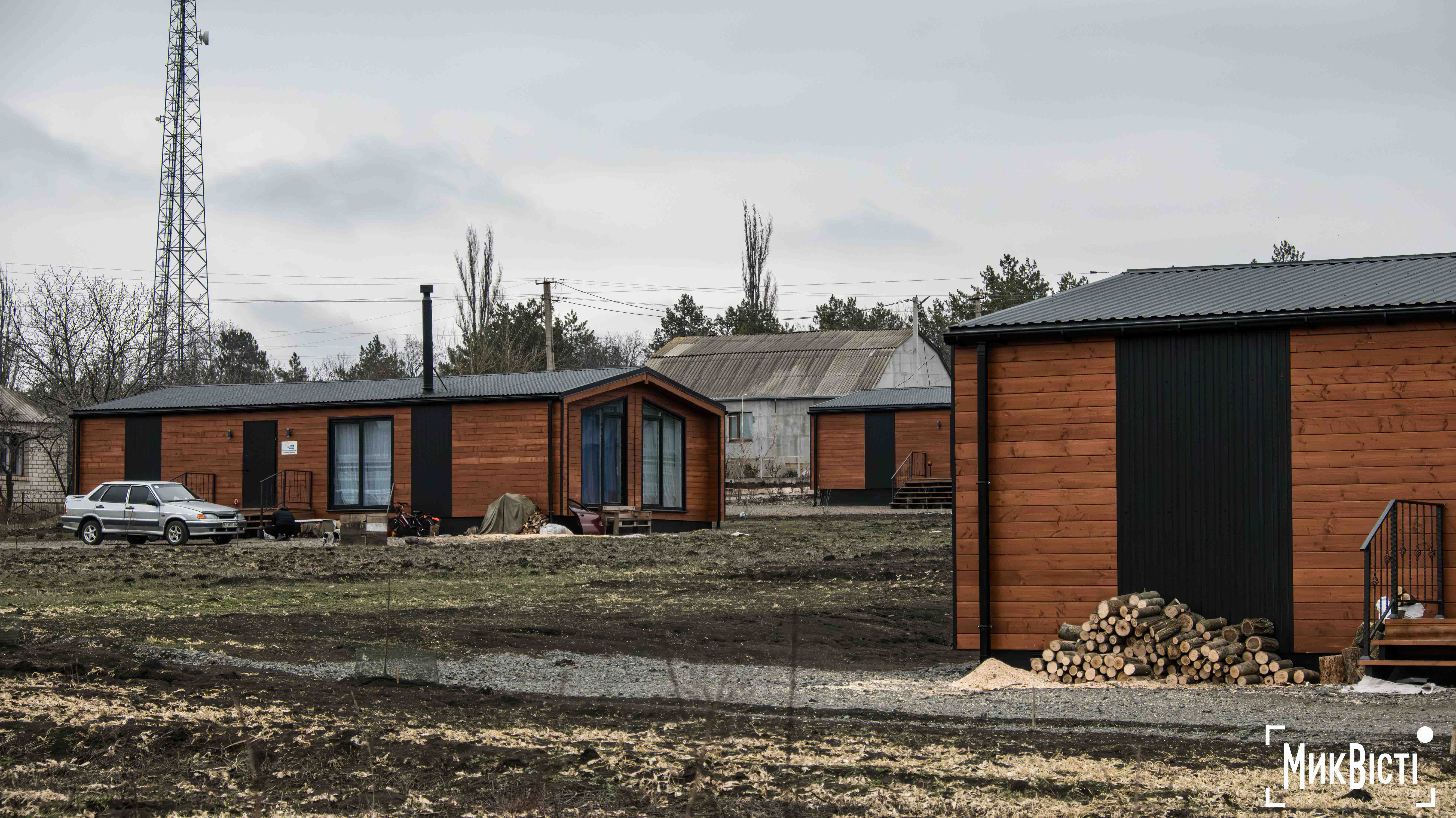 The "Danish neighbourhood" in Domanivka, where displaced persons live. Photo: NikVesti
With the support of Denmark, eight modern houses have been built here, and work has recently begun on the ninth. In total, the area is designed for 15 houses. Each house is a fully-fledged social housing unit with an area of 74 square metres, with three bedrooms, an equipped kitchen and a shower cubicle.
The project has been a lifeline for families from the Kherson, Donetsk, Kharkiv and Dnipropetrovsk regions. Currently, 14 children live in the neighbourhood, and one child was born in the new home.
«At the beginning of the full-scale invasion, there were more than 5,000 displaced persons in the community, and today there are 2,400 left. People are gradually integrating. These houses also help to attract important specialists. For example, two families of doctors live here — a traumatologist and a primary health care specialist,» says Viktor Vlasiuk.
Domanivka was the first in the region to decide on this format. At first, there were concerns about temporary trailers, but the reality exceeded expectations. The houses are insulated, autonomous, and legally transferred to the community by a Danish foundation. Residents sign usage agreements every year: they pay for utilities themselves, and the community maintains the housing in proper condition.
«The waiting list for settlement has already been formed, and we want to complete the microdistrict with 15 houses. The structures are assembled quickly — the frame is assembled in 2-3 weeks,» adds the community leader.
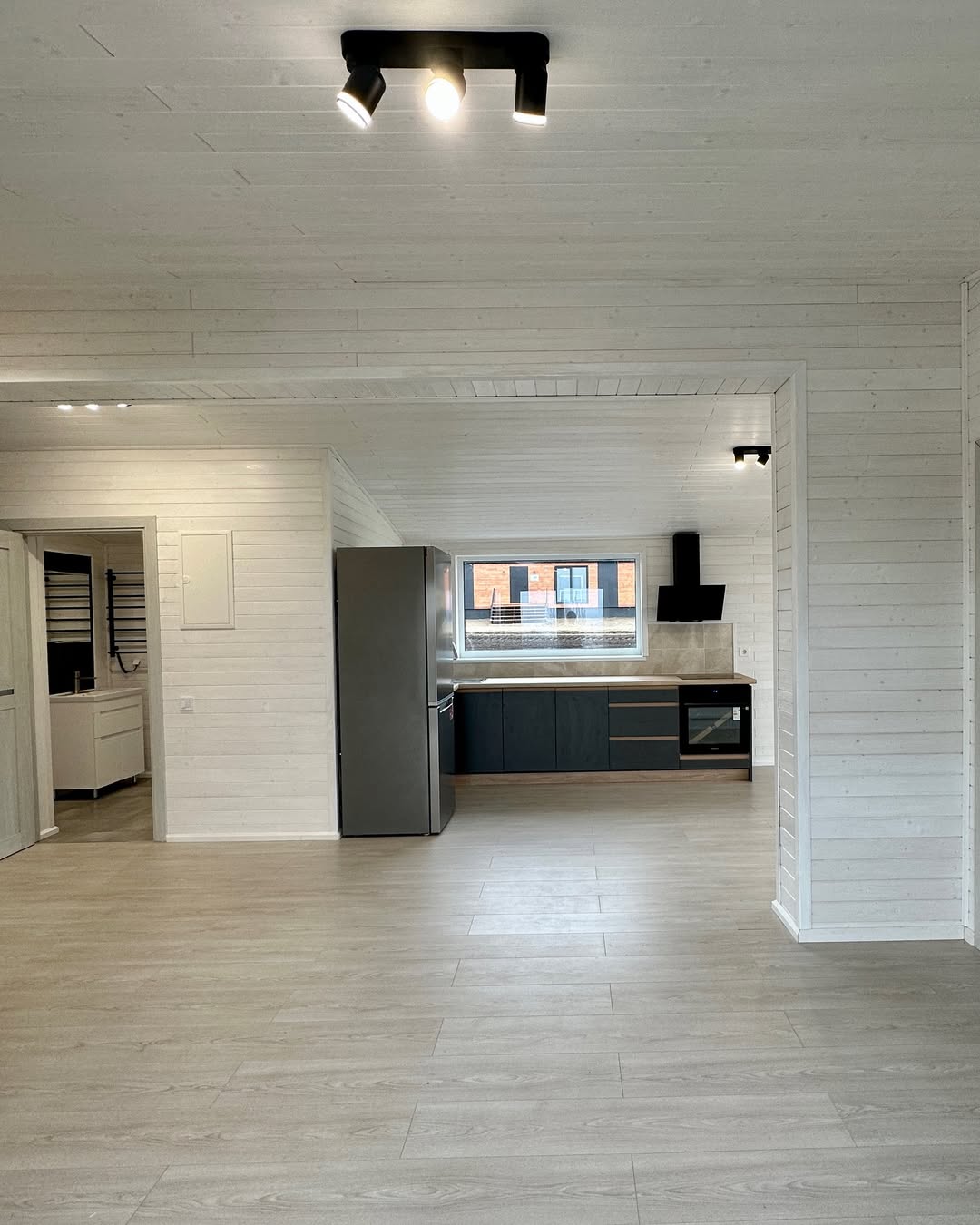 This is what a modular house looks like from the inside. Photo: KBK company
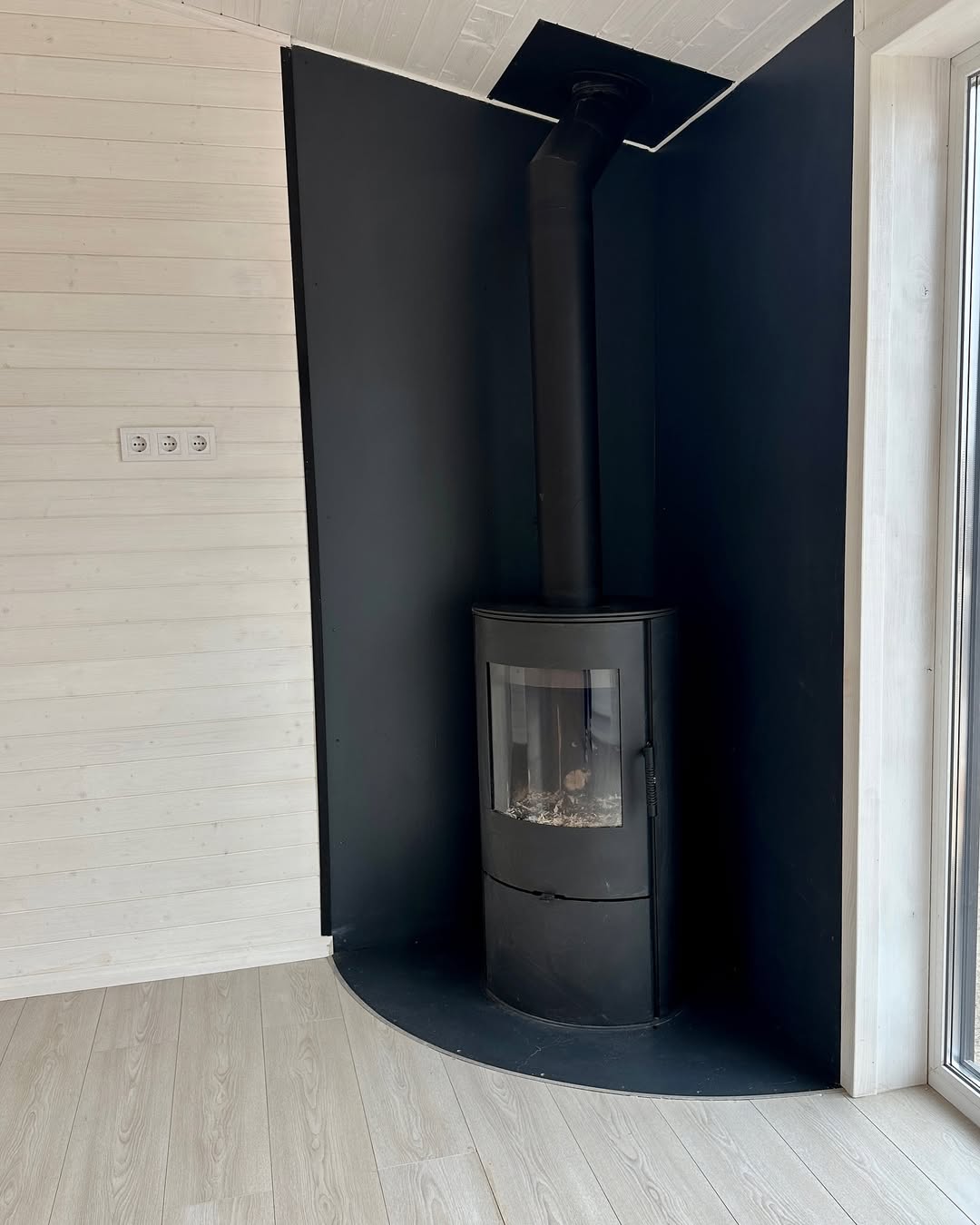 This is what a modular house looks like from the inside. Photo: KBK company
Energy independence: fuel for the community
Today, Domanivka is working not only on water, but also on energy autonomy. The community is implementing an ambitious plan to produce its own fuel, which was announced by the government back in 2023. At that time, Deputy Prime Minister for Recovery Oleksandr Kubrakov noted that this would allow Domanivka to save about 3.5 million hryvnias per year on heating public facilities alone.
The investment amounts to 3.1 million hryvnias for the purchase of 23 modern boilers and repair work. It will pay for itself in one heating season, providing heat to schools and hospitals for 15,000 community residents.
Today, these plans are becoming a reality. Serhii Trostinetskyi, director of the Domanivska Agrarian and Fuel Company, demonstrates a new pellet production line received from the Danish Ministry of Foreign Affairs. Its capacity is about 1 tonne of product per hour, over 700 tonnes per month.
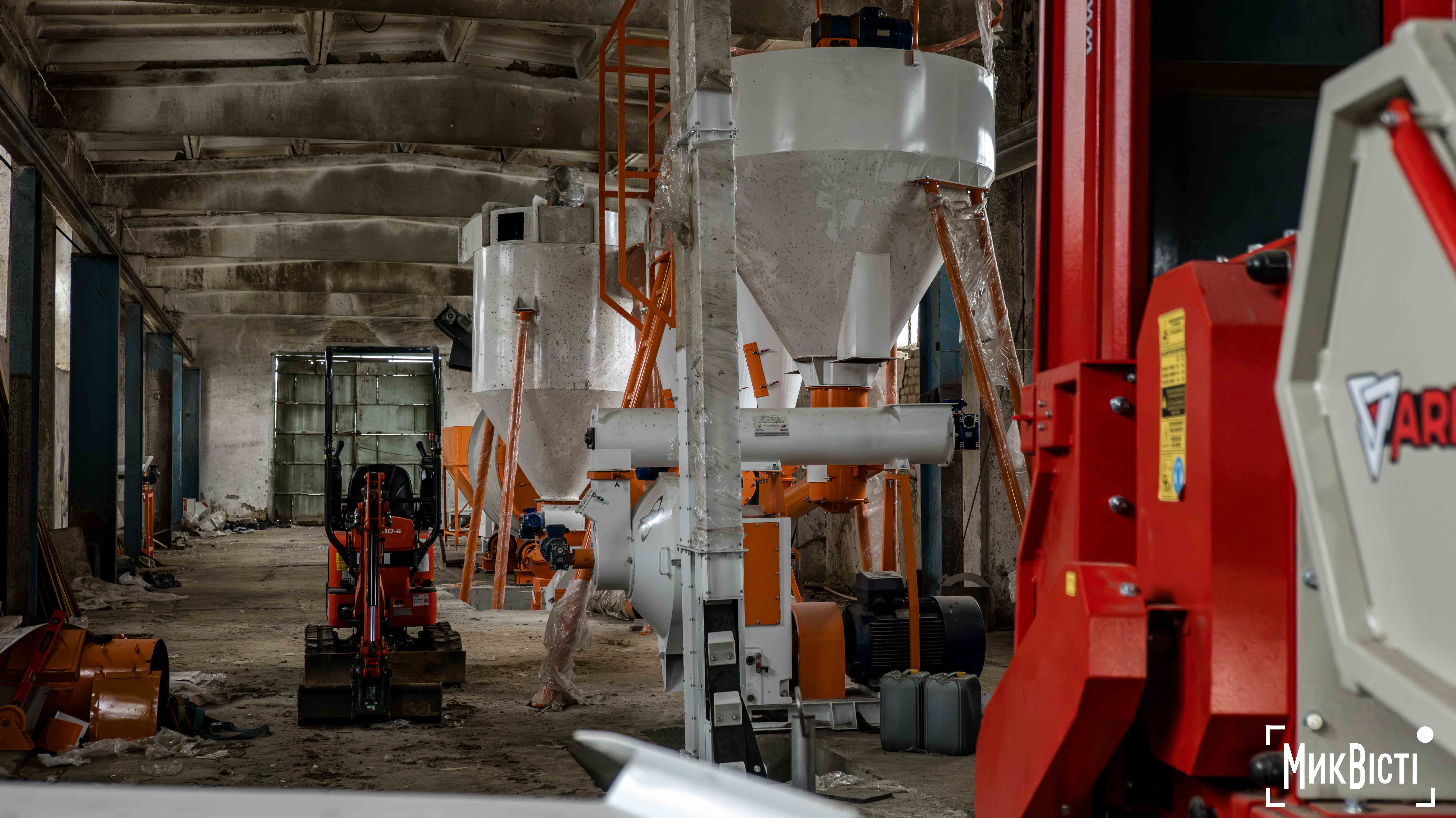 Equipment that will be used to produce solid fuel for the community. Photo: NikVesti
The idea to produce their own fuel came about at the beginning of the invasion. At that time, the community began to actively obtain and install heating boilers designed specifically for alternative fuels. Eventually, the idea arose to become self-sufficient. The project received support from the region and Danish partners.
«A logical idea arose: to provide the community with its own fuel. Together with the head and the team, we wrote a project, appealed to the regional military administration and received support. Our idea interested the Danes, our main sponsors, and in 2023 we began implementation,» explains Serhii Trostinetskyi, head of the enterprise.
The main feature is a «closed» cycle. The community will not only process the raw materials, but also grow them itself: energy willow, miscanthus, straw, reeds and wood residues. This is not only good for the environment, but also for the economy: around 10 new jobs and direct income.
Since the community will not consume the entire volume of pellets itself, the surplus will be sold to neighbours. Preliminary agreements have already been reached with Pervomaisk.
«The community will not be able to consume all of this fuel. Therefore, we are counting primarily on cooperation with neighbouring communities. There is already a preliminary agreement with the Pervomaisk community, where there are significantly more heating installations that run on this type of fuel. In the future, if we manage to reach a sufficient level of production, we do not rule out the possibility of working for commercial results — including exports, if the conditions for this arise,» added Serhii Trostinetskyi.
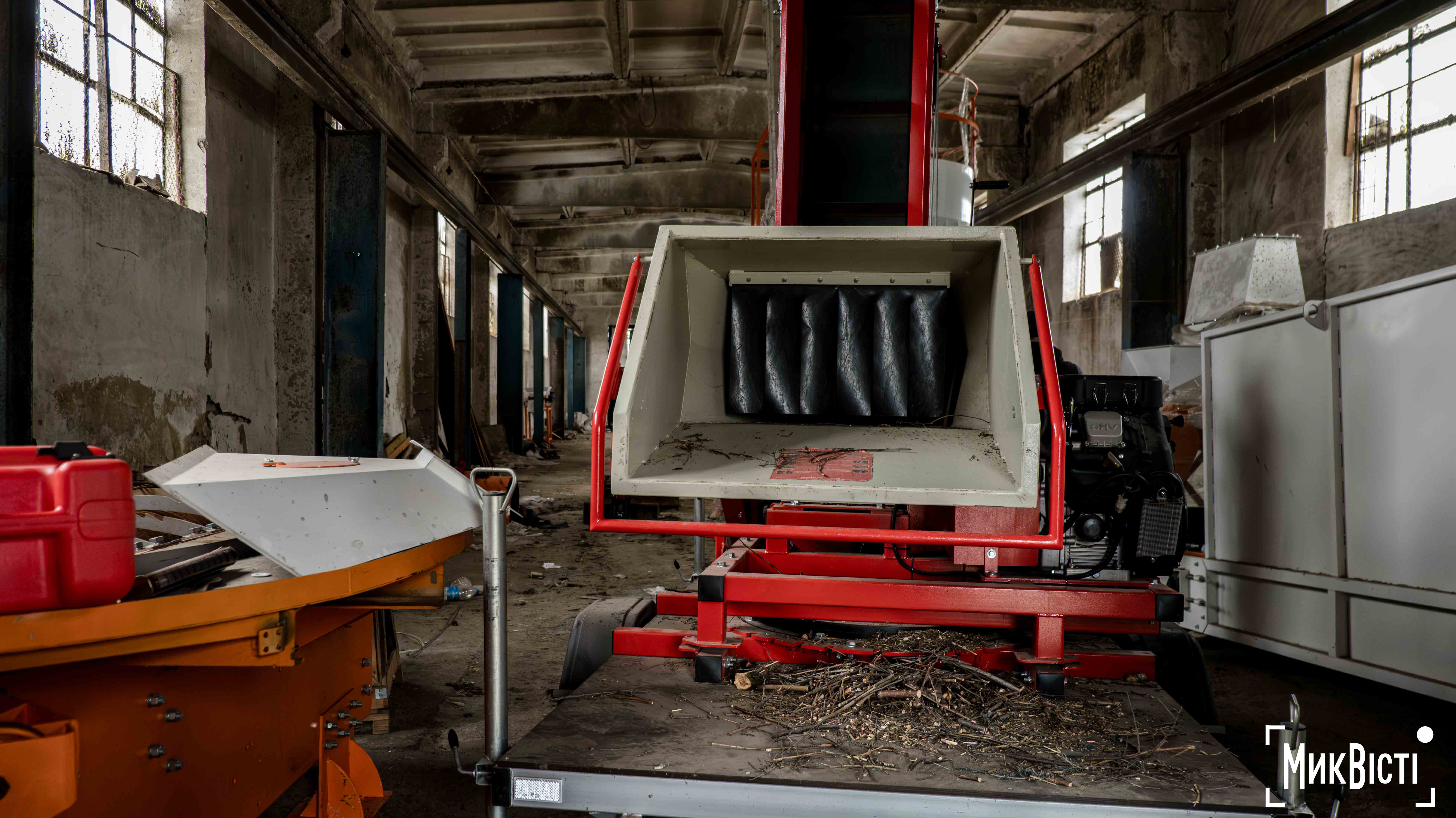 Equipment that will be used to produce solid fuel for the community. Photo: NikVesti
NEFCO Investment Director Bo Nyhus adds that the goal is not just restoration, but a «green transition» of the municipal sector, which will make communities more environmentally friendly and economically sustainable in the future.
«We are proud to be a key partner in the cooperation between the Ministry of Foreign Affairs and the city of Mykolaiv and the Mykolaiv region. At NEFCO, we strive to allocate funds efficiently and transparently to improve the daily lives of the local population, while ensuring climate resilience and initiating a green transition of the municipal sector,» adds Bo Nyhus.
At the same time, the community modernised its medical infrastructure with the support of the German organisation GIZ. This was done as part of a special programme funded by the German government and the European Union. The local hospital and primary health care centre underwent major renovations, with energy-efficient windows, generators and a modular boiler room installed.
The hospital also received a solar power station, which allows medical equipment to operate during power outages. An important part of the assistance was the transfer of a mobile clinic — an equipped outpatient clinic on wheels.
Today, Domanivka, where one of the neighbourhoods is even called «Copenhagen», shows how local initiatives, with the support of international donors, can solve problems that have remained unresolved for decades.

This material was produced as part of the "Improving Ukrainian Media Resilience" project, implemented by the Fondation Hirondelle (Switzerland) and IRMI, the Institute for Regional Media and Information (Ukraine). The project is funded by Swiss Solidarity.