The state is building new treatment plants, while Mykolaiv insists on modernising them with an EIB loan: what will the city gain from this?
-

- Yuliia BoichenkoReporter
-
 20000 +
Incredible! This content has reached a new level — 20,000+ views!
20000 +
Incredible! This content has reached a new level — 20,000+ views!
-
 Prefer on Google
-
20K
Incredible! This content has reached a new level — 20,000+ views!
-
Prefer on Google
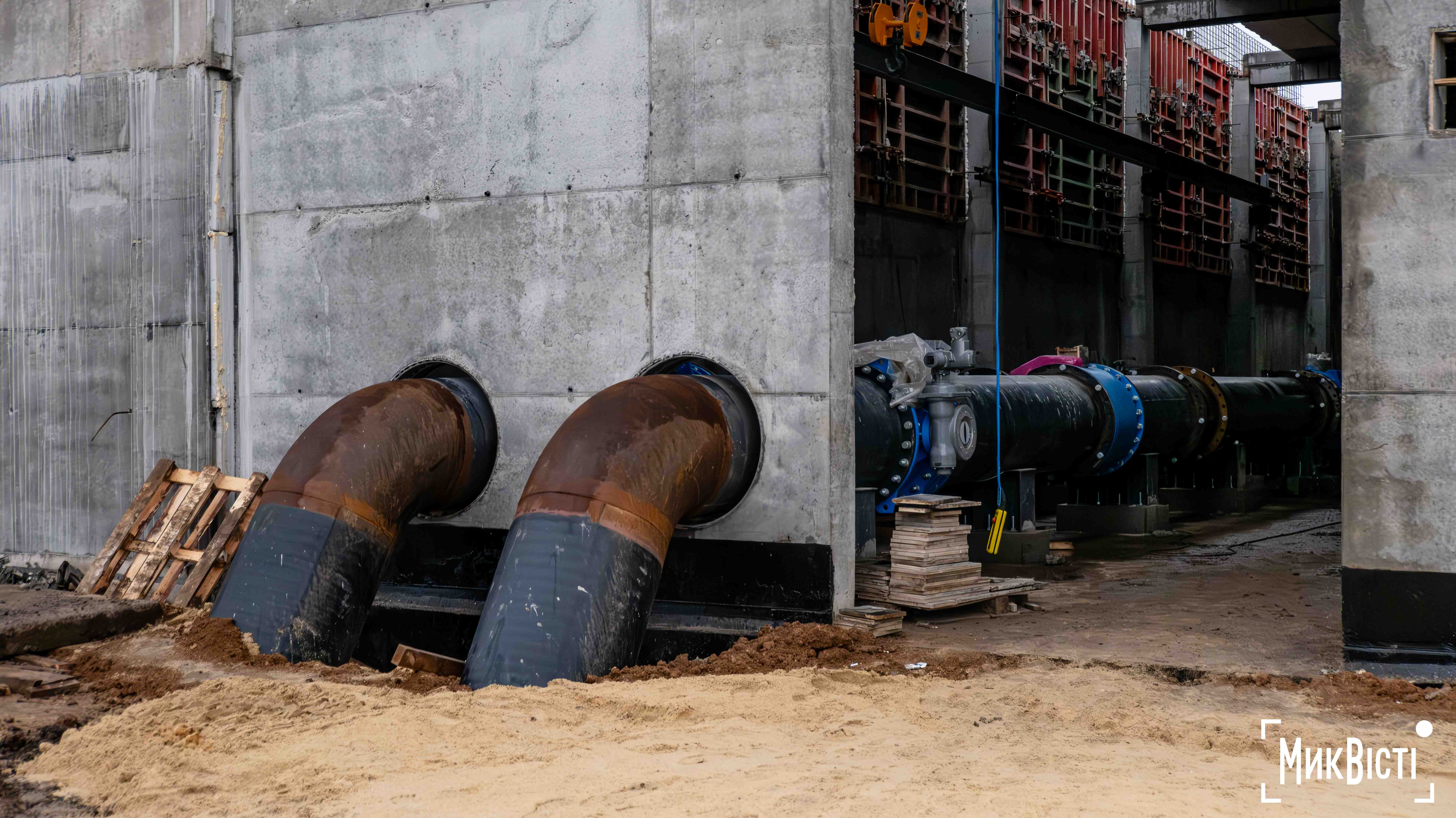 Construction of water treatment facilities for Mykolaiv, photo by "NikVesti"
This year, for the first time, the city came close to regaining its usual normality: high-quality water in the taps.
A new water pipeline for Mykolaiv was launched back in autumn 2025. However, in order for residents to receive drinking water from their taps, new treatment facilities were needed. Initially, this was planned to be done with a loan from the European Investment Bank, but the state decided otherwise: the facilities are being built with the money saved on the water pipeline.
Despite this, the city still plans to take out an EIB loan guaranteed by the state and modernise the treatment facilities that are under construction. NikVesti looked into why Mykolaiv needs this and whether it will affect tariffs .
What kind of treatment facilities is the state building for Mykolaiv?
The new treatment facilities for Mykolaiv are promised to be fully operational in March 2026, although some water has been passing through them and being supplied to the city since January.
«These will be fully-fledged treatment facilities for Mykolaiv. But we understand that in order for this water to reach the consumer and for them to be able to drink it safely from the tap, a lot of work still needs to be done directly in the city, by the water utility itself. Because pipes and communications still need to be replaced. But after these treatment facilities are launched at the end of March, the water will be safe to drink and of excellent quality,» said Serhii Sukhomlyn, head of the State Agency for Restoration, during a visit to the new water pipeline.
These treatment facilities are equipped with DynaDisc microfilters, according to the Mykolaiv Regional Military Administration. In fact, they provide mechanical filtration of water. This technology is based on rotating microfilters in the form of discs covered with a very fine mesh. Water passes through these discs, and all mechanical impurities are retained on their surface. When the filter becomes dirty, the system automatically flushes it without stopping the treatment plant.
DynaDisc is used in EU countries, particularly in Sweden and Germany. But there, it is only the first «filtration barrier» that removes the main dirt from the water before it goes on to further treatment. Such filters do not remove chemical impurities, bacteria, viruses or dissolved substances. Therefore, drinking water supply systems usually use several more stages of purification after DynaDisc.
These filters will purify water from the Southern Bug River. The point near Nova Odesa was chosen for the construction of the water pipeline because the water there is fresh and of the highest quality, explained the head of the State Agency for Restoration.
«This intake provides the best water in the region in terms of composition. There is no salt there, which makes it possible to provide high-quality water that can be supplied to the residents of Mykolaiv,» Serhii Sukhomlyn explained to NikVesti.
But in addition to mechanical microfilters, the new treatment facilities include:
- preliminary dosing of activated carbon, which adsorbs organic contaminants and removes odours and tastes;
- pH correction with sulphuric acid to ensure stable water parameters;
- oxidation and disinfection with permanganate or sodium hypochlorite;
- coagulation and flocculation, during which impurities are enlarged for further filtration;
- final disinfection and storage in reservoirs, after which the water is sent to existing municipal treatment facilities.
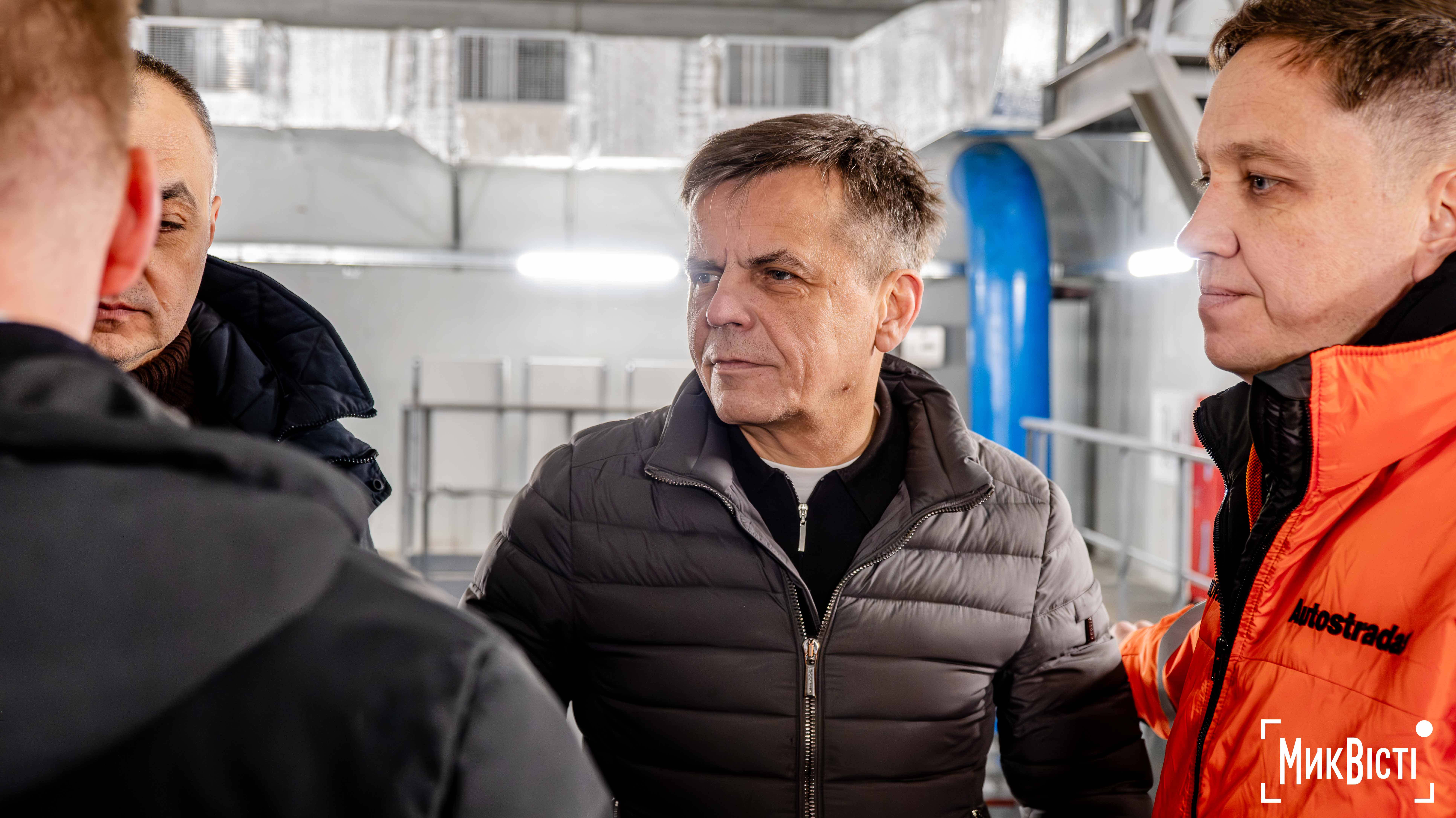 Head of the State Agency for Restoration Serhii Sukhomlyn, photo by NikVesti
Mykolaiv wants to modernise the new treatment facilities. Why?
Despite this, the Mykolaiv authorities still insist that the new treatment facilities need to be modernised — equipped with modern membrane filters, Mayor Oleksandr Sienkevych explained to NikVesti.
«Our desire is to have a water purification system with membranes. That is, today, after the modernisation of our water supply system, we will not be able to purify salt water to drinking quality. Any water, but not salt water. That is, we will not be able to remove salts until we have a membrane system, i.e. osmotic purification,» the mayor explained.
To put it simply, water passes through a very thin membrane with microscopic pores, and anything larger than these pores — bacteria, viruses, small particles, organic impurities — remains on the surface of the membrane. Such filters are usually installed after mechanical purification to prevent contamination from clogging the membrane.
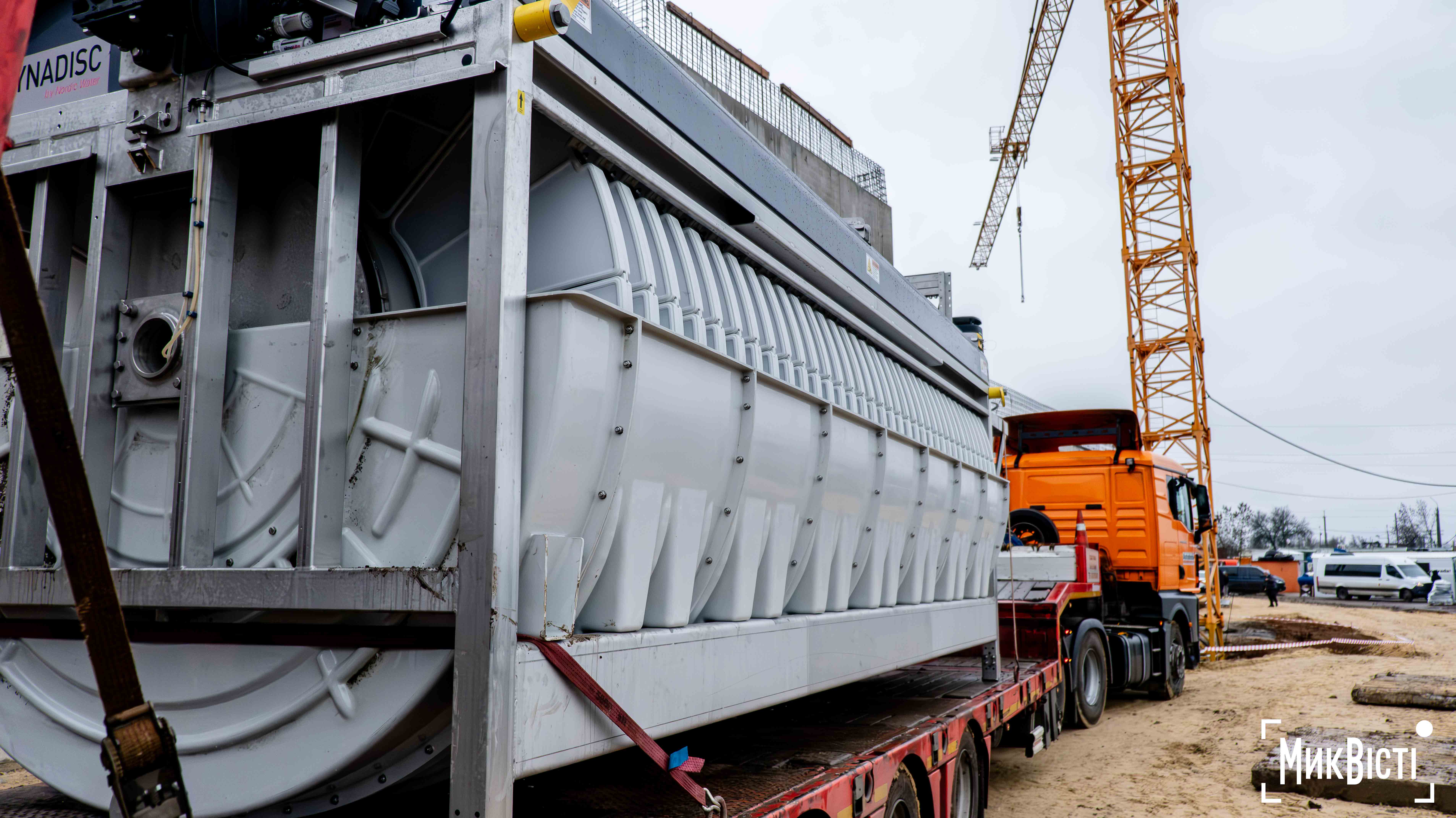 Construction of a water treatment plant, photo by NikVesti
The mayor added that the modernisation of treatment plants involves not only the installation of membranes, but also the complete replacement of outdated structures, which were built 70 years ago, with new ones.
«In other words, this is a new pressure filter station. And the membrane, as they say, is the 'crown' of water purification,» he added.
This will allow water to be purified to drinking quality even from the Inhulets River, which is an alternative source for the city in case of repeated damage to the water pipeline due to shelling, explained Oleksandr Sienkevych.
«Therefore, our task is to build world-class systems that can purify any water to drinking quality — whether it is water from the Southern Bug, water from the Inhulets, or, God willing, when everything returns to normal and we can get water from the Dnipro,» said the mayor.
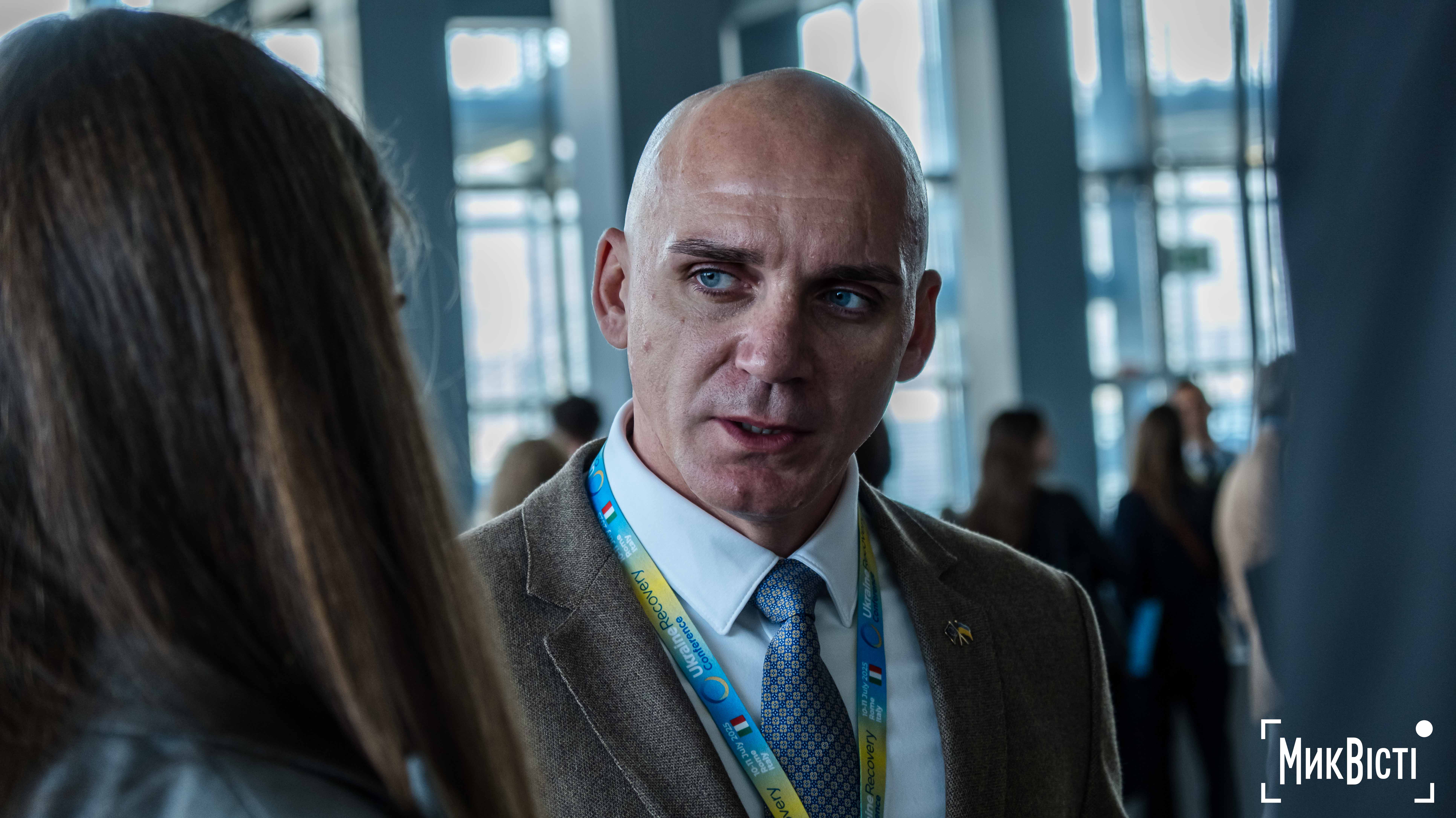 Mayor of Mykolaiv Oleksandr Sienkevych at the Ukraine 2025 Recovery Conference in Rome, photo by NikVesti
The city's position: the EIB loan should be taken over by the state
Back in October last year, Kristina Mikulova, head of the European Investment Bank's Regional Centre for Eastern Europe, told NikVesti that €120 million was needed for new water treatment facilities for Mykolaiv.
It was expected that the EIB would provide a €68 million loan, with the remainder coming from Denmark in the form of a grant. The Mykolaiv authorities expected the state to take on the loan obligations.
«This is a large-scale project — €100-120 million is needed to achieve a fully sustainable water supply for the residents of Mykolaiv for decades to come, not just for the transition period. We want to minimise the debt burden and make our part of the financing as favourable as possible,» Kristina Mikulova said at the time.
Hello! I am Yuliia Boichenko, the author of this article.
Thank you for your attention to our texts — it means a lot to the NikVesti team.
We regularly publish in-depth materials for those who want to understand the topic and get to the heart of the matter.
We have dozens of examples when our journalism, together with our readers, has influenced situations and changed them.
Join the NikVesti Readers’ Club — support independent journalism that matters.
Support us by joining the NikVesti Club
Despite the fact that the treatment facilities are currently being built with state money, the city authorities are still seeking to attract credit funds from the European Investment Bank for their further modernisation. Mykolaiv Mayor Oleksandr Sienkevych believes that all obligations under such a loan should be assumed by the state.
«What happened on the Dnipro — the destruction of the water intake station — is not the fault of the people of Mykolaiv. In other words, we are victims in this case, victims of what Russia has destroyed. And therefore, it would be unfair to place the burden of this misfortune on the shoulders of the people of Mykolaiv. If the state can obtain this money as payment for the frozen assets of the Russian Federation and compensate itself in the future through the Ministry of Finance for this loan, I believe it would be fair,» the mayor explained his position.
As previously discussed, part of the funds for modernisation will be provided by the Danish government as grant support, said the mayor.
«We had preliminary talks with the Danish embassy, and Denmark has already allocated grant funds to support this project in its three-year strategic plan for cooperation with Mykolaiv. So, there's credit money from the EIB, plus grant funds from Denmark,» said Oleksandr Sienkevych.
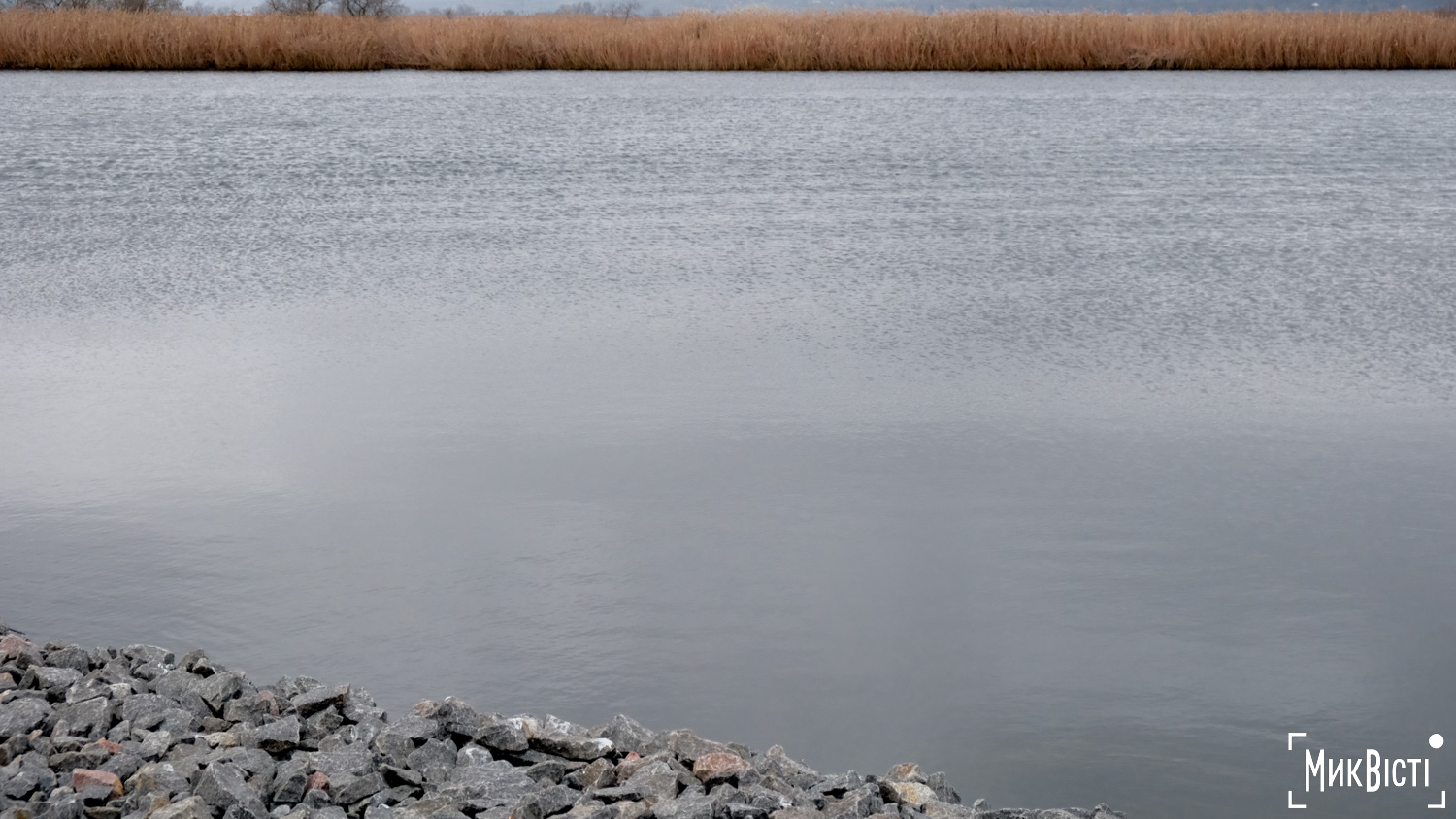 The water intake point for Mykolaiv, the Southern Bug River, photo by NikVesti
How this will affect water tariffs for Mykolaiv residents
After the launch of drinking water in Mykolaiv, the tariff will increase. According to preliminary calculations by the water utility, it could be up to 100 hryvnias per cubic metre. This is three times higher than the current tariff of 34.044 hryvnias per cubic metre of water: 17.532 hryvnias for water supply and 16.512 hryvnias for water disposal.
However, the announced tariff is approximate, said Vasyl Telpis, acting director general of Mykolaivvodokanal. The final figures will depend on the amount of reagents, water quality and the launch of solar power plants.
«We have already made some rough calculations. We have not changed the tariff since 2021, and it is currently in effect. We have calculated all the costs, taking into account the increased costs of electricity and so on. As of today, a cubic metre of water will cost up to 100 hryvnias,» he said.
However, during the period of martial law, there is a ban on raising tariffs, recalled the head of the Mykolaiv Regional State Administration, Vitalii Kim. He promised to do everything possible to ensure that Mykolaiv residents receive water at the lowest possible price.
This means that the water tariff after the full launch of the treatment plants is currently unknown. Therefore, it is also impossible to say what it will be in the event of additional modernisation with EIB funds, Mayor Oleksandr Sienkevych told nikvesti.
«This requires calculations. Today, the water disposal tariff will increase because electricity prices have increased three or more times and the minimum wage has increased. This means that the tariff is already critically inadequate. Therefore, we see that when drinking water appears in Mykolaiv, the tariff will certainly increase,» said the mayor.
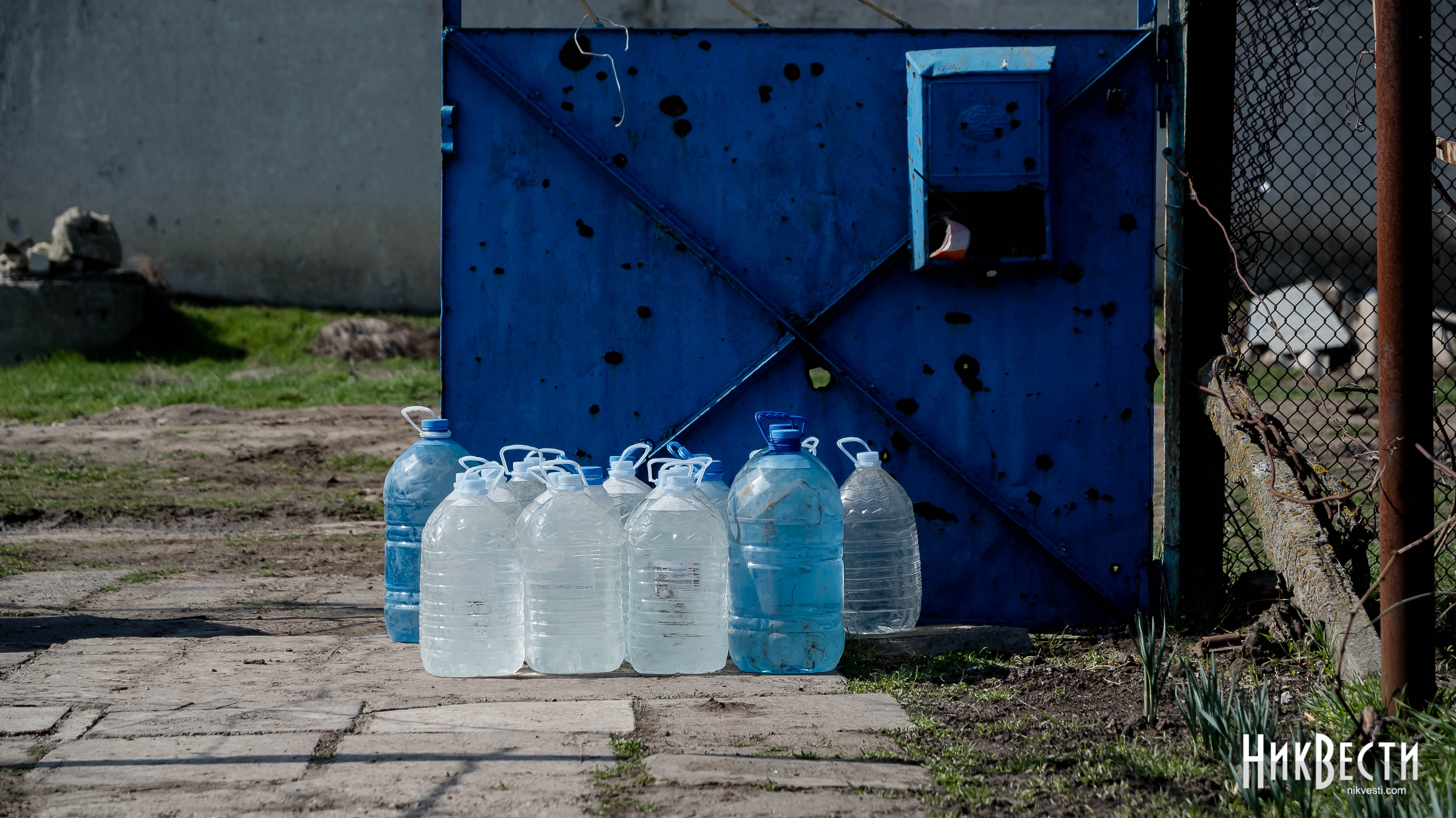 Bottles of purified water, archive photo NikVesti
The city wants to modernise the new treatment plants not only for quality reasons, but also for preventive protection: in the event of damage to the water pipeline, water can be supplied from Inhulets. The water there is saltier, and without membrane filters, it cannot be purified to drinking quality. Therefore, Mykolaiv is requesting a loan from the European Investment Bank.
However, the city cannot take out such a loan on its own — state guarantees are required. Despite this, the state has not yet publicly announced whether it is ready to take on this obligation. The only way forward is direct communication between local and state authorities. It is currently unknown whether such a dialogue has taken place or not, whether it will be behind closed doors or whether we will see it publicly. However, it is impossible to make a decision without it.
As for the tariff, Mykolaiv residents should probably expect an increase. The current tariff is already unprofitable, so it will definitely rise after the new treatment facilities are launched. The only question is by how much — and whether there will be a second increase in the event of modernisation with EIB funds.
Yuliia Boichenko, NikVesti


This material was produced as part of the "Improving Ukrainian Media Resilience" project, implemented by the Fondation Hirondelle (Switzerland) and IRMI, the Institute for Regional Media and Information (Ukraine). The project is funded by Swiss Solidarity.