
The reconstruction of the Arkas Lyceum in Mykolaiv is scheduled for completion in 2027
-

- Darina MelnychukCorrespondent
-
 3000 +
Wow! Over 3,000 visitors have viewed this content!
3000 +
Wow! Over 3,000 visitors have viewed this content!
-
 Prefer on Google
-
3K
Wow! Over 3,000 visitors have viewed this content!
-
Prefer on Google
Work has been underway for over a year in Mykolaiv to restore the Mykola Arkas Lyceum, which was destroyed by a Russian missile at the start of the full-scale invasion. During discussions on the school’s reconstruction, it was decided that the building should retain its historic appearance following the restoration.
Denmark has pledged to provide funding for the school’s reconstruction. The United Nations Office for Project Services (UNOPS) is directly overseeing all reconstruction work on the school.
For some time, the start of work was delayed due to the lengthy process of signing and agreeing a tripartite agreement. In early 2025, the contractor officially began the restoration of the school. The contractor was due to complete the stabilisation work this spring, but it has been delayed due to weather conditions and the building’s dilapidated state.
Find out what work will be carried out next and when pupils will be able to return to school in the article by NikVesti.
Start of the school’s reconstruction
The lyceum was shelled on the night of 31 October to 1 November 2022. The building’s façade was severely damaged by a rocket strike. In particular, the hall and entrance hall, the Ukrainian and English language classrooms, the Ukrainian language and literature classroom, and the art gallery were destroyed. In addition, the IT classroom and the headteacher’s office were damaged.
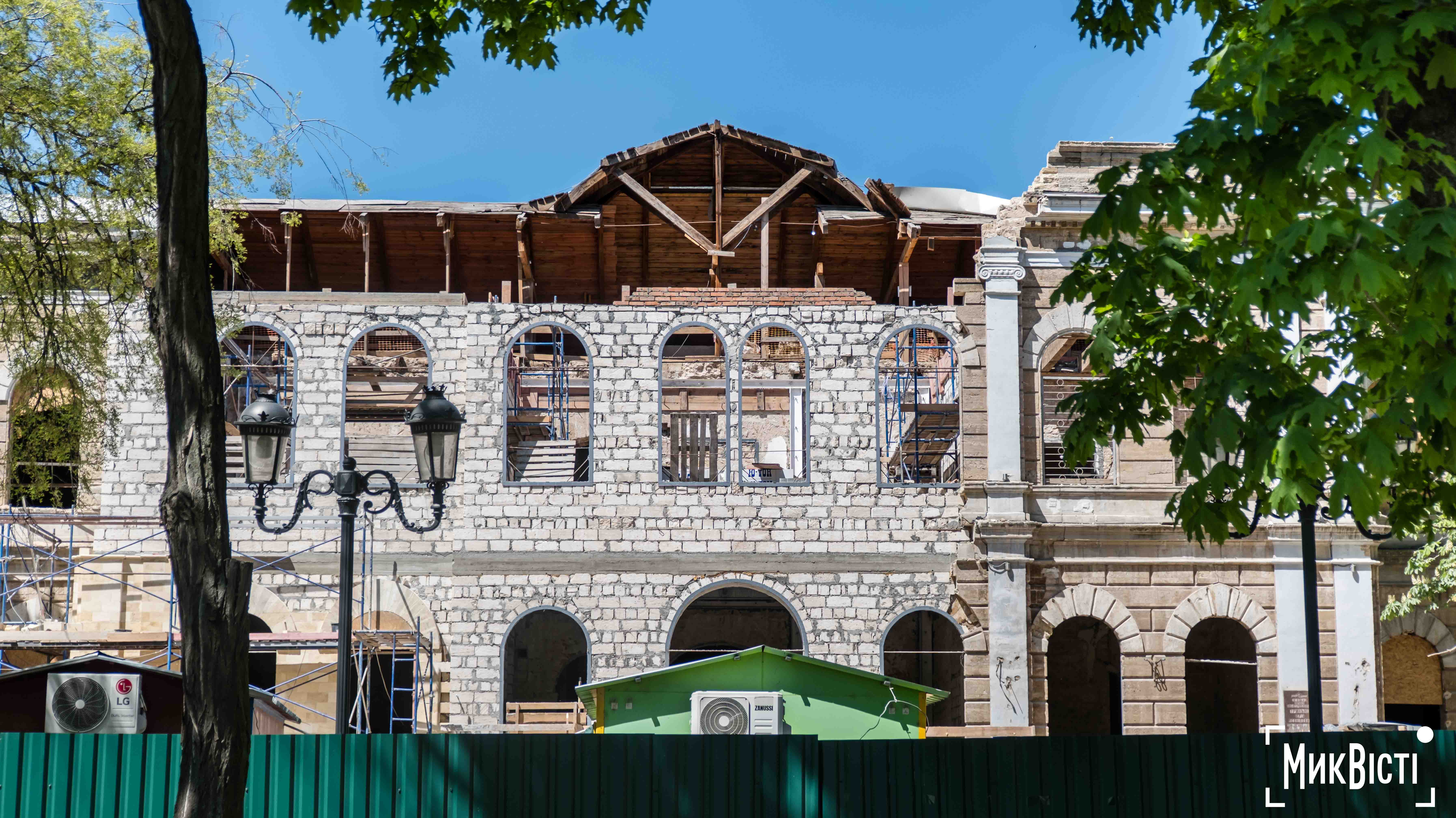 The restored façade of the Mykola Arkas Lyceum in Mykolaiv. Photo: NikVesti
In 2023, the Danish government undertook to fund the reconstruction of the school, and the implementation of the project was entrusted to the United Nations Office for Project Services (UNOPS).
In autumn 2024, UNOPS developed the project documentation and selected a contractor following an open tender, but the actual start of works was delayed. This was due to the lengthy process of agreeing the contract between the client, UNOPS and the contractor, as well as the need to obtain permission from the State Inspectorate of Architecture and Urban Planning of Ukraine.
Once permission was granted, construction work began in the winter of 2025. The contractor, under the supervision of UNOPS engineers, has now dismantled all unsafe structures, reinforced the foundations, repaired the roof and installed a shelter.
Hello! I am Darina Melnychuk, the author of this article.
Thank you for your attention to our texts — it means a lot to the NikVesti team.
We regularly publish in-depth materials for those who want to understand the topic and get to the heart of the matter.
We have dozens of examples when our journalism, together with our readers, has influenced situations and changed them.
Join the NikVesti Readers’ Club — support independent journalism that matters.
Support us by joining the NikVesti Club
The stabilisation work was not completed by the end of March. Why?
The reconstruction involves two main phases within the school restoration project. The first is the stabilisation phase, which includes emergency measures, structural reinforcement, the installation of a shelter and the repair of the attic. The second phase involves the complete restoration of the building: faсade work, window replacement, interior finishing work and engineering systems.
«Work on the Arkas Lyceum is divided into two stages: the first is stabilisation, and this is the most critical stage, as we have effectively stabilised the structures. The second stage is full restoration with the aim of creating a functional building to which pupils can return for face-to-face learning,» explains project manager Teresa Molero Rodríguez.
The delay in the stabilisation work was due to the critical condition of the façade structures, which required a much greater volume of work than originally anticipated, says civil engineer Vira Sarry. Furthermore, the challenging weather conditions during the winter were an additional factor.
«The façade structures were in a state of disrepair upon arrival, so we had to dismantle them very carefully to avoid risks to people. We also had to restore more structures than we had planned in the project documentation. Due to the unusually cold winter, bricklaying work was temporarily suspended, as the technology does not allow for it to be carried out at low temperatures. This resulted in a delay,» explained Vira Sarry.
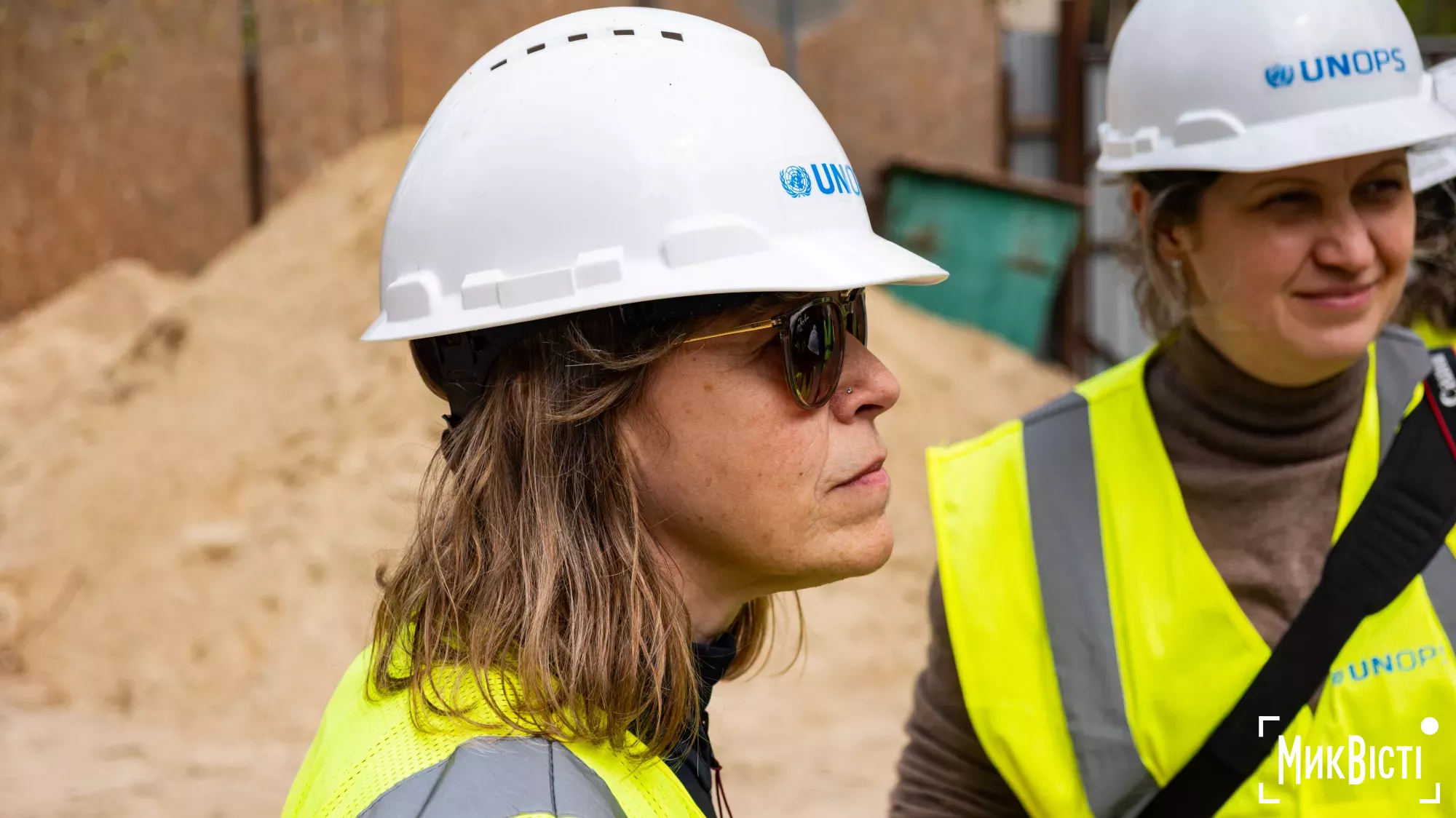 UNOPS Project Manager Teresa Molero Rodríguez. Photo: NikVesti
One of the most challenging stages was working on the foundation, which was around five metres deep, limiting the possibility of further excavation in line with safety requirements. Significant effort was also required to reinforce the walls and dismantle damaged structures — part of the building had to be completely demolished.
«The stabilisation phase was the most critical and complex. During the work, we encountered a number of unforeseen situations that were difficult to predict in advance. We recognise the cultural value of this institution both for the people of Mykolaiv and for Ukraine as a whole. That is why we are working on it with the utmost care and respect, in coordination with the donor, educational bodies, the capital construction department, the authorities and the cultural heritage department,» added Teresa Molero Rodríguez.
In addition, engineer Vira Sarry noted that the work is complicated by the dense urban development. Due to the narrow access road, which is unsuitable for large-scale machinery, only small construction equipment is being used on site, which also affects the pace and complexity of the work.
Oleksii Savchuk, Director of the City Council’s Capital Construction Department, said that they plan to complete the stabilisation works in the second quarter of the year. However, these repair works are already part of the second phase of restoration, which will continue until 2027.
«Unfortunately, it is not possible to expect the project to be completed this year. In addition to finishing works, a significant amount of structural reinforcement is required. Some of this work has already been carried out, although it was not included in the original design. In particular, many damaged wooden beams were discovered — these are being reinforced, and where this is not possible, they are being replaced. A lot of work has already been done, but there is still a lot to come,» he explained.
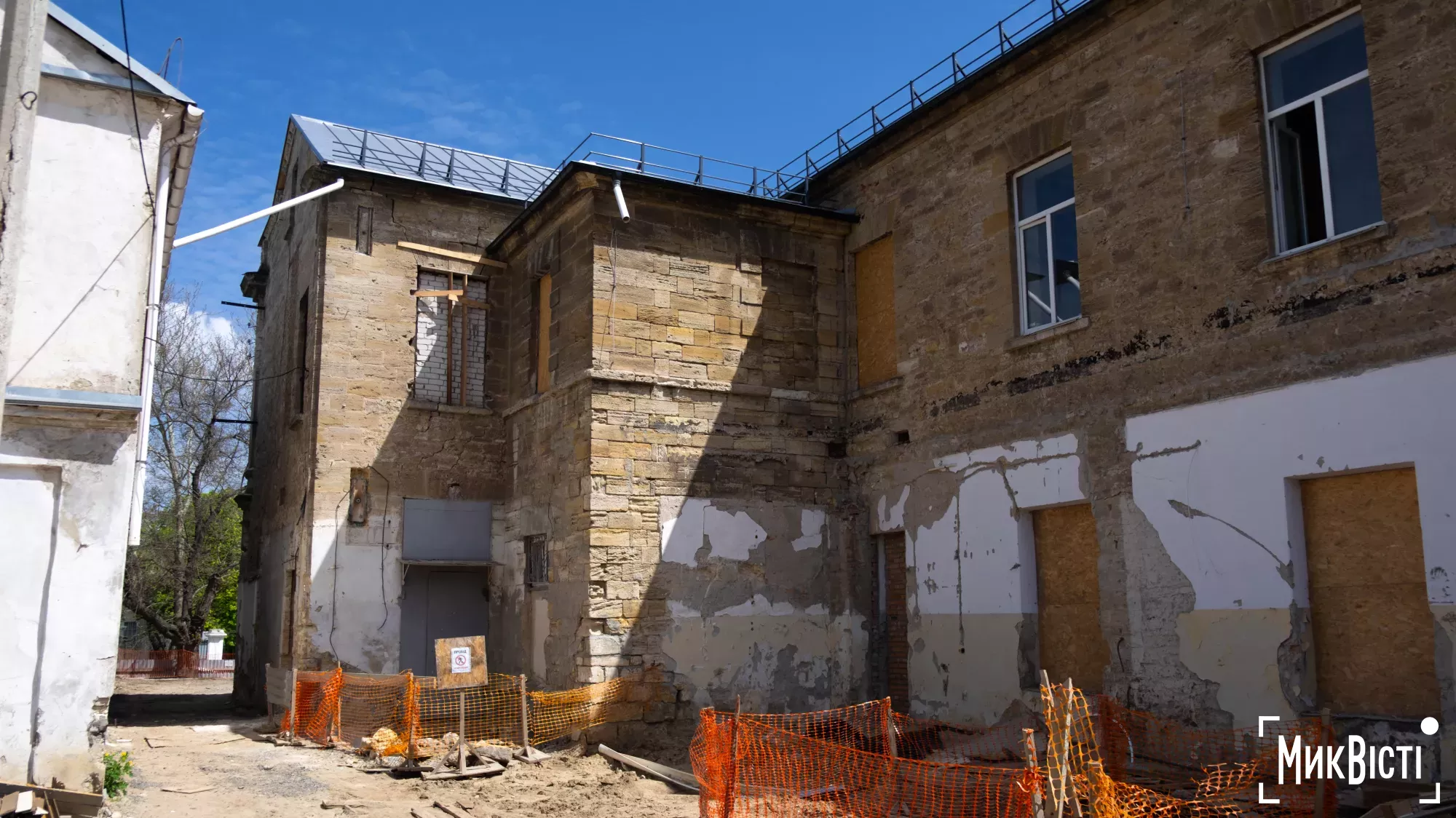 Photo: Kirill Vitvitsky, NikVesti
How a shelter was built in a 19th-century school building
The contractor has completed the construction of a shelter covering an area of approximately 714 square metres. According to the project documentation, it is designed to accommodate 434 pupils, as well as 51 staff members — the school’s teaching and technical personnel. This will enable the school to provide full-time in-person learning.
The shelter will be equipped with the necessary utilities, ventilation, a heating unit, toilets, classrooms and communal areas.
The project also includes accessibility features: three emergency exits, small lifts for people with reduced mobility, and ramps. Information signs in Braille, schematic diagrams and tactile navigation elements will also be installed in the building.
The shelter is now ready for finishing works. Specifically, this involves plastering, painting the walls, screeding the floors, and installing the building services — ventilation, heating, electricity, lighting, and the fire alarm system. The structural part of the shelter has already been completed.
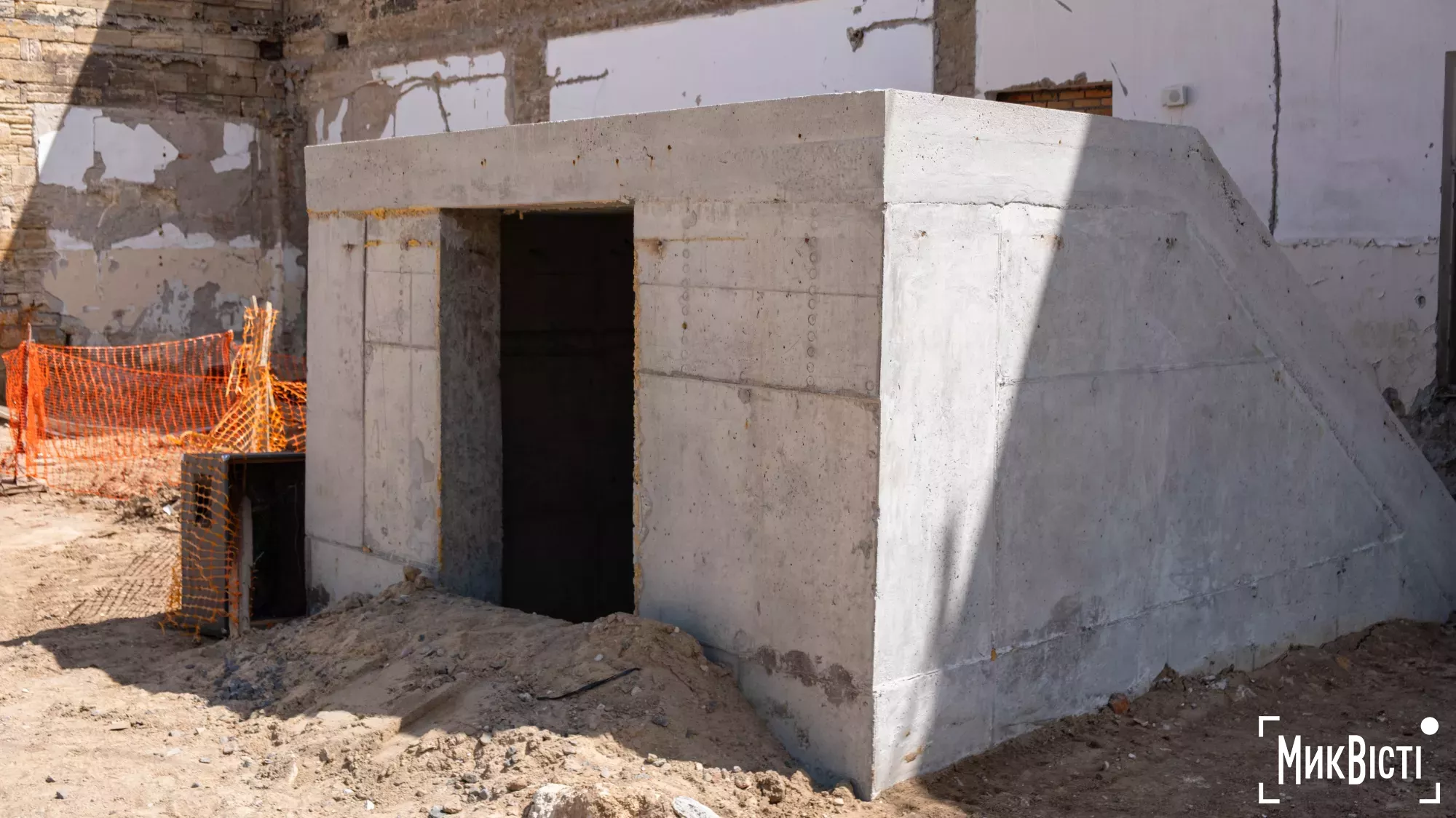 Entrance to the shelter at the Mykola Arkas Lyceum. Photo: NikVesti
Engineers explain that due to the building’s specific features, it is only possible to fit out a simple shelter here, rather than a radiation-proof one.
«The building was constructed back in the 19th century, and its structure does not allow for the installation of a radiation-proof shelter. To do so, the walls would have to be significantly reinforced on all sides, but the existing foundations would not be able to withstand this. Furthermore, there is a park nearby, which is a cultural heritage site, where such work cannot be carried out either. At the same time, this shelter will have all the necessary safety features: ventilation, fire alarms and other systems,» says engineer Vira Sarry.
Furthermore, she explains that the construction of the shelter required additional structural reinforcement, as there was previously nothing there — just a technical basement with two rooms.
«During the works, we effectively redesigned this section from scratch: we dug down to a depth of about three metres, reinforced the foundations and walls, laid a concrete floor and ceiling, and reinforced the openings. We were prepared for difficult conditions, but in reality they turned out to be even more challenging,» says Vira Sarry.
Last year, during emergency repair work at the Mykola Arkas Lyceum, an underground passage was discovered at foundation level. Currently, the plan is to reinforce the arch and preserve it in its original form as an additional entrance to the building.
«We’ll reinforce it and tidy it up a bit — that’s our plan. At the same time, we’ll leave the arch open so that it’s clear it was here. We don’t know for certain what it was used for or why it’s here. We plan to reinforce it, particularly on the left side, clean it up and, possibly, install a mesh to prevent anything from falling out. Scientific support has been brought in for the project, so other specialists will be investigating this arch,» explains Vira Sarry.
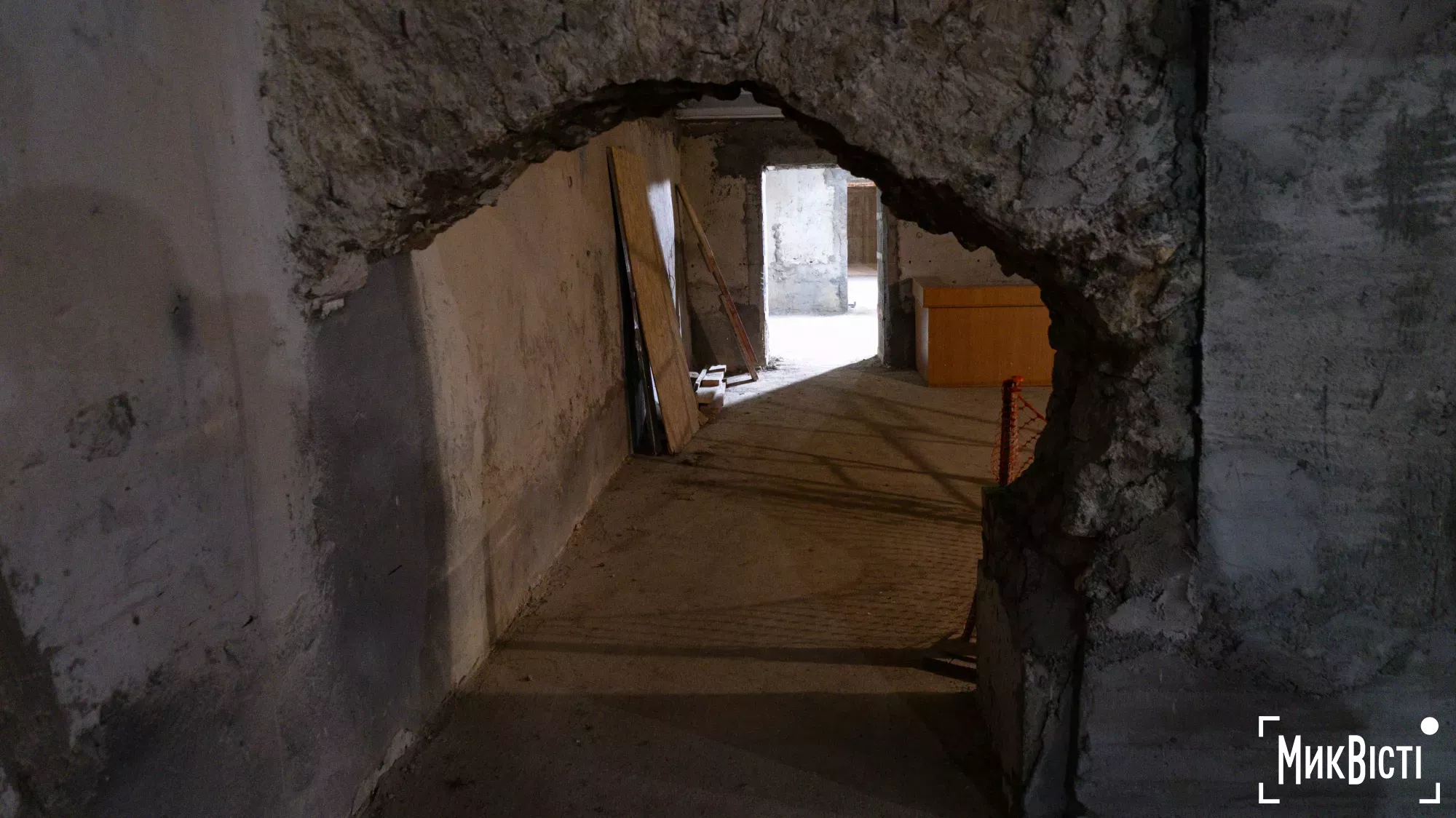 Underground passage in the shelter of the Mykola Arkas Lyceum in Mykolaiv. Photo: NikVesti
Preserving history: How elements of the Arkas Lyceum’s façade are being restored
Oleksii Savchuk, Director of the City Council’s Capital Construction Department, said that work is currently underway to restore the entrance area and prepare the façade elements.
«As of today, the entrance area is being restored. Work is already underway on the second floor, specifically the bricklaying. Facing work has also begun — they are checking how the authentic stone will look on the façade. The façade elements are being prepared: the stone is sanded by hand and then further processed to match the existing façade as closely as possible,» said Oleksii Savchuk.
A separate area for stone processing has been set up on the construction site, where restorers are working. Here, the stone is cut into pieces and prepared for further use in the façade work.
«The stone arrives in the form in which it is supplied. It first undergoes laboratory testing for strength. After that, it is cut and prepared for the final facade masonry. Processing a single element can take between 10 and 15 minutes, depending on its size and complexity. The workers carrying out this work are familiar with risk assessments in accordance with UNOPS standards and are provided with all necessary personal protective equipment — for eyes, ears and respiratory protection. The work is also partly carried out by hand using power tools,» explained engineer Vira Sarry.
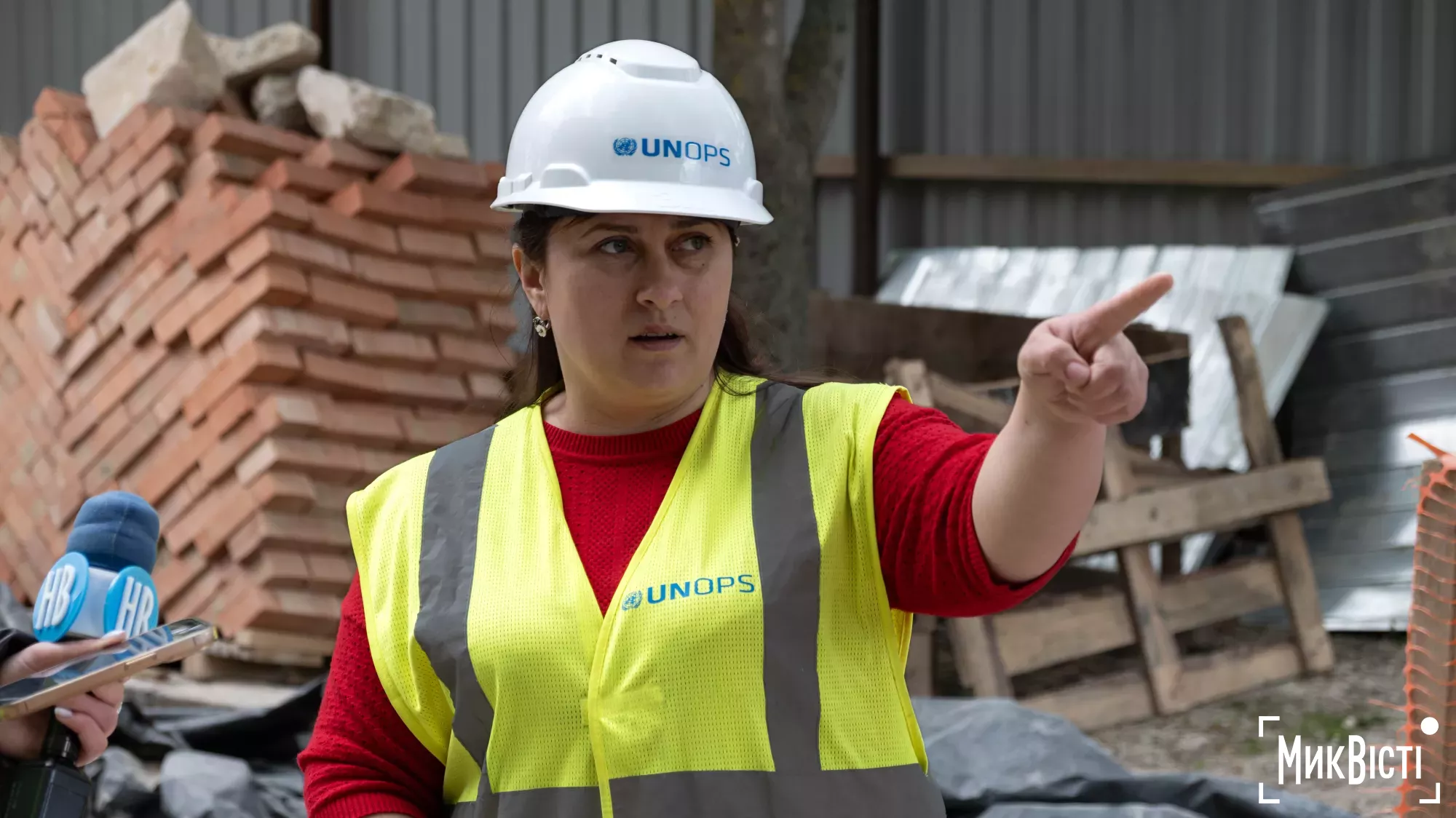 Civil engineer Vira Sarry. Photo: NikVesti
All stages of the restoration work are carried out in constant coordination with the cultural heritage authorities, the engineers explain.
«We are in constant collaboration with the cultural heritage department. We often have to obtain specific permits — even for things such as the colour of the roof, the colour of the joints or the removal of elements from the faсade,» noted Vira Sarry.
She added that the documents for the next stages of the restoration have been submitted to the cultural heritage authorities for approval. Once permission to carry out the construction work has been granted, the contractor will be able to move on to the second phase of the restoration.
«The next stage involves demolition work on two floors and in the sports hall. After that, repairs will be carried out on the floor slab between the first and second floors, as well as raising the floor level in the part of the building where there is no basement,» added Director of Capital Construction Oleksii Savchuk.
Special monitoring devices have been installed on the building to monitor the condition of the walls, allowing the movement of cracks to be tracked. With their help, specialists can determine whether the structures require additional reinforcement. Currently, according to engineer Vira Sarry, the building is in a stable condition.
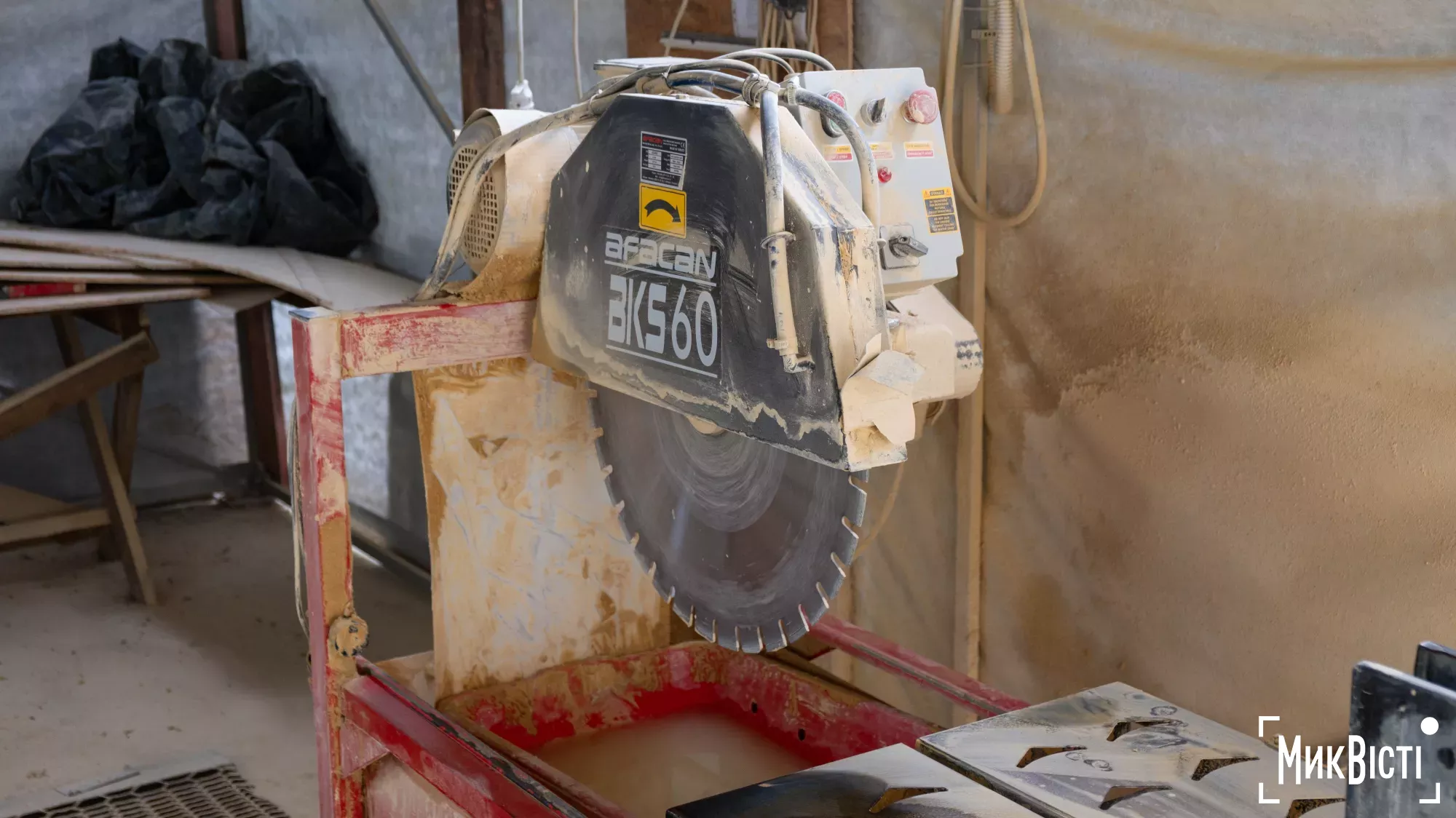 The stone-working area where the restorers work. Photo: NikVesti
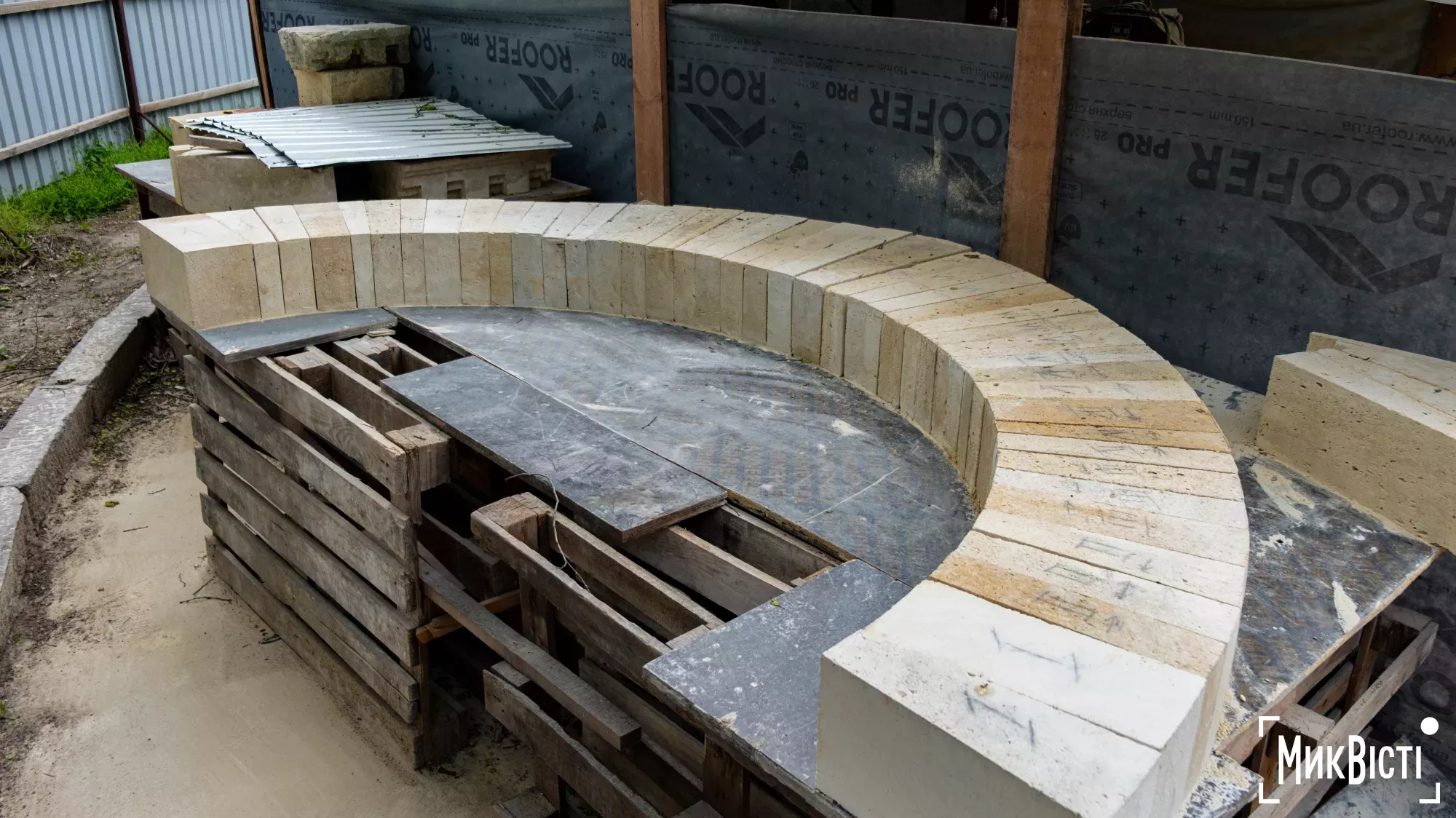 The stone-working area where the restorers are working. Photo: NikVesti
«Together with the contractor, we have installed markers to monitor the movement of cracks in the walls. These are special indicators made of mortar: if a crack continues to develop, the marker will crack, and we will know that additional reinforcement is needed. If they remain intact, it means the structures are in a stable condition,» explains Vira Sarry.
Returning to familiar surroundings. When will the school’s pupils be back at their desks?
The plan is to complete the reconstruction of the school in 2027, as previously reported. However, the timeline depends directly on unforeseen construction work and the overall situation in the region.
«As for our scope of work, we are aiming for 2027, of course, taking into account the unstable situation. Our goal is to complete the work by the end of 2027. We have always been aiming for this date, but as for the specific month, we are still working on that,» says project manager Teresa Molero Rodríguez.
At present, the final budget for the school’s reconstruction has not yet been determined, as work is ongoing and the funding amount is being finalised.
«We cannot give a final figure at the moment, as the first phase is still being completed and the second is only being planned. The level of uncertainty remains high. At the same time, we are in constant communication with the donor and the city authorities, who are aware of the costs. The final budget will be drawn up once all the work has been completed,» she noted.
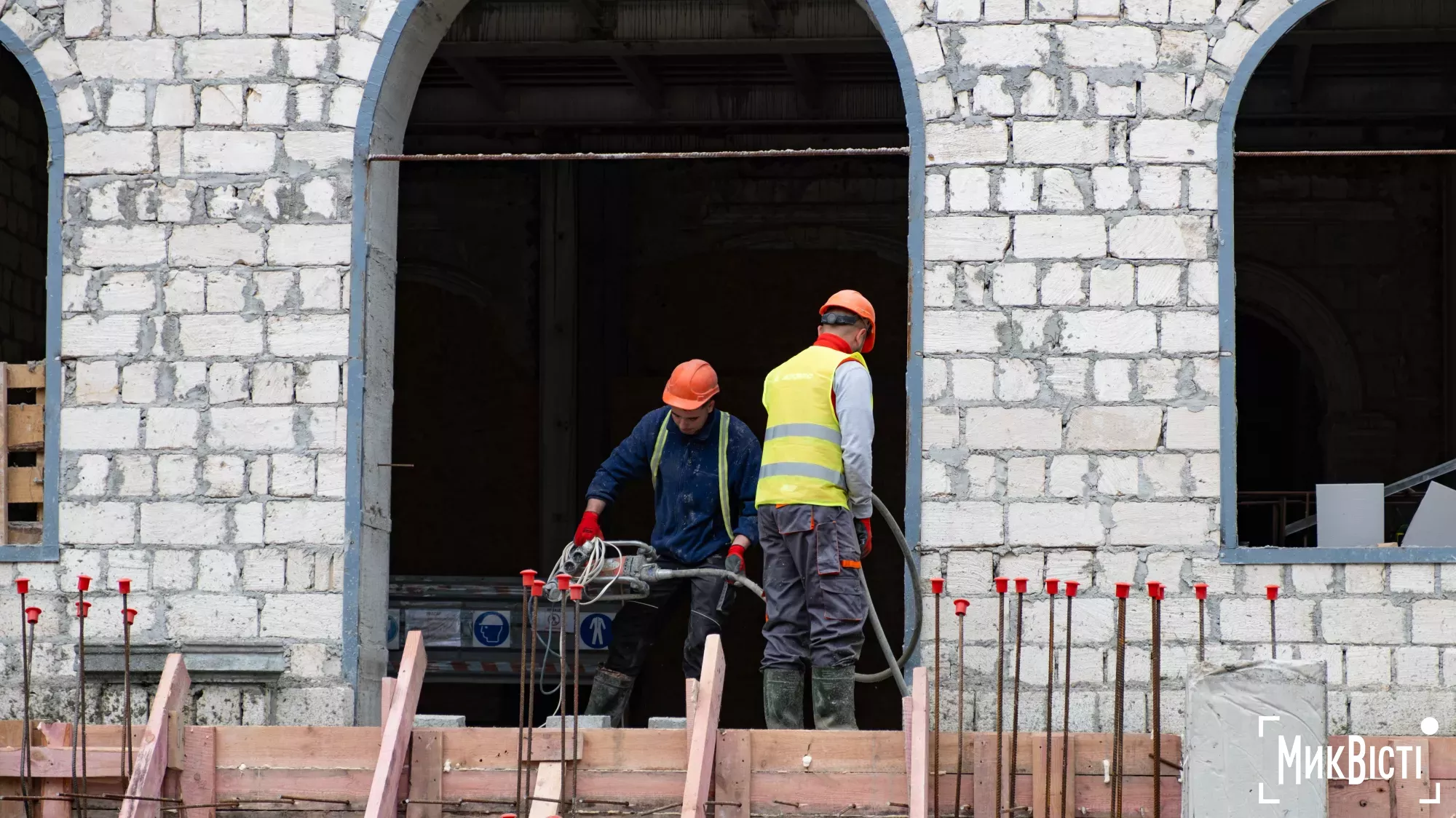 Builders are restoring the façade of the Mykola Arkas Lyceum in Mykolaiv. Photo: NikVesti
According to the project documentation, the restoration of the school’s façade, roof and windows cost around 41 million hryvnias. These funds were provided by the Danish government, as previously explained by Oleksii Savchuk, Director of the City Council’s Capital Construction Department.
«UNOPS has significant international experience in implementing similar projects, particularly in other countries. For us, this is the first such project in Ukraine, and we are applying that experience here. This is an important project being carried out in cooperation with Denmark and the local authorities to ensure the outcome the city needs,» added Teresa Molero Rodríguez.
Liubov Patlata, Headmistress of the Mykola Arkas Lyceum, told NikVesti that children and parents are looking forward to the reconstruction of their school. According to her, pupils are currently attending classes in person at Gymnasium 339, but are already eagerly awaiting their return.
«We’re all waiting — parents and children alike — and we’re eagerly looking forward to the reconstruction. Of course, we want to go home, back to our own school. The children feel comfortable here; they’re studying in person and they like it. But we’re still waiting for the school to be rebuilt. As they say, it’s nice to be a guest, but you want to go home. We hope we’ll be back very soon,» says Liubov Patlata.
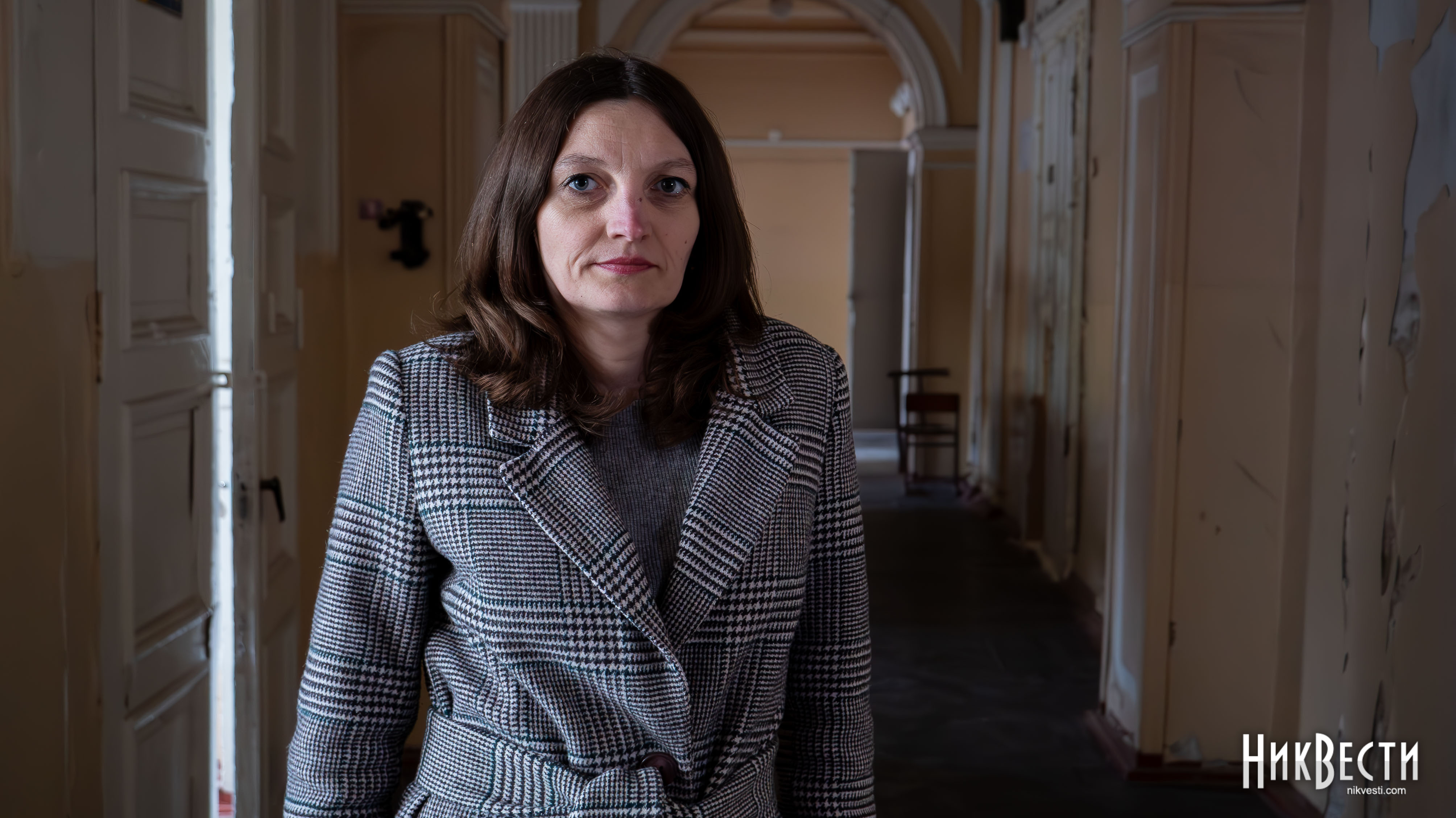 Liubov Patlata, headteacher of the Mykola Arkas Gymnasium. Archive photo: Serhiy Ovcharishyn, NikVesti
She added that parents regularly enquire about the progress of the reconstruction, and the school tries to keep them informed.
«Parents ask questions, and we keep them informed. Whenever possible, we take photos, show them, and explain the stages of the work. We all walk past the school every day and see how the restoration is gradually progressing. It’s already clear that a lot has been done inside; we know that a shelter has been built there,» shares the headteacher.
Despite the complexity of the work and the delays, the Mykola Arkas Lyceum has managed to stabilise and prepare for full restoration, preserving its historic appearance.
Ahead lies the most extensive part of the reconstruction, which will determine what the school will look like after restoration. And although the exact dates for pupils’ return to their classrooms are not yet known, one thing is already clear: this will not simply be a rebuild, but the restoration of an important part of the city’s history.
The further course of the restoration depends on obtaining all the necessary approvals, renewing permits and launching the second phase of works, which involves a full-scale reconstruction of the building. It is this stage that will be decisive in ensuring the school can resume operations in its usual format.


This publication was produced within the framework of the Institute for War & Peace Reporting (IWPR) project “Strengthening Public Oversight,” with financial support from Norway. The content of this publication is the sole responsibility of the NGO “Mykolaiv Media Hub” and the online media outlet “NikVesti.” This material can in no way be considered as reflecting the views of IWPR or the Government of Norway.
