

Waste of war: can the plant in Mykolaiv keep up with the scale of destruction?
-

- Yuliia BoichenkoReporter
-
 10000 +
Right on target! Over 10,000 visitors are interested in this content!
10000 +
Right on target! Over 10,000 visitors are interested in this content!
-
 Prefer on Google
-
10K
Right on target! Over 10,000 visitors are interested in this content!
-
Prefer on Google
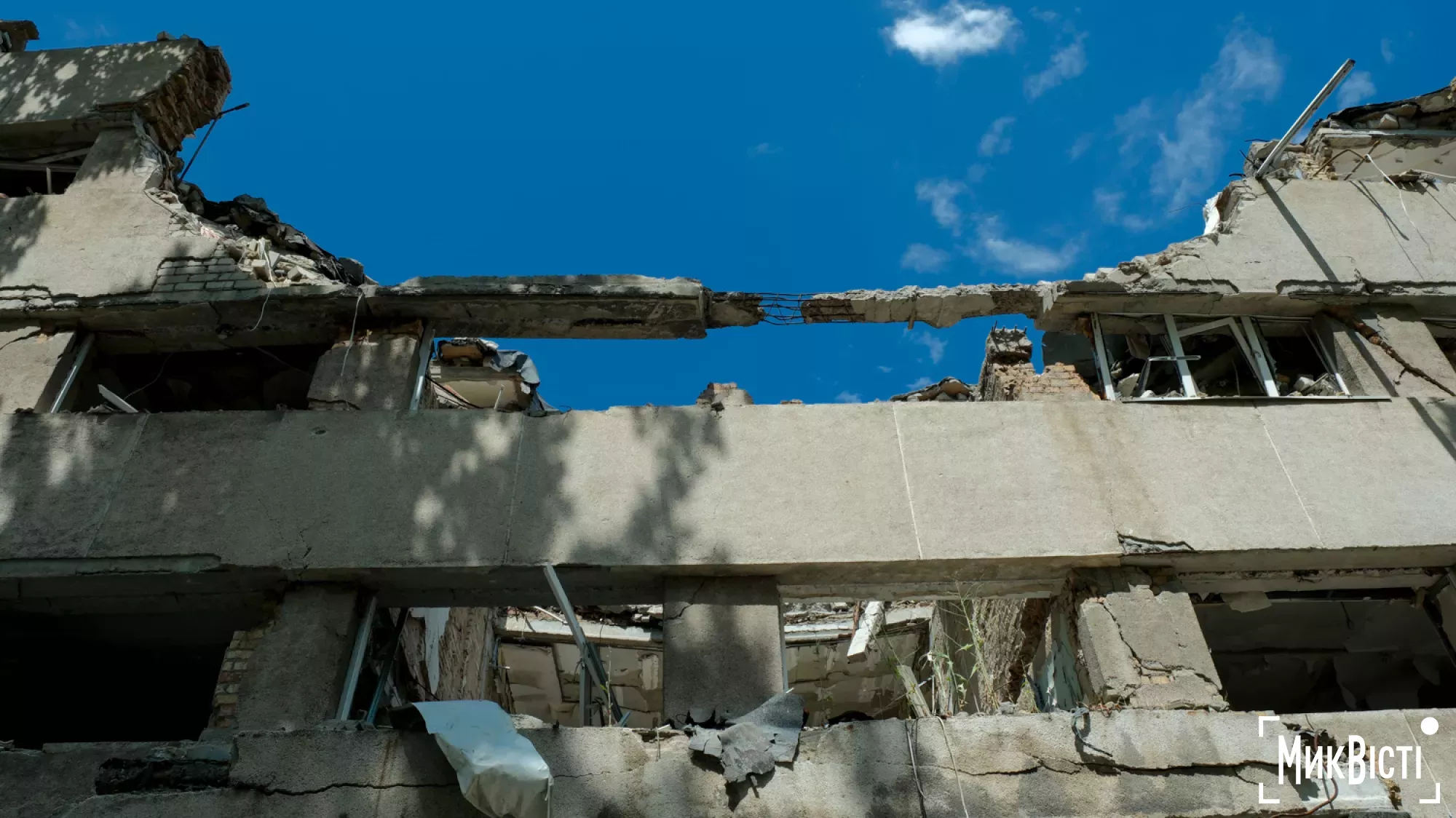 The ruined building of the Ingul Hotel along Admiralska Street in the centre of Mykolaiv, photo by NikVesti
How many destroyed buildings can you count during a single walk through Mykolaiv? If you walk along Admiralska Street, there are at least five — historical buildings, a residential building, and a hotel. A year ago, there were more: some have already been restored, while others are in the process of being rebuilt.
What remains after the shelling is officially called «rubble». A plant that processes it has been operating in Mykolaiv for almost a year. The equipment for it was provided by international partners, the site was equipped with funds from the city budget, and the process itself is carried out by the municipal enterprise ELU Avtodorig.
NikVesti investigated how this plant works today, how much debris has been recycled and sorted, and whether its efficiency matches the scale of the destruction.
Demolition waste is recycled into material for repairing roads in Mykolaiv
We are standing on a site where specialised equipment is operating. At this moment, it is processing debris — it is quite noisy around us and there is a pile of dust. «This is the heart of the whole process,» says Vitalii Shevchenko, director of the municipal enterprise ELU Avtodorig.
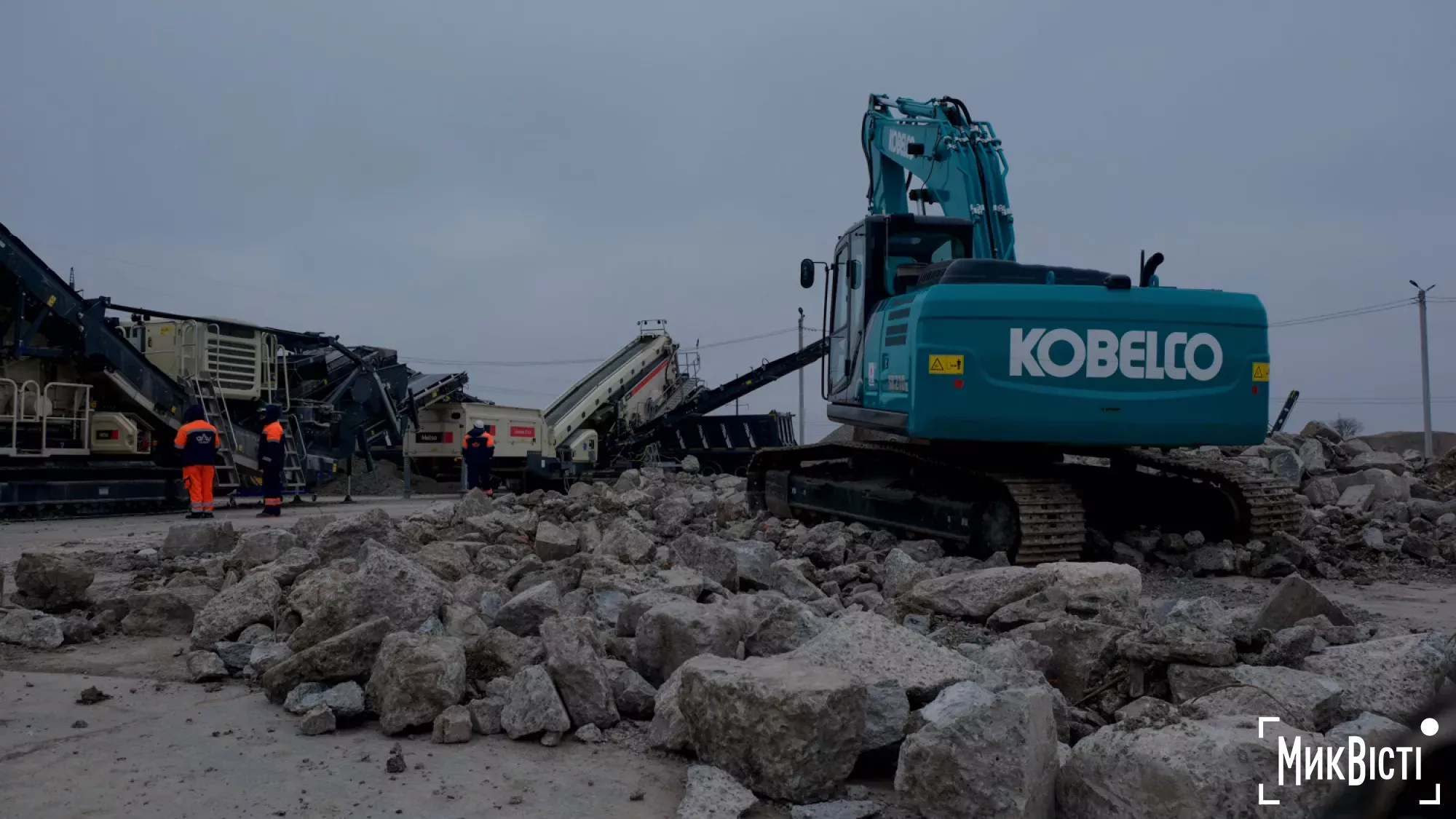 A plant for processing demolition waste in Mykolaiv, February 2026, photo by NikVesti
Dismantled parts of destroyed buildings are brought here for processing. They are handled by specialised equipment provided to the city by the Japan International Cooperation Agency (JICA). Some of the equipment was provided by the United States Agency for International Development (USAID) and the United Nations Development Programme (UNDP). It recycles this demolition waste into building materials: crushed stone, sand, gravel and screenings.
Recently, the destroyed part of the Korabelnyi Palace of Culture was reprocessed here.
«The contractor hired by UNDP demolished part of the building and brought it to us. We sorted the debris, separating stones and rubbish. We kept what could be recycled into gravel, screenings and sand. Everything else that cannot be recycled goes to the city landfill,» explained Vitalii Shevchenko.
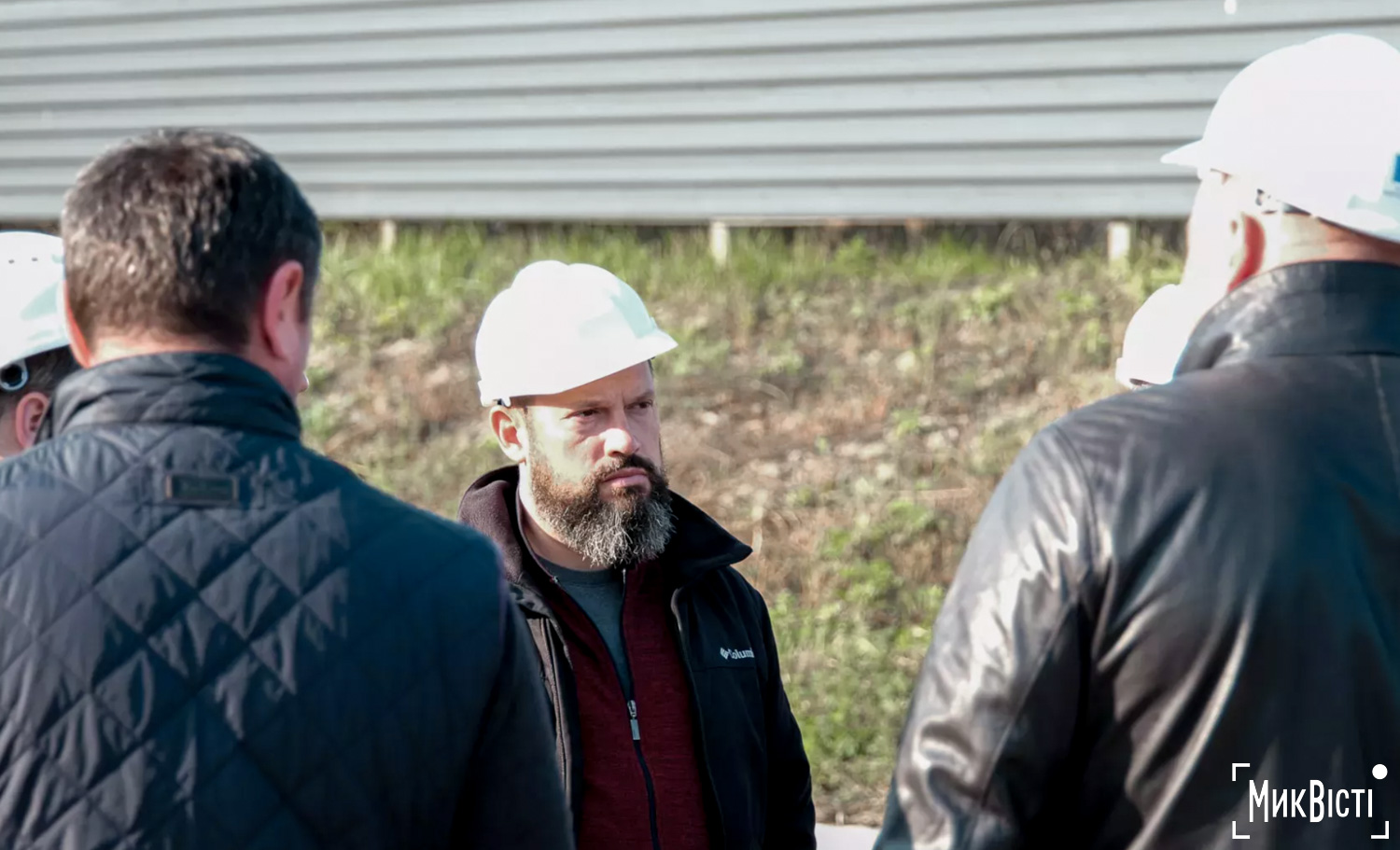 Director of the municipal enterprise ELU Avtodor, Vitalii Shevchenko, photo by NikVesti
Debris that was cleared immediately after the shelling is also brought in for recycling, says the director of the municipal enterprise ELU Avtodorig.
«The rubbish that, for example, is at the site of the strike and we see that it is impossible to recycle — goes straight to the city landfill. What can be recycled — comes to us, is recycled, sorted,» explained Vitalii Shevchenko.
Before each new recycling process, the debris is checked for asbestos levels. If the waste is asbestos-free or has an acceptable level of asbestos-containing materials, it is sent for recycling. If the lab technician finds asbestos, it is packed in special plastic bags and then disposed of or buried, but ELU Avtodorig does not deal with this.
Reference: Asbestos is a mineral that was previously widely used in construction (particularly in slate and pipes) due to its strength and fire resistance. Asbestos dust is hazardous to health: when inhaled, it can cause serious lung disease, so such materials require special disposal.
«Currently, there is only one company in Ukraine that has the capacity to process this asbestos. It is located in the Odesa region. However, this processing is very expensive and the process itself is very complex. That is, it is burned at a temperature above 1450°,» explained Vitalii Shevchenko.
All processed demolition waste «has a second life», says the director of the municipal enterprise. All the raw materials obtained after processing are further used for the city's needs. For example, they are taken by the municipal enterprises Mykolaivoblteploenergo and Mykolaivvodokanal, which need to repair the damage caused by repair work. At the site, we met employees of the regional heating company who had come for raw materials.
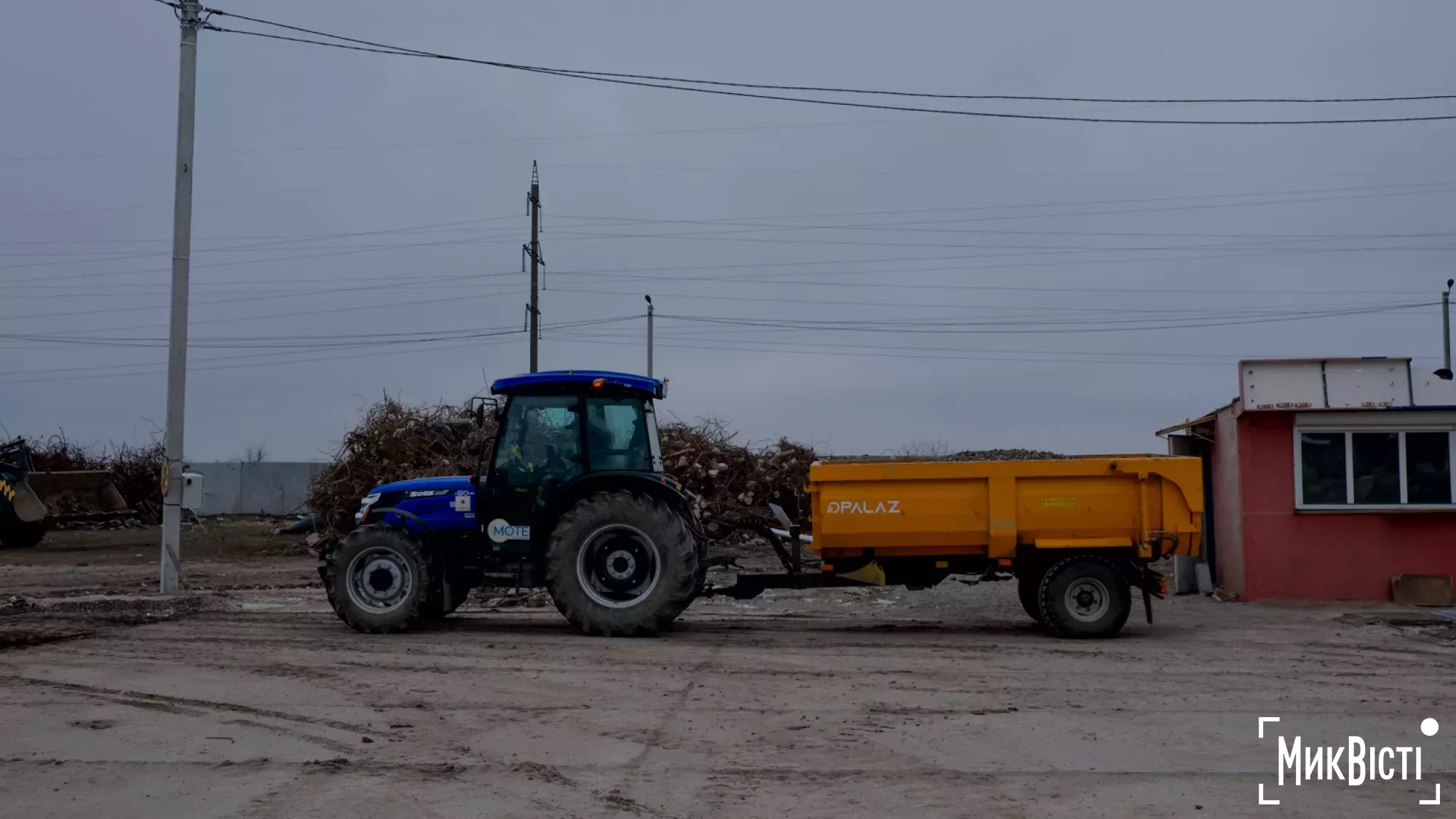 Regional heating company equipment at the waste processing plant in Mykolaiv, February 2026, photo by NikVesti
ELU Avtodorig also uses processed debris to repair roads in Mykolaiv, but only for patching and routine maintenance.
«If we buy new gravel, for example, it has a certain market price. I don't know what it is now because we haven't bought it in a long time. But for us, it's still two to three times cheaper than buying it,» said Vitalii Shevchenko.
One of the latest examples cited by ELU Avtodorig is the section of road through the garage cooperatives, as you drive from Industrialna Street towards the Namyv microdistrict. There, the company only carried out patch repairs to the road, using recycled construction waste.
«If we were to build a normal road, it would cost 50-60 million hryvnias with all the designs, drainage, normal asphalting, pavements, and lighting. But we just filled it in, and it cost a few thousand hryvnias,» added Vitalii Shevchenko.
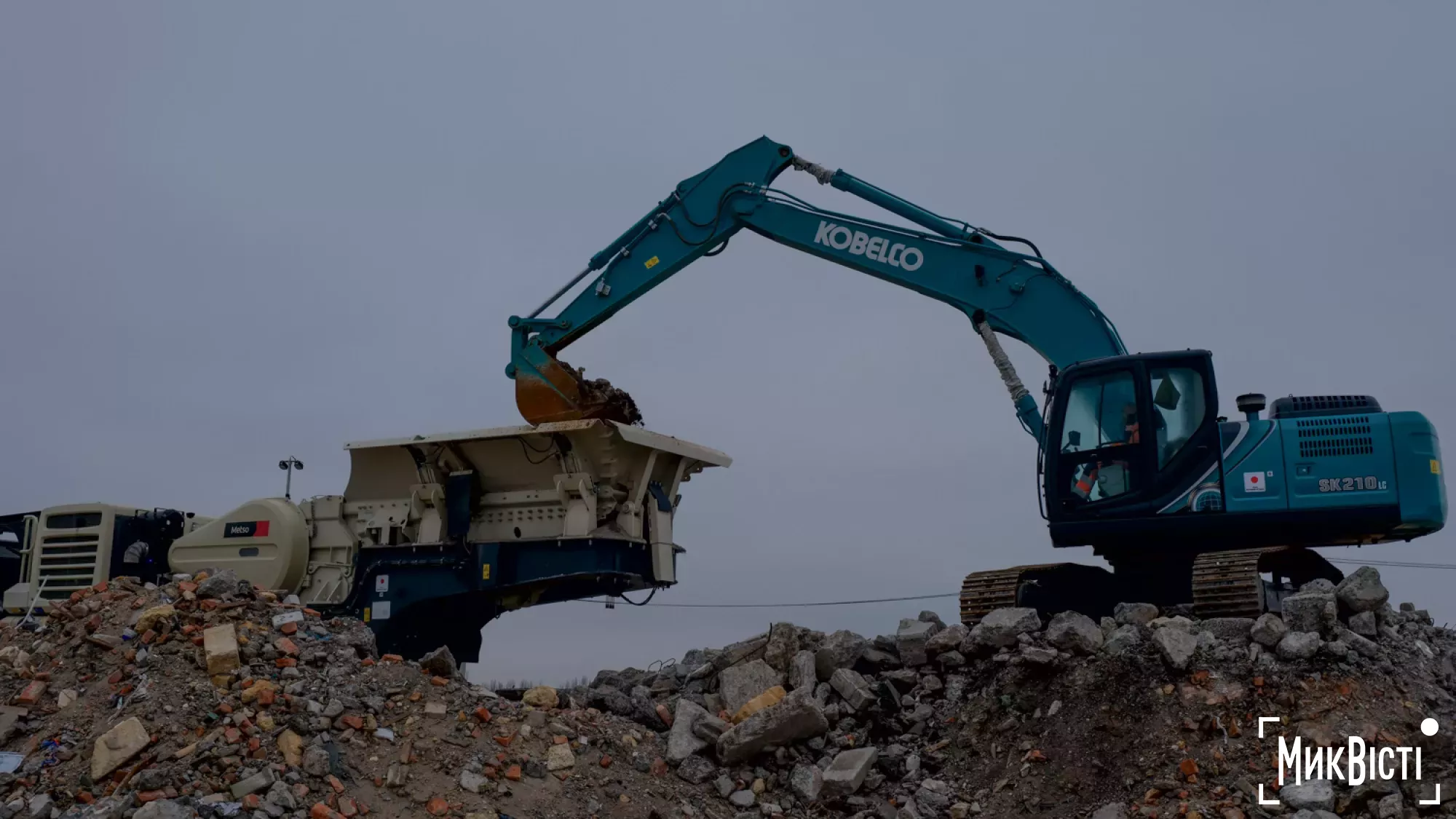 Waste recycling plant in Mykolaiv, February 2026, photo by NikVesti
ELU Avtodorig cannot currently carry out major repairs using recycled demolition waste, as this requires special certification for the recycled raw materials. This is an expensive process, says Vitalii Shevchenko.
«Certification is only required for major repairs. If it is, for example, road filling, then it is not necessary. Certification must be obtained for each batch of recycled materials. Therefore, it is illogical and very expensive. One certificate costs 12,500 hryvnias. That is, you have to get it and send it to Kyiv. There, in the laboratory, they do all this and send a response. That is, it is illogical. If you need to use 15-20 or 100 tonnes of this stone there, it does not cost that much. That is, this is an inappropriate question, because it will not even be the basis for major repairs,» he assured.
What are the environmental risks of accumulating construction waste?
The situation with the accumulation of construction waste is dangerous for the environment, because such construction waste differs from «classic» waste, said Kyrylo Kosourov, chairman of the board of the Association of Enterprises in the Field of Hazardous Waste Management and a practicing ecologist, in a comment to NikVesti earlier. Such raw materials include not only concrete and reinforcement, but also a lot of household items and electrical appliances, which complicates their reuse.
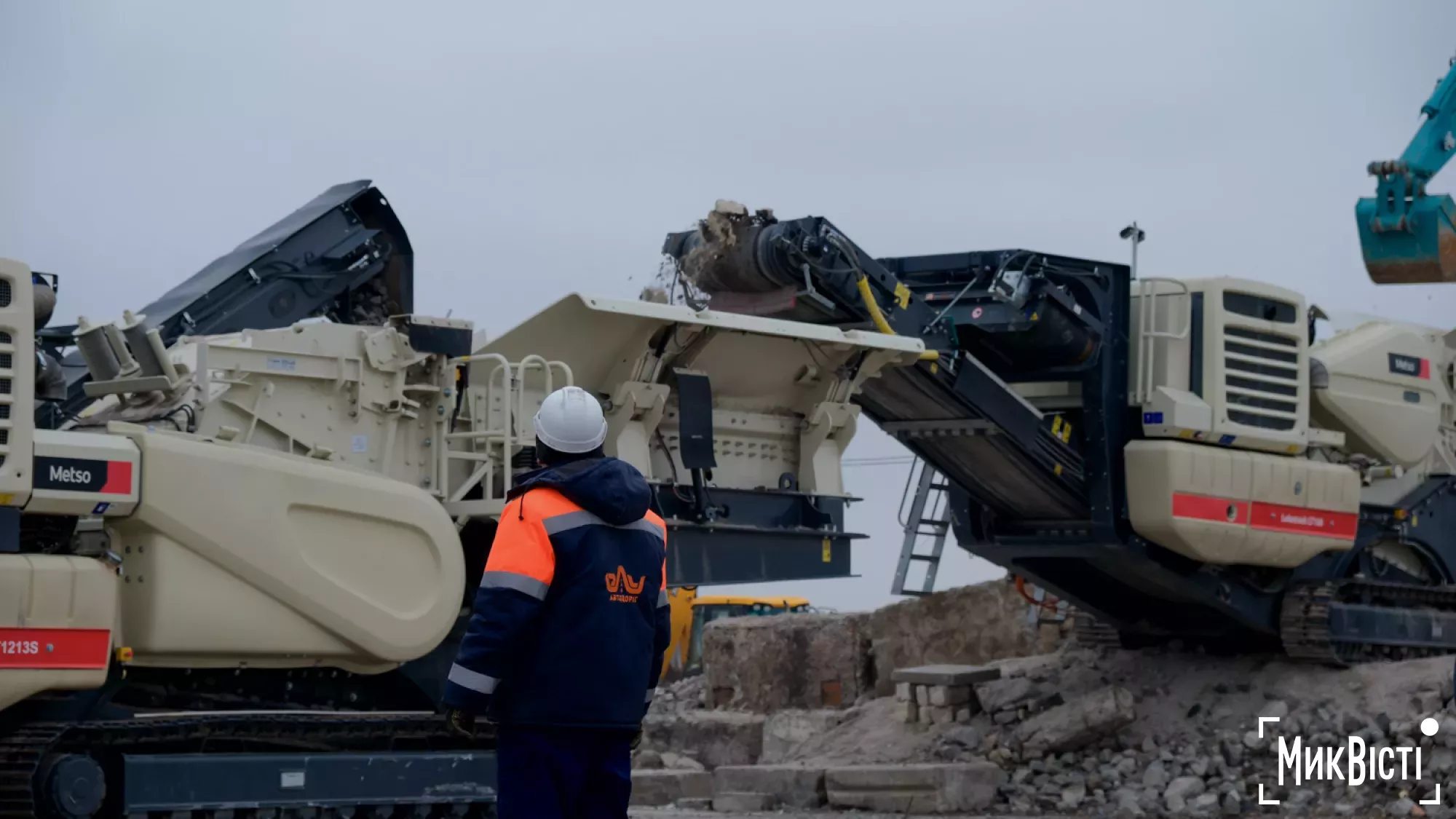 A plant for processing debris waste in Mykolaiv, February 2026, photo by NikVesti
The expert notes that some of the waste contains toxic substances that pollute the air, soil and groundwater. For example, asbestos, which was used to make slate in Soviet times, belongs to the category of hazardous materials. «In this case, the negative impact on the environment is multiplied many times over,» adds Kyrylo Kosourov.
Waste from destruction becomes dangerous from the moment it is created, he said: «A rocket hits, a fire breaks out, and the products of combustion are already entering the atmosphere. Then the debris forms and lies there, it is washed out by sediments, and all of this ends up in the soil and, over time, in the aquifers».
«The most effective thing that can be done now is to dismantle the rubble on site, sort it and crush it. When crushed on site, the volume of this waste is reduced by 5-8 times. Accordingly, less transport is needed to remove it,» said Kyrylo Kosourov.
The plant has processed less than 1% of all debris waste in Mykolaiv
To date, 4.6 million tonnes of debris have accumulated in Mykolaiv. Of this, the plant has processed 6,400 tonnes, according to the Department of Housing and Communal Services of the City Council in response to an information request from NikVesti. In fact, the plant has processed approximately 0.14% of the total amount of debris.
«A large number of objects were dismantled in 2023-2024, but our site only started operating in 2025. The volumes are indeed very large. But it should be understood that not all of it is concrete. There are many components: glass, wood, concrete, iron,» said Ihor Nabatov, first deputy director of the Department of Housing and Communal Services, in a comment to NikVesti.
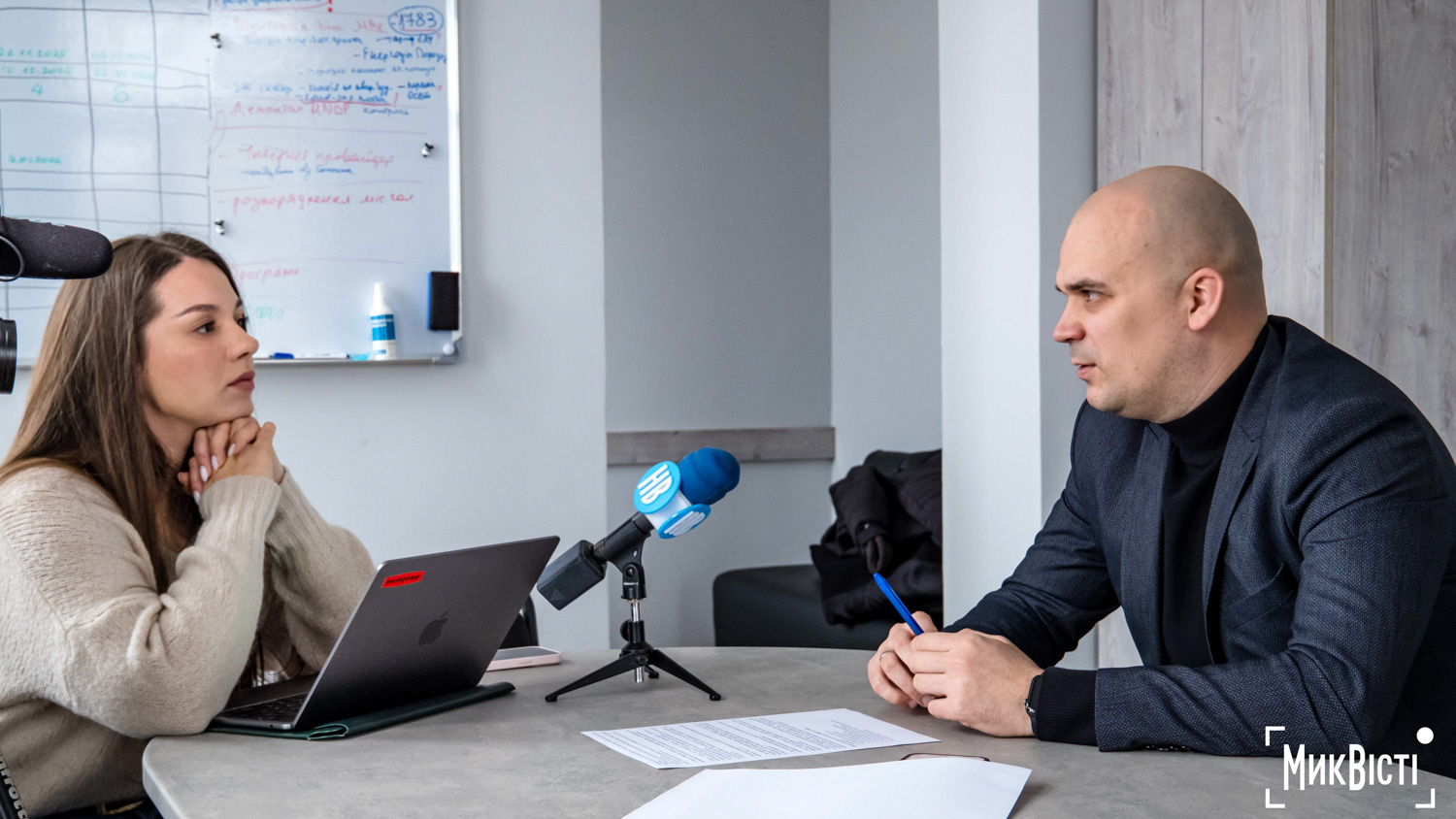 First Deputy Director of the Department of Housing and Communal Services Igor Nabatov during a conversation with a journalist, photo by nikvesti
ELU Avtodorig explained that the plant recycles everything that the city brings them after the demolition of buildings.
«We only process what is brought to us, but we are not the customer, we are not the recipient of funds for this demolition. We process everything that is brought to us,» explained Vitalii Shevchenko, director of the enterprise.
The plant's total capacity to process demolition waste is 40-50 thousand tonnes per month, he said.
«We have a very large capacity for processing recyclable raw materials. Compared to other cities, I believe that it is either the largest or among the top three. In fact, our capacity is to process up to 40-50 thousand tonnes per month of raw materials that can be recycled,» says Vitalii Shevchenko.
In fact, it will take the plant approximately 10 years to process 4.6 million tonnes of debris from the destruction in Mykolaiv.
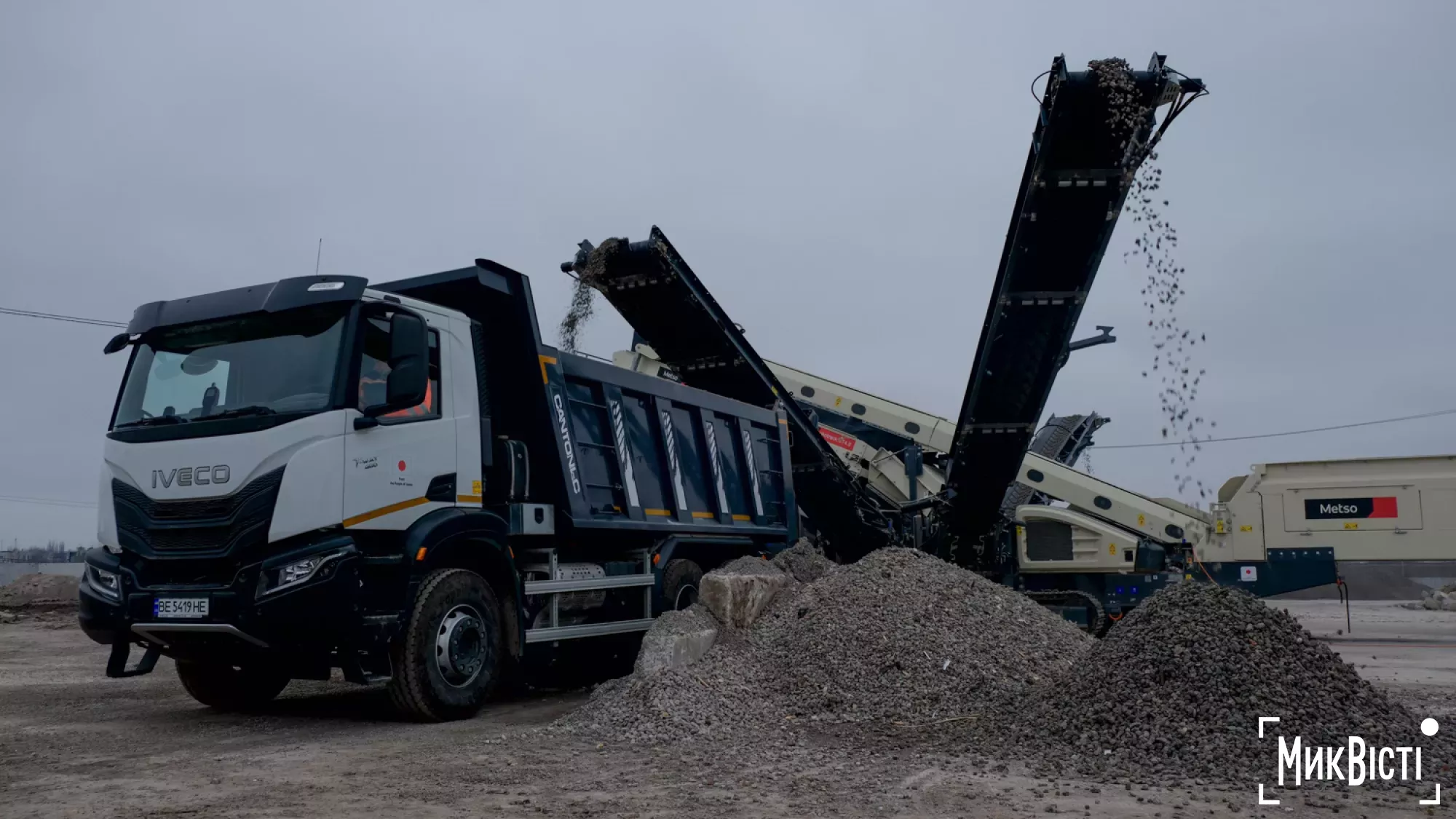 Waste processing plant in Mykolaiv, February 2026, photo by NikVesti
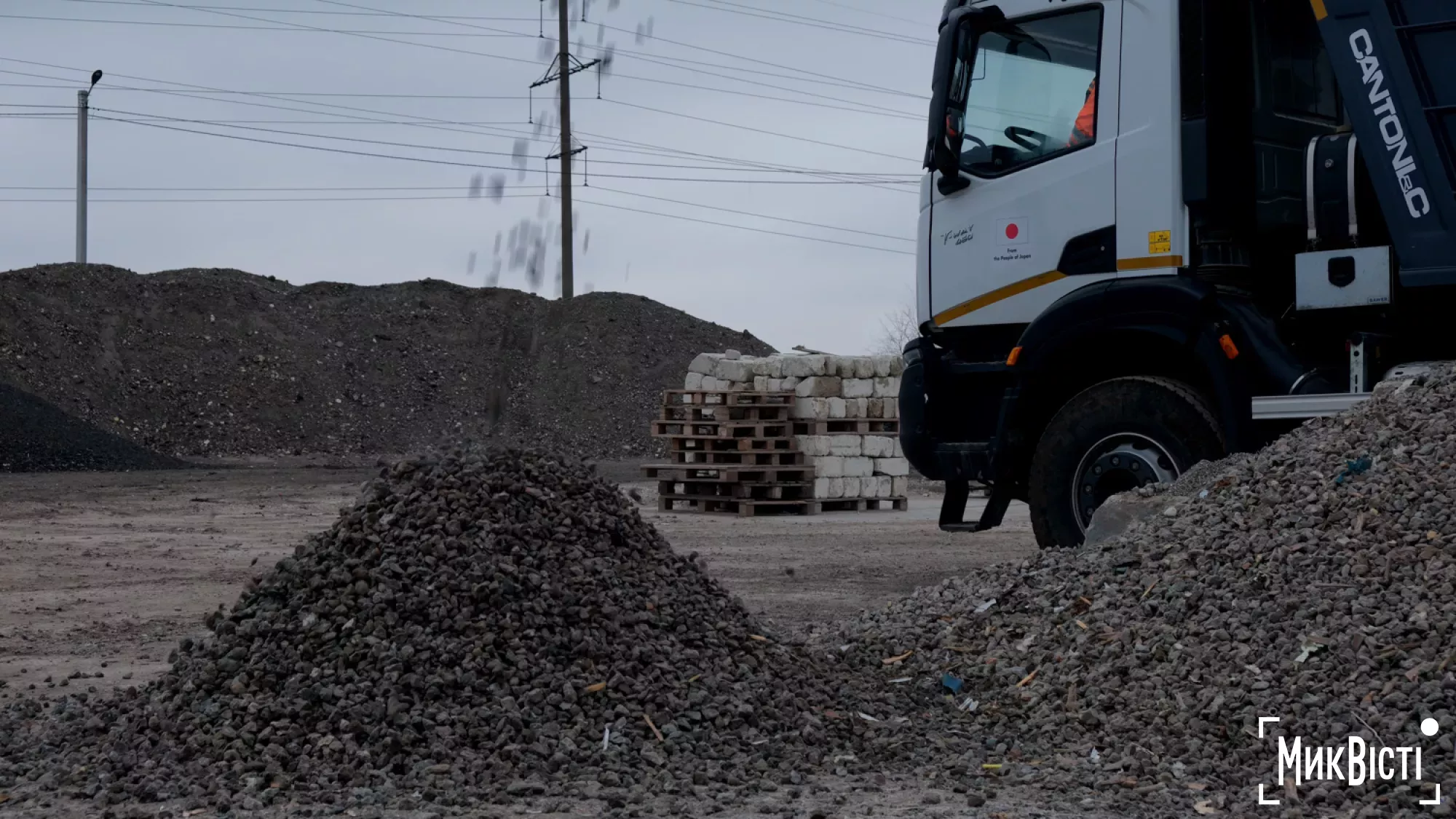 Waste processing plant in Mykolaiv, February 2026, photo by NikVesti
However, the difficulty lies in the fact that construction waste must be sorted before it can be processed, notes Vitalii Shevchenko, director of ELU Avtodorig. This process is done manually.
«Sorting means separating bricks and concrete, metal, wood, glass, and asbestos-containing slate from the pile. All of this must be manually measured with a dosimeter to ensure that asbestos levels do not exceed the norm. Only after that is it sorted manually and then sent for processing,» explained Vitalii Shevchenko.
The plant can currently sort a maximum of 10-15 thousand tonnes per month, he says. However, this is provided that there are enough people to carry out this process.
«Currently, there are only three sorters working there, but 40 people are needed to increase the pace to the capacity that is available for processing. It takes a lot of time,» explained Vitalii Shevchenko.
The plant costs 1 million hryvnias per month to operate
The Mykolaiv city council has spent 9.5 million hryvnias from its budget on maintaining the demolition waste processing site over the nine months it has been in operation, according to a response from the city council's Department of Housing and Communal Services to an information request from NikVesti On average, this amounts to about 1 million 55 thousand hryvnias per month.
Currently, the plant does not earn money from sorting, processing, and temporary storage of processed demolition waste, the department said. However, earlier they talked about plans to provide demolition waste processing services to other communities. They were offered two options for cooperation:
- to transfer all waste for processing, paying a lower price;
- to receive the processed material back, but this option is more expensive.
«In my opinion, for communities located near the city of Mykolaiv, the second option would be more logical in terms of implementing the resolution. But it is not their choice, as they say.
We discussed this with JICA, and they supported it. Unfortunately, this comes at a cost to the communities, because we can only provide funding from the city of Mykolaiv for our own waste,» said Ihor Nabatov, First Deputy Director of the Department of Housing and Communal Services.
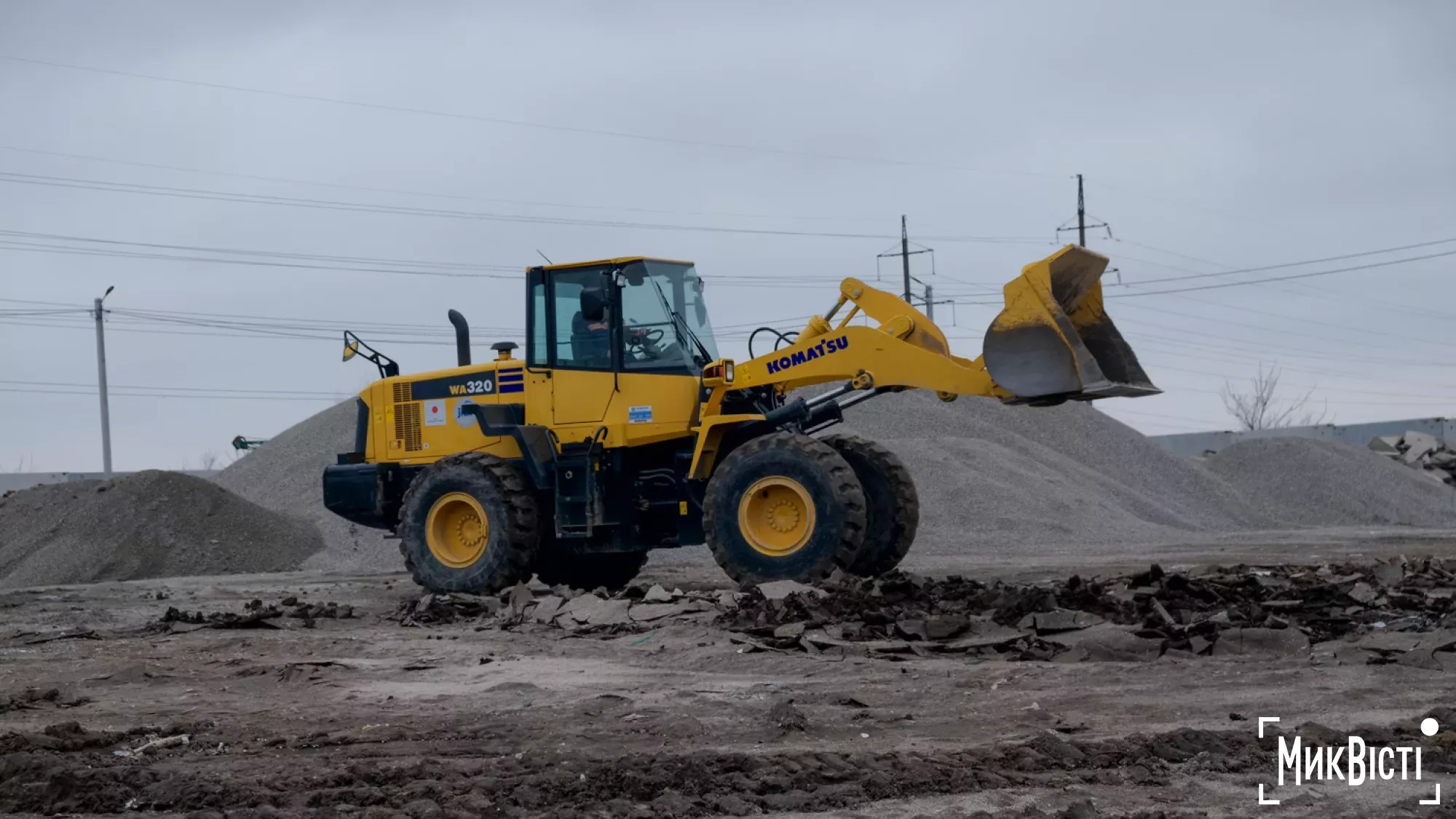 Waste processing plant in Mykolaiv, February 2026, photo by NikVesti
Vitalii Shevchenko, director of the municipal enterprise ELU Avtodorig, believes that communities from neighbouring regions will not transport their own demolition waste for processing because it is unprofitable for them. Such negotiations have already taken place with communities in the Kherson and Dnipropetrovsk regions.
«We have already had such a dialogue with several communities. We offered them to bring their waste to us for processing. But this is still an unresolved issue, because transporting (rubble, — note) from other communities is expensive. In other words, they understand that it is not profitable for them to transport waste here and then take it away. Therefore, other communities are not yet transporting waste to us. I believe that they are unlikely to do so. But that is just my opinion. Perhaps I am wrong,» said Vitalii Shevchenko.
Despite this, the Port of Pivdennyi and the Kostiantynivka community in the Mykolaiv region have approached Mykolaiv, as they want to process their own demolition waste at the Mykolaiv site.
«We understand that most likely there will be very large volumes at the Pivdennyi port. The Kostiantynivka community also has quite large volumes. It all comes down to the fact that we need to set a price for how much it will cost for these communities,» said Ihor Nabatov, first deputy director of the Department of Housing and Communal Services, in a comment to NikVesti.
He added that the city authorities have already prepared a draft decision on setting the price for such a service for communities. This issue is planned to be submitted to the executive committee for consideration on 25 February.
«Today, ELU Avtodorig has finally prepared the relevant calculation, which has already been verified by the Department of Economic Development. At the next executive committee meeting, I think on 25 February, we will submit this price for approval. So far, we are only approving the price that provides for the processing and return of processed demolition waste directly to the customer,» explained Ihor Nabatov.
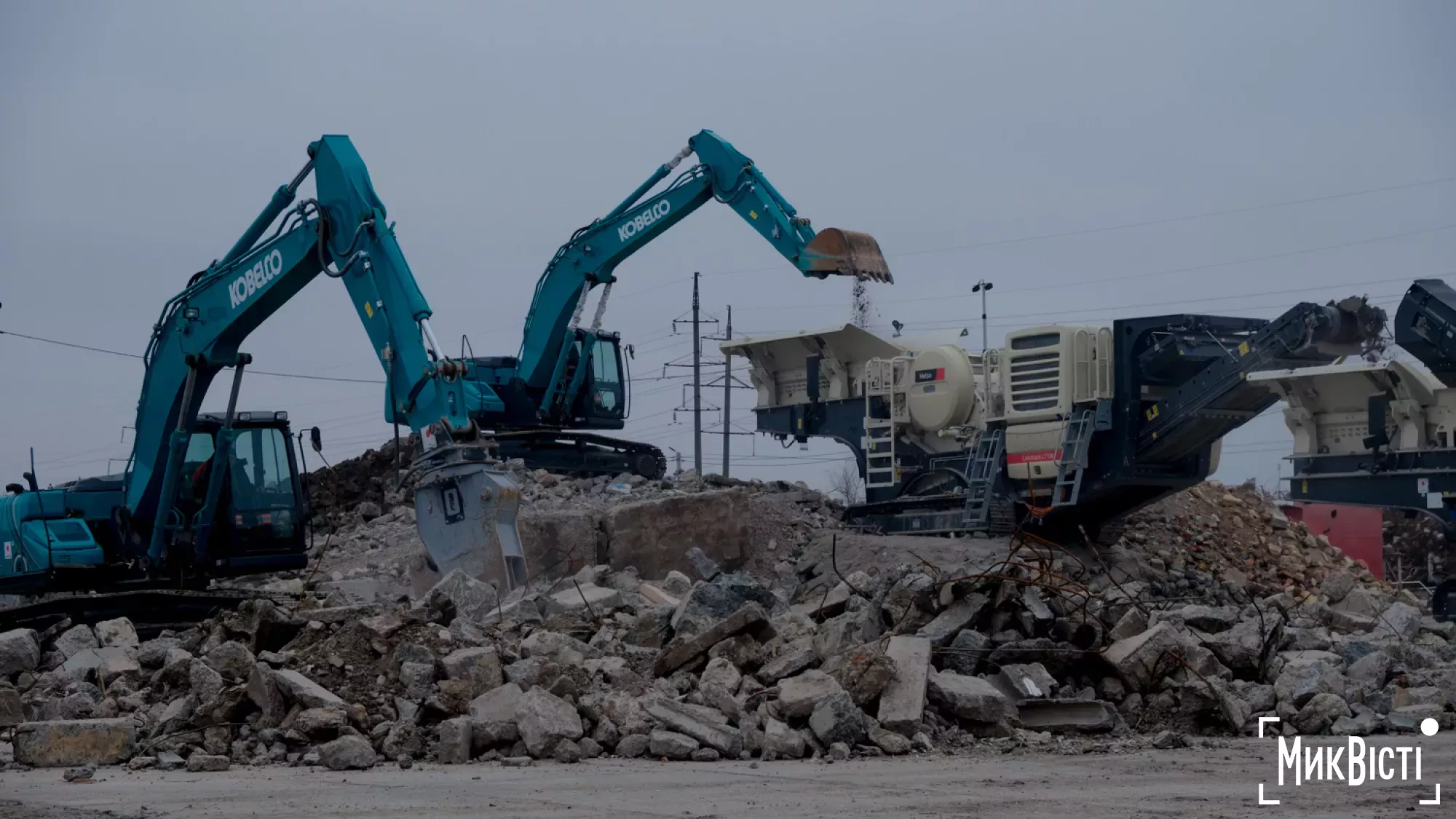 Waste processing plant in Mykolaiv, February 2026, photo by NikVesti
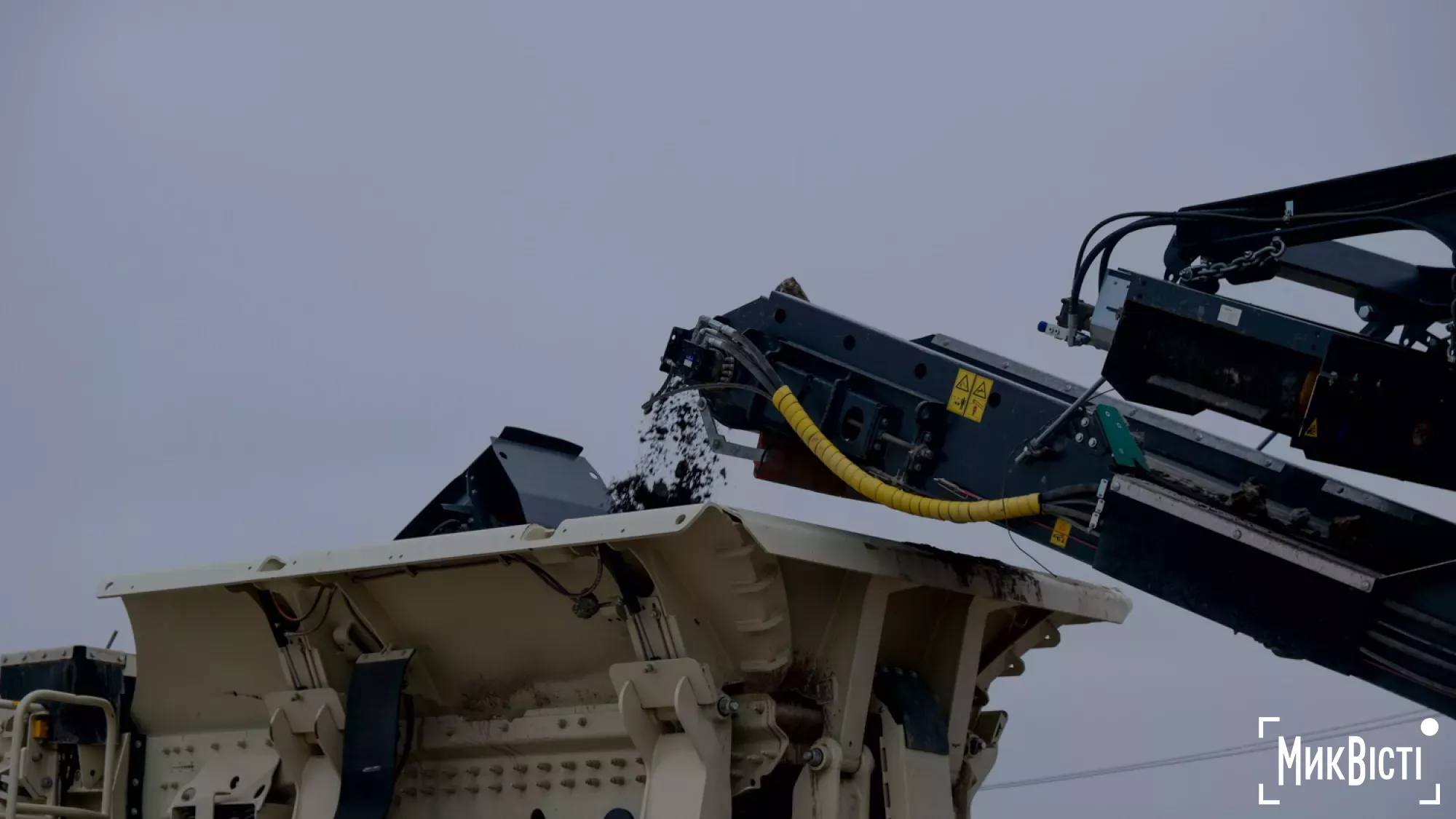 Waste processing plant in Mykolaiv, February 2026, photo by NikVesti
Mykolaiv wants to produce paving stones — this will require 30 million hryvnias
In the future, they want to use the processed debris to produce paving stones — these plans were previously announced by the mayor of Mykolaiv, Oleksandr Sienkevych. To this end, he said, with the support of international partners, the city intends to acquire a set of equipment for concrete production.
«We will be able to use our own funds to produce building materials from construction waste. They can be used for work in the city. Our goal is to create conditions for a circular economy in Mykolaiv, where waste becomes money. And to save the city money, for example, for the creation of various concrete products. This includes paving stones, which will not be purchased but will be produced by the city itself at a minimal cost,» explained Oleksandr Sienkevych.
The city expects to receive 30 million hryvnias from a donor, the director of ELU Avtodorig told NikVesti. These funds are not included in this year's city budget.
«The desire is there, we are looking for a donor. If the donors give the money, we will do it. This year, there is no budget to allocate these funds from the budget. It is approximately 30 million hryvnias,» said Vitalii Shevchenko.
In addition to producing paving stones, the city also wants to build an asphalt plant on the site of a construction waste processing facility. This was announced by Mayor Oleksandr Sienkevych at a briefing in January 2026. The city has already compiled a list of the necessary equipment and a description of the business processes and is currently looking for donors.
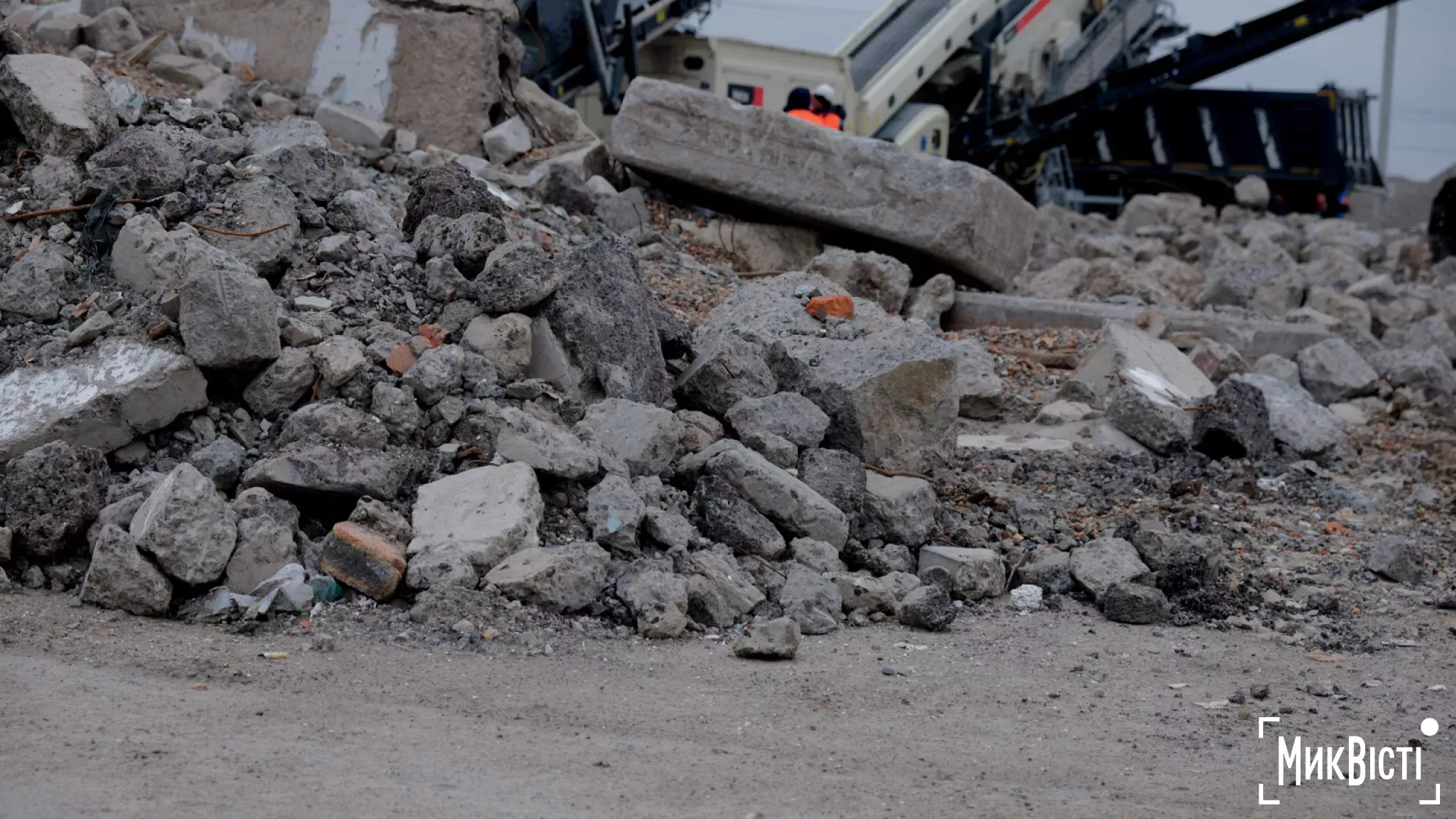 Waste processing plant in Mykolaiv, February 2026, photo by NikVesti
Mykolaiv has received a modern site with equipment and support from international partners. The recycled waste is already being used for road repairs and municipal works — in fact, the rubble is getting a second life.
However, the scale of processing is not yet commensurate with the volume of destruction: the plant has processed only 0.14% of the 4.6 million tonnes of waste. The city authorities say that the plant is capable of processing up to 50,000 tonnes of waste per month. However, this figure is meaningless when the maximum capacity for sorting this waste is 15,000 tonnes per month. However, the plant currently lacks this capacity due to a shortage of people to manually sort the debris, which is then sent for recycling.
Whether the city will be able to pick up the pace and turn recycling into a systematic tool for reconstruction depends on the organisation of the process and human resources, which is the responsibility of the city authorities.
Yuliia Boichenko, NikVesti


This material was produced as part of the "Improving Ukrainian Media Resilience" project, implemented by the Fondation Hirondelle (Switzerland) and IRMI, the Institute for Regional Media and Information (Ukraine). The project is funded by Swiss Solidarity.


Чому ви читаєте «МикВісті»? Яка наша діяльність найбільш важлива для вас? Та чи хотіли б ви стати частиною спільноти читачів? Пройдіть опитування, це анонімно і займе 5 хвилин вашого часу