
When will Mykolaiv get drinking water in the taps and how much will it cost?
-

- Yuliia BoichenkoReporter
-
 30000 +
Now it’s global! Over 30,000 visitors have chosen this content!
30000 +
Now it’s global! Over 30,000 visitors have chosen this content!
-
 Prefer on Google
-
30K
Now it’s global! Over 30,000 visitors have chosen this content!
-
Prefer on Google
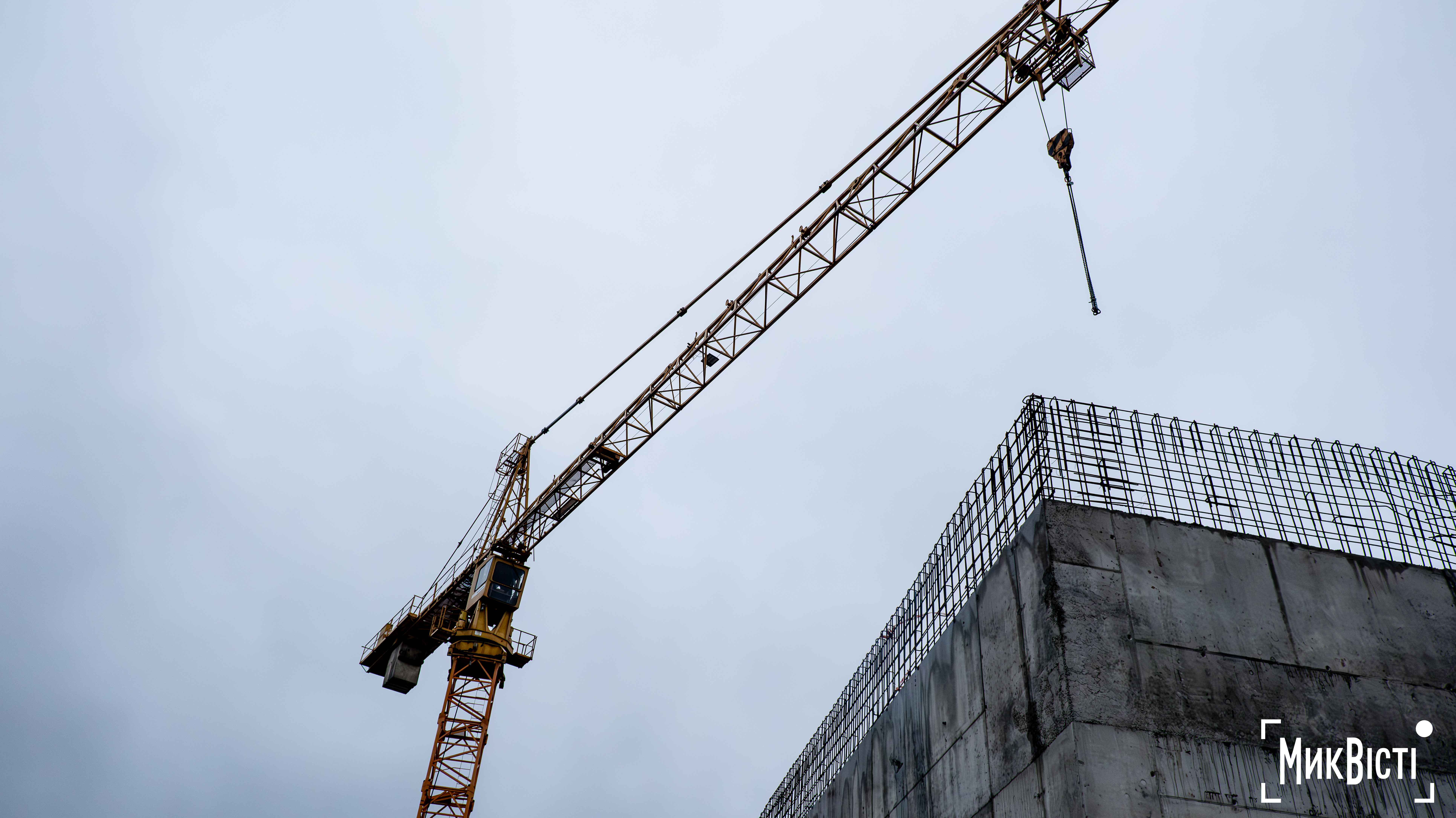 Construction of a water treatment plant for Mykolaiv, photo by NikVesti
Mykolaiv has recently received a long-awaited water pipeline, which already allows the city to supply water of better quality than the water that was in the taps of Mykolaiv residents two months ago. Currently, the water comes from the Southern Bug River. But to provide the city of almost half a million people with drinking water, it was necessary to build new treatment facilities. Various projects and sources of funding were considered, and eventually the funds were allocated from the state budget.
NikVesti visited the place where water is taken and supplied to Mykolaiv via a new water supply system and where new water treatment plants are being built. Read our article to find out when the city will get quality water in its taps and what the tariff will be.
What does the place that pumps water for Mykolaiv look like?
«On 28 August, the first 5,000 cubic metres of water went to Mykolaiv», recalls Serhii Sukhomlyn, Head of the State Agency for Reconstruction. And the full-fledged official supply of centralised water supply from the new water pipeline began on 7 October 2025.
Hello! I am Yuliia Boichenko, the author of this article.
Thank you for your attention to our texts — it means a lot to the NikVesti team.
We regularly publish in-depth materials for those who want to understand the topic and get to the heart of the matter.
We have dozens of examples when our journalism, together with our readers, has influenced situations and changed them.
Join the NikVesti Readers’ Club — support independent journalism that matters.
Support us by joining the NikVesti Club
We are standing by the Southern Bug River. This is the place where water is taken from for Mykolaiv.
«The water is taken from here through four huge thousand-metre-long pipes, almost 700 metres long, and is transferred to the pumping station», explained Nataliia Zhadan, Head of the Regional Water Resources Office in Mykolaiv Region.
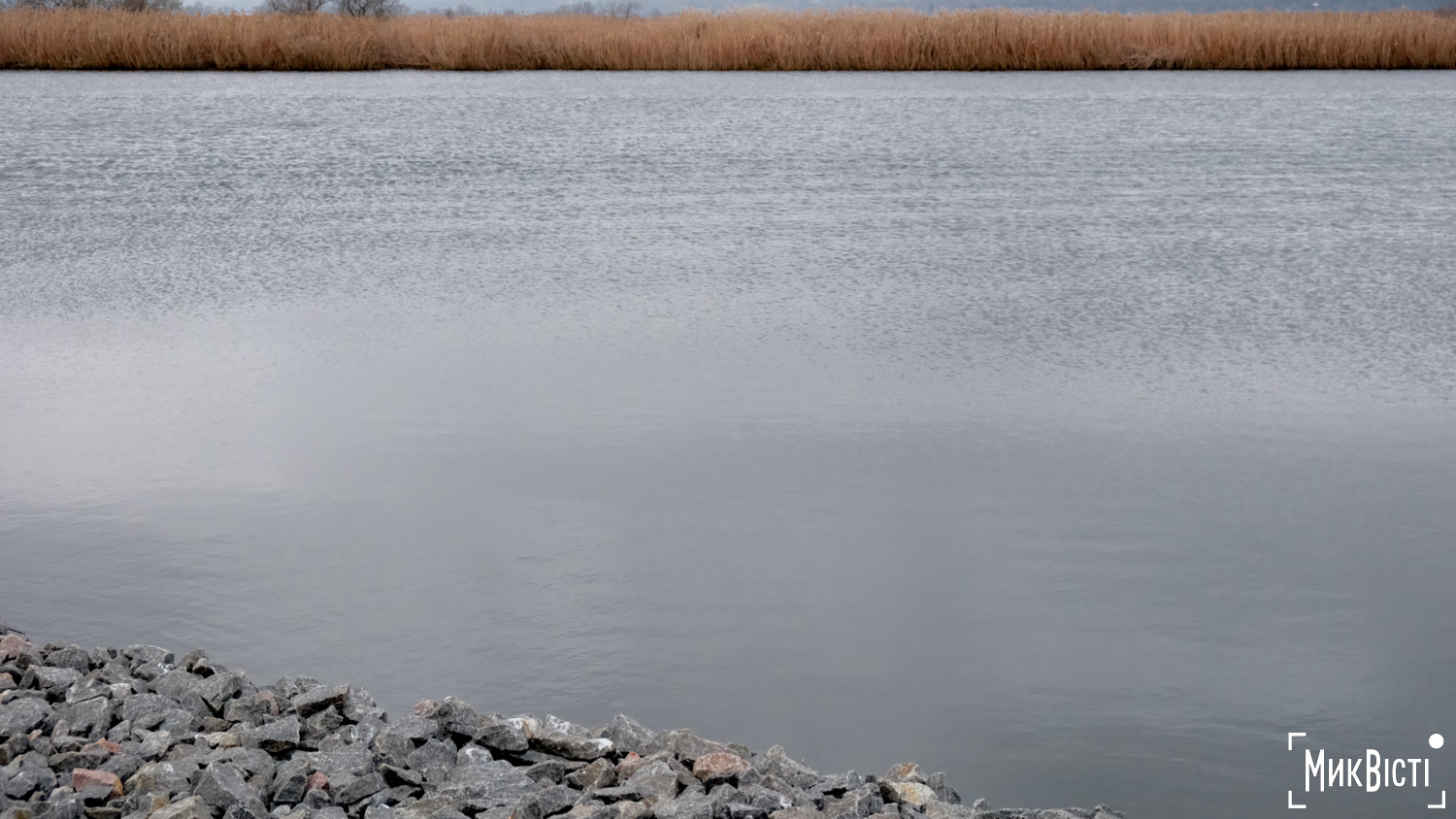 The water intake point for Mykolaiv, the Pivdennyi Buh River, photo by NikVesti
Next, we moved to the first pumping station, one of three existing ones that pump water from the river and supply it to Mykolaiv. It is located four metres underground and is poured with monolithic concrete. In fact, all three pumping stations are anti-Shahed, says Sukhomlyn.
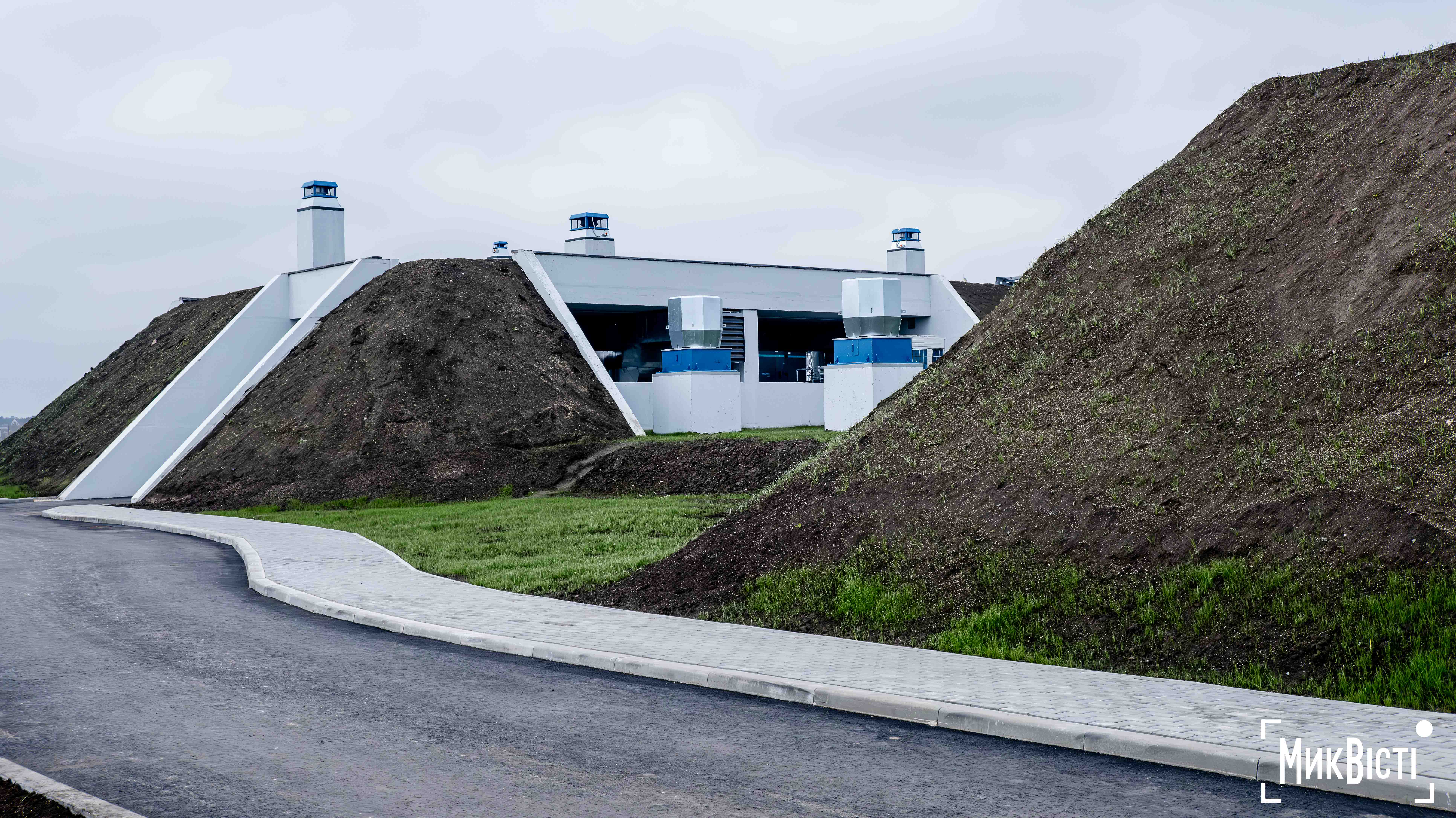 Pumping station, photo NikVesti
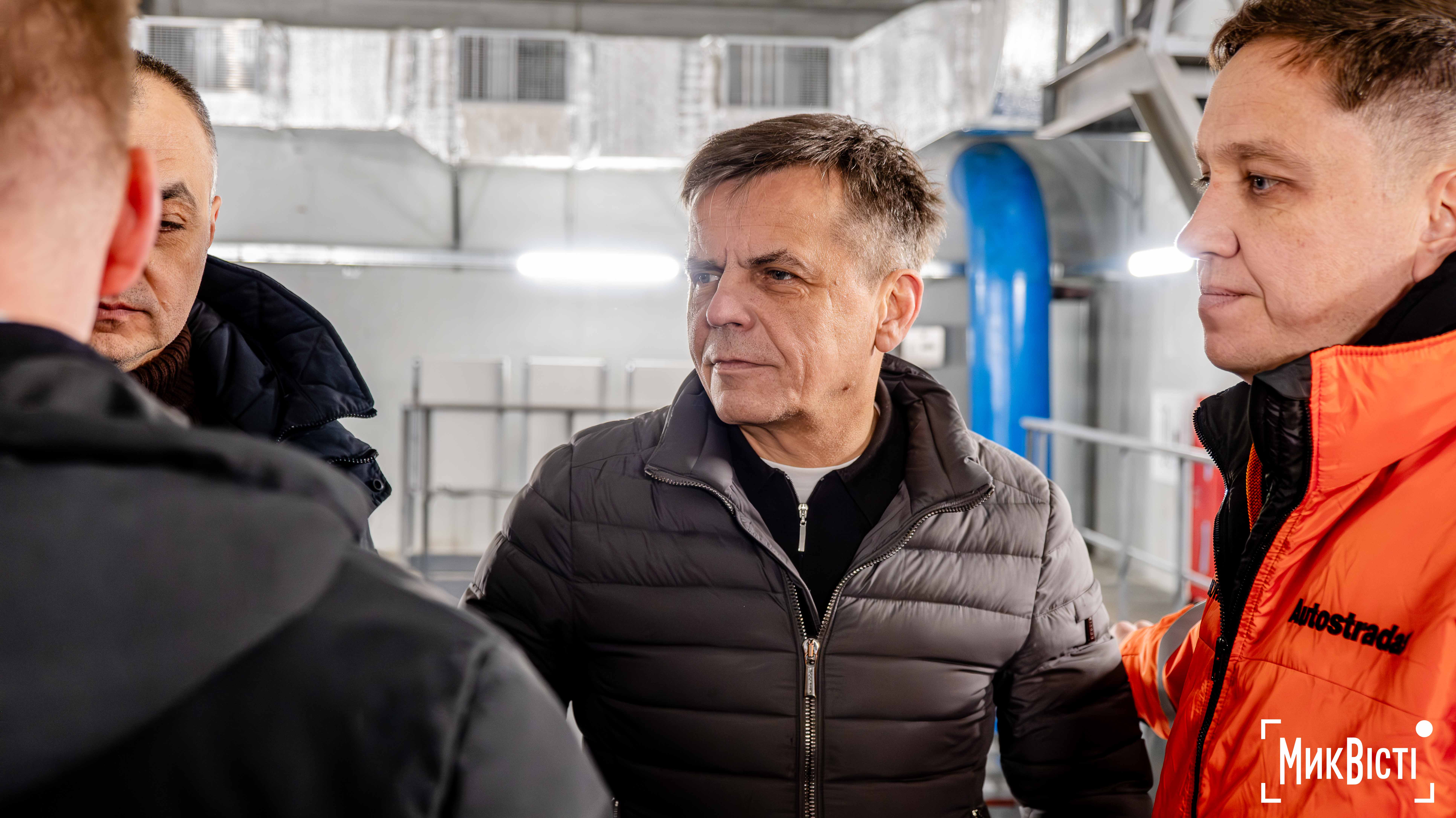 Head of the State Reconstruction Agency Serhii Sukhomlyn, photo by NikVesti
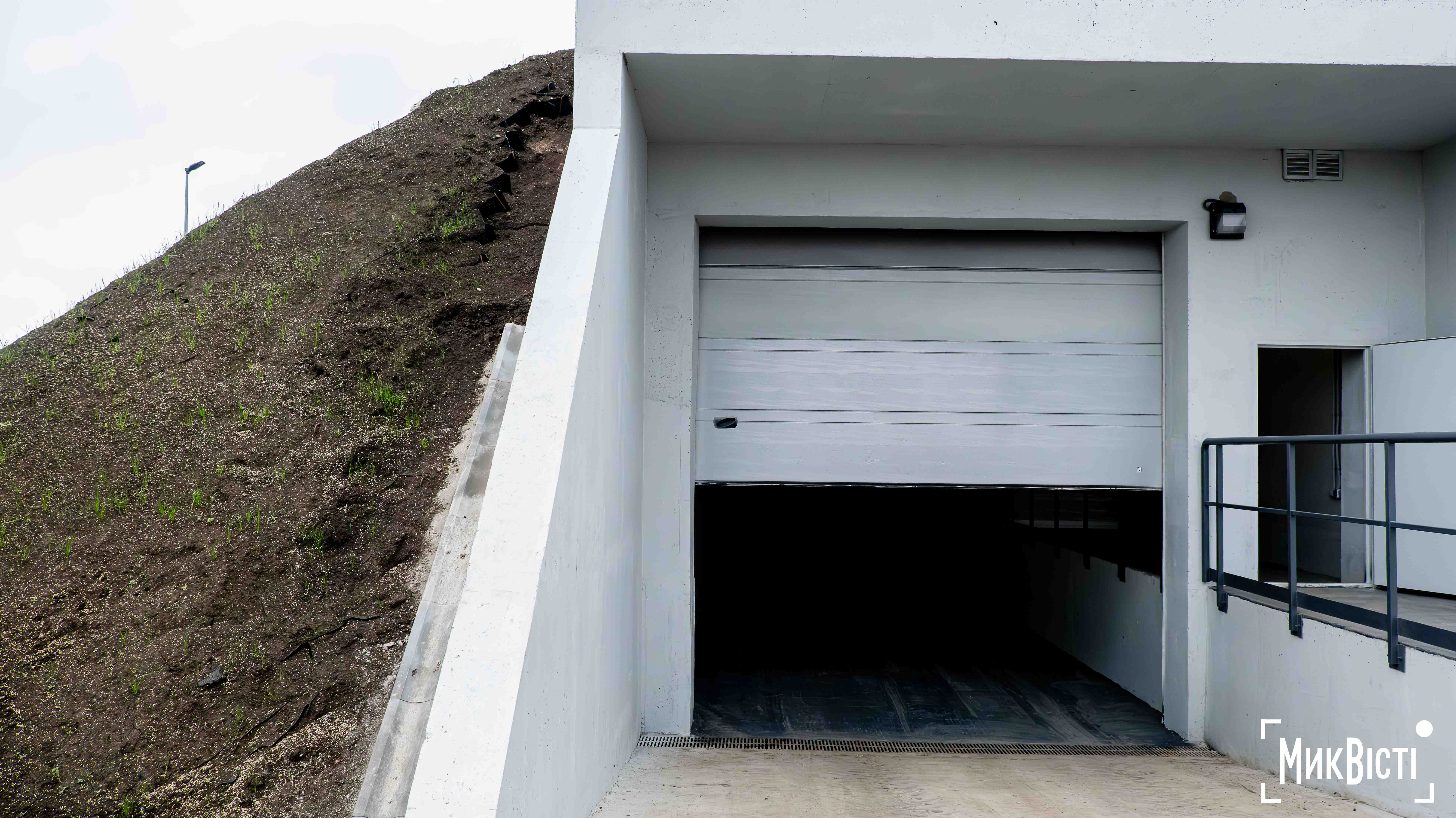 A pumping station, photo by NikVesti
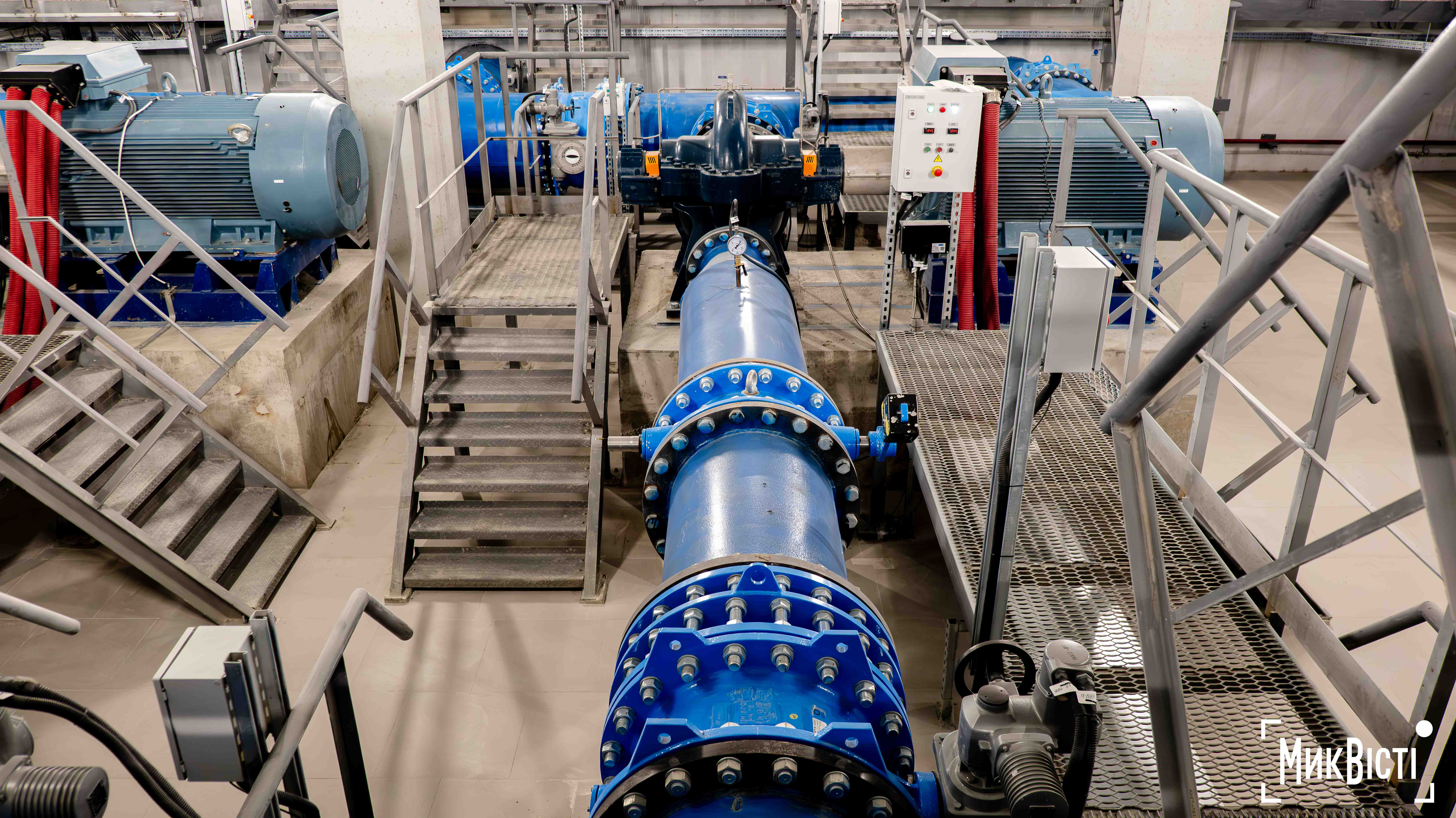 Pumping station, photo by «NikVesti»
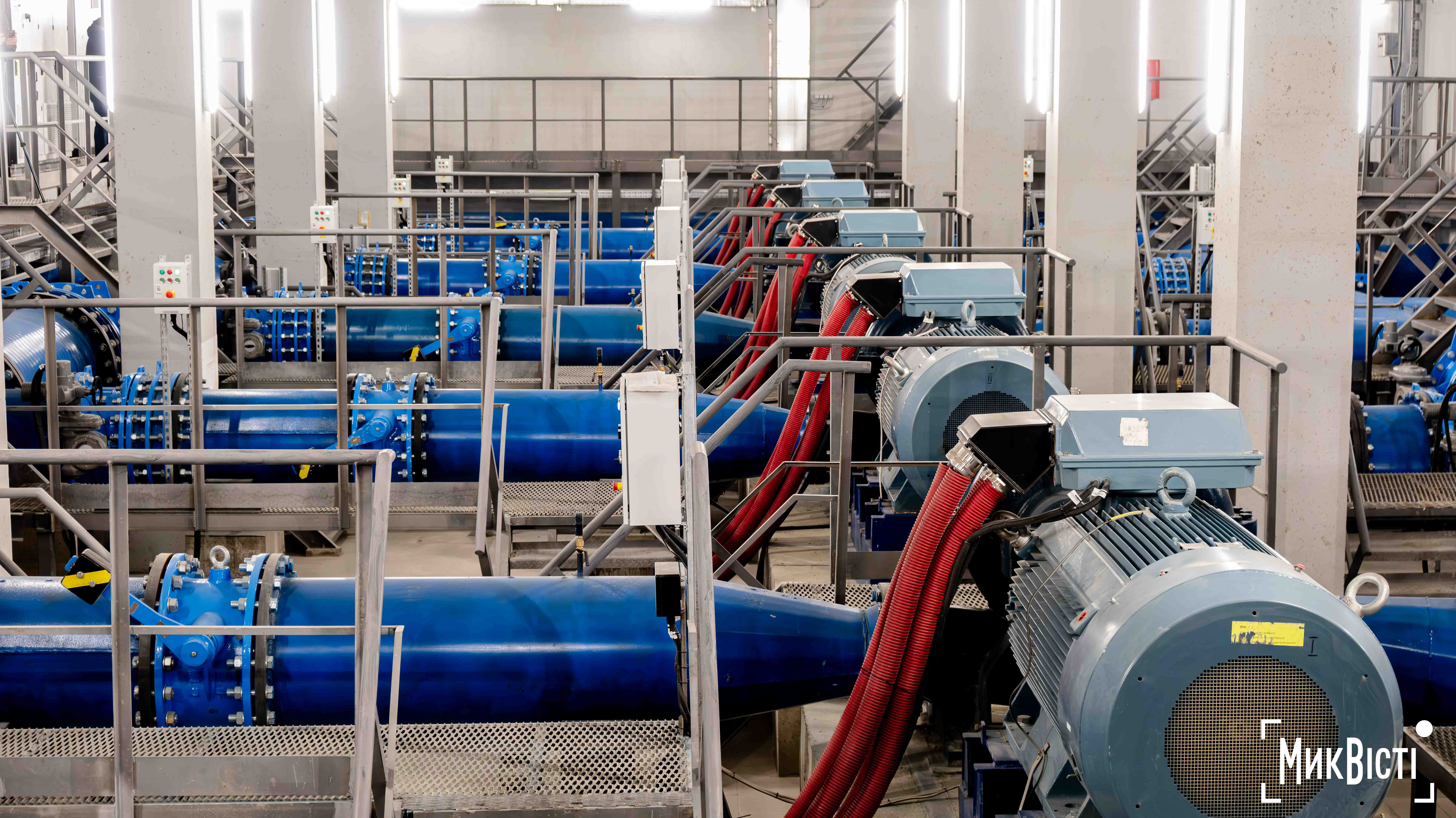 Pumping station, photo by NikVesti
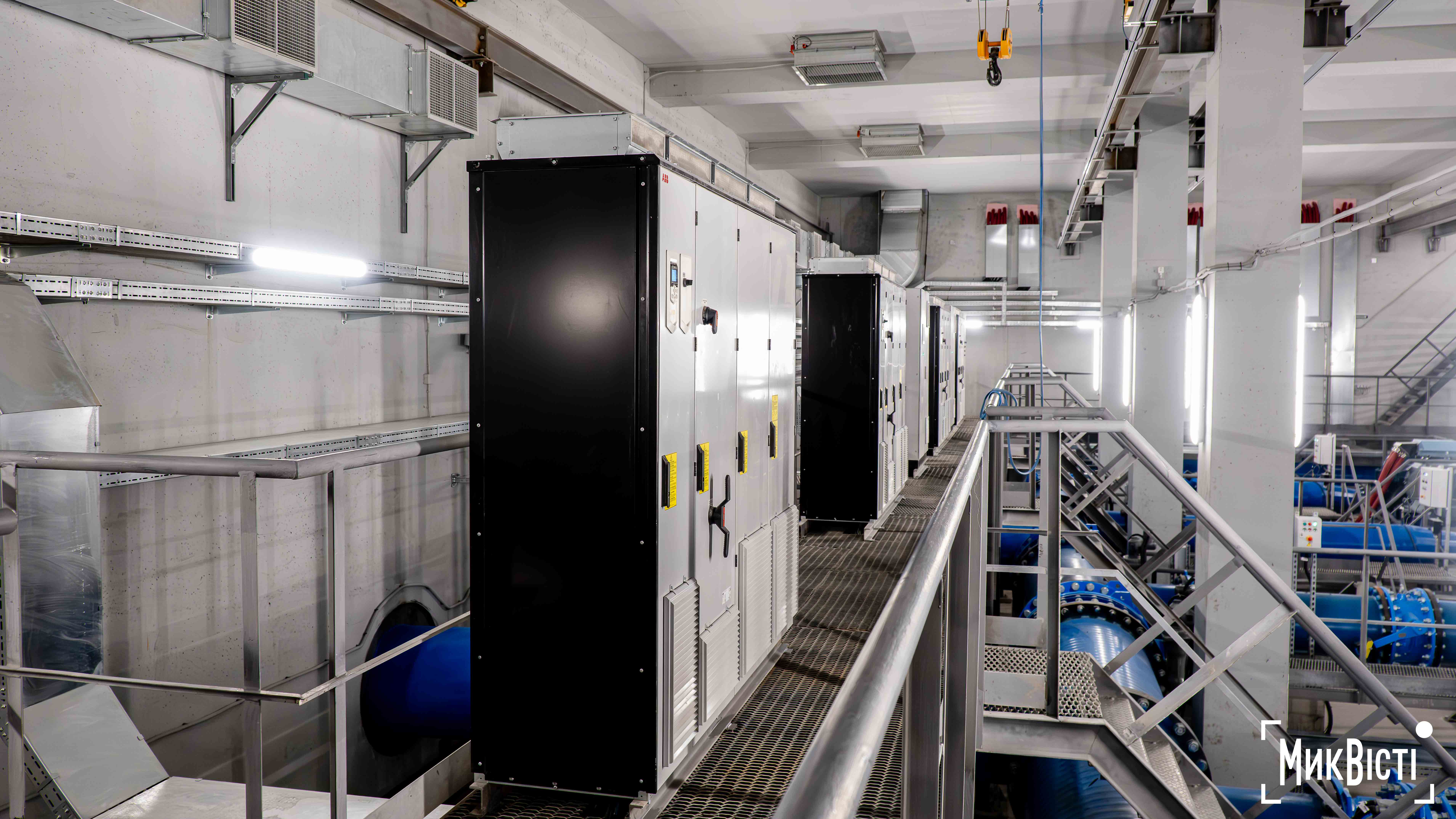 Pumping station, photo NikVesti
To ensure uninterrupted operation during power outages, the pumping stations were equipped with generators and solar panels, says Nataliia Zhadan.
«The 1.5 megawatt solar panels are one of the sources of additional power for our pumping station. In addition, we have two huge generators of 1400 kilowatts each. This allows us to work in blackouts all the time», she explained.
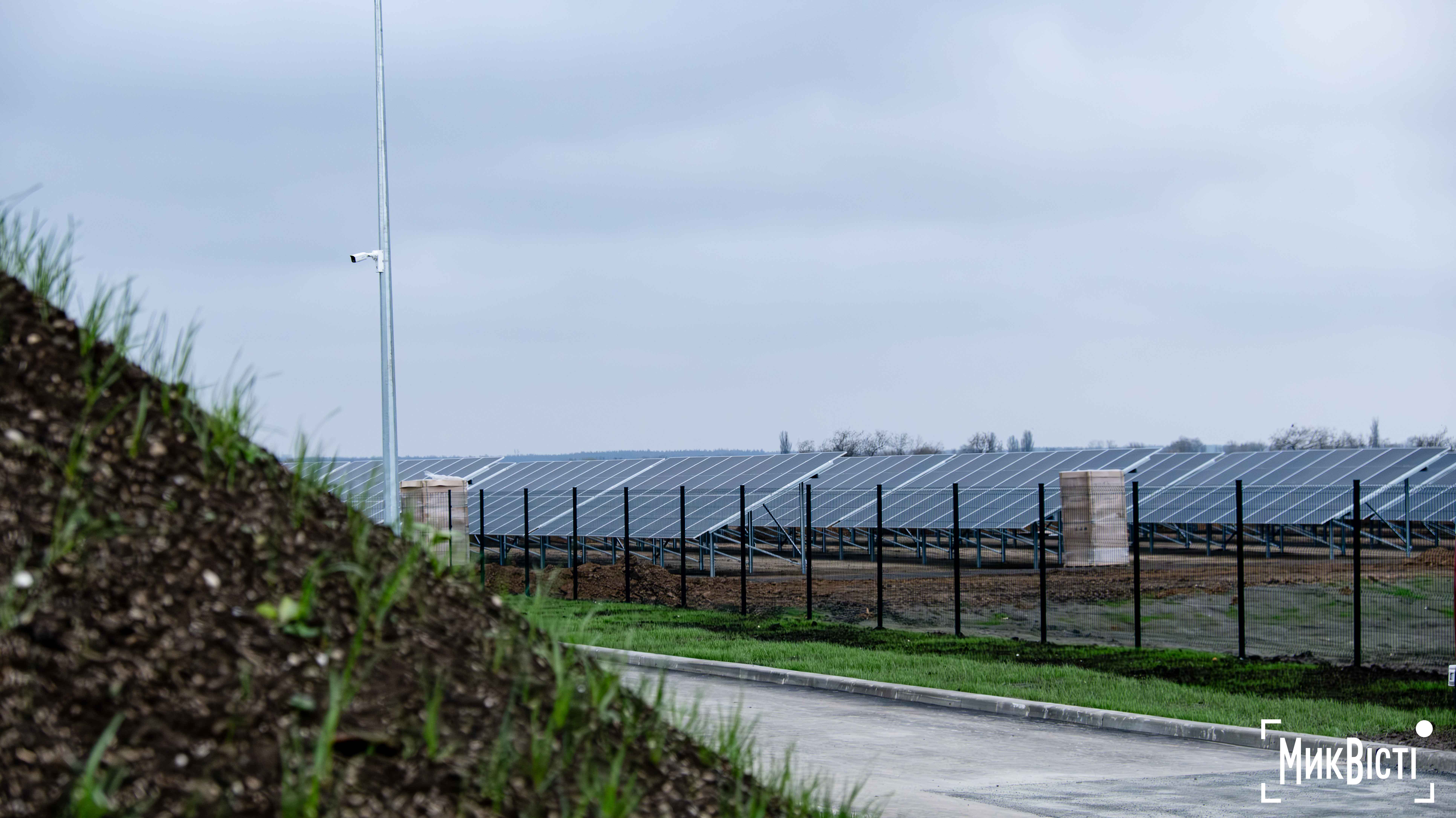 Solar panels, photo NikVesti
Serhii Sukhomlyn added that during the construction of the water supply system, the type of pipes was carefully chosen, as it also helps to save on electricity consumption. In simple terms, it works like this: when the city pumps water through the water supply system, the pumps work against the hydraulic resistance — that is, against how «difficult» it is for water to move through the pipe. The lower the resistance, the less energy the pumps need.
«We calculated that this pipe, which is used in this water supply system, will save Mykolaiv about 1.5 billion hryvnias in electricity costs over 20 years. This is just the type of pipe», said the head of the State Agency for Reconstruction.
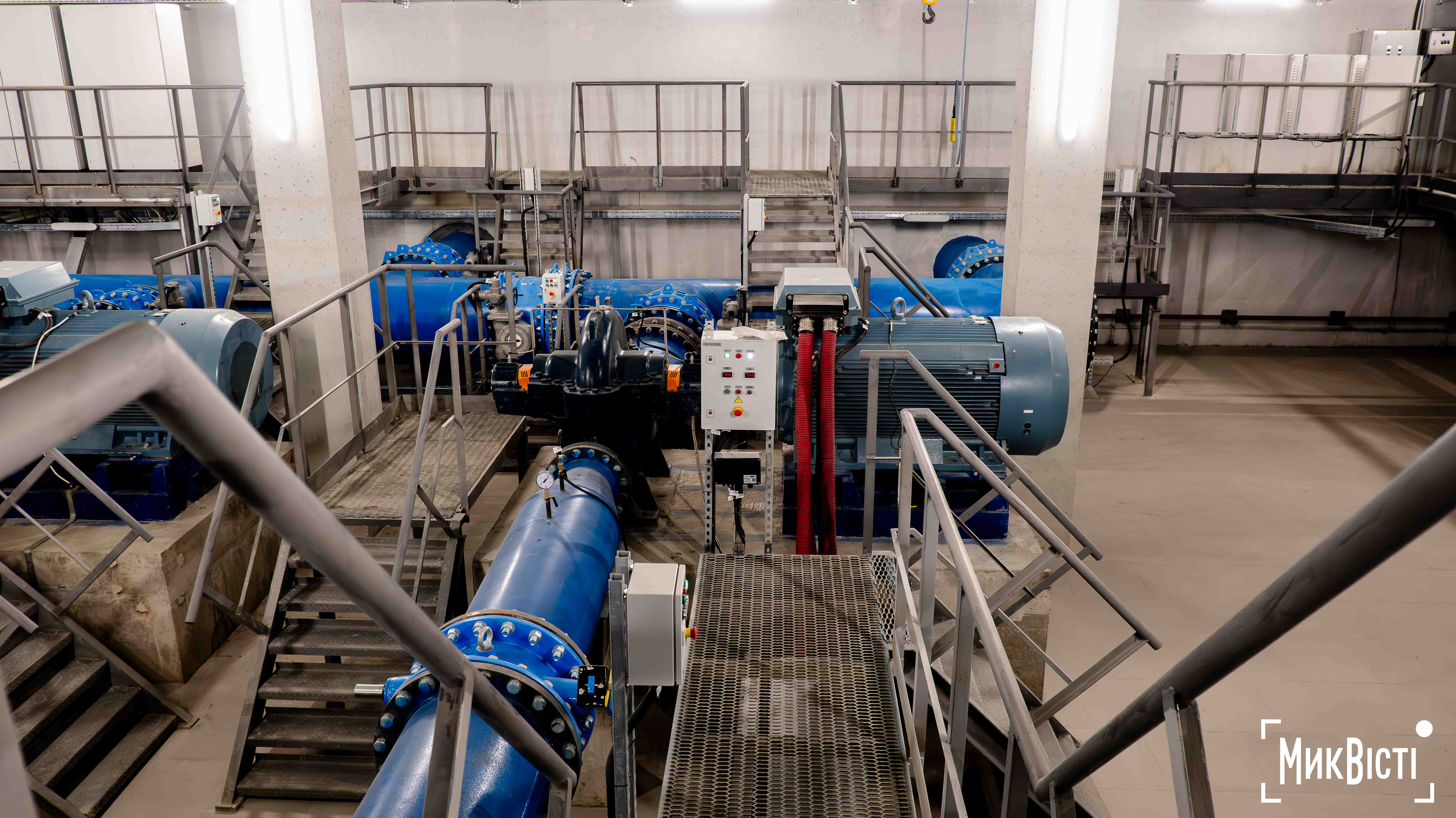 Pumping station, photo NikVesti
When will Mykolaiv residents be promised quality water in their taps?
Initially, the construction of new water treatment plants for Mykolaiv was planned to be financed by loans from the European Investment Bank, with the Danish government providing another part of the funds as grant support.
The project took several years to implement and was supposed to help provide the city with water of European standards, Kristina Mikulova, Head of the EIB's Regional Centre for Eastern Europe, explained earlier in a commentary to NikVesti. Therefore, she explained, in order to provide the city with quality water, it was necessary to implement «a temporary solution» and «a long-term solution»:
- «The temporary solution» is the launch of a new water supply system with modernised water treatment facilities that the city has. Funds for their modernisation should be allocated by the state. This will allow the city to supply treated water to the taps of Mykolaiv residents, but not yet of drinking quality.
- «The long-term solution» is to build new water treatment facilities. Funds for this are provided by the European Investment Bank (loan) and the Danish government (grants). This project will take several years to complete and should help provide the city with water of European standards.
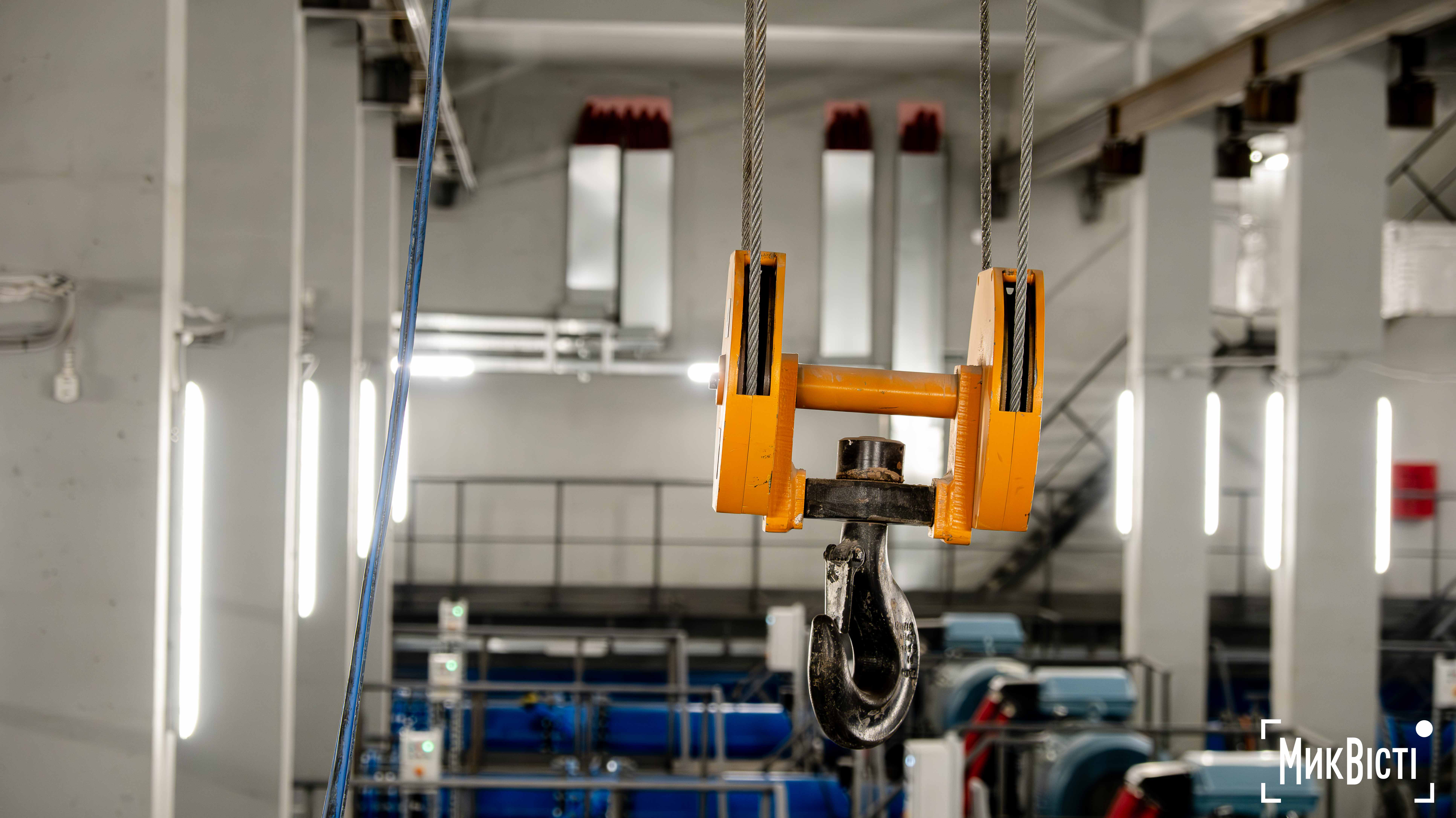 Pumping station, photo NikVesti
But this idea was abandoned, Serhii Sukhomlyn, head of the State Agency for Reconstruction, explained to NikVesti. The decision was made to build the new water treatment plant using public funds, which were saved during the construction of a new water supply system for the city.
«Mykolaiv has been part of the EIB project for about 7 or 8 years now to build a sewage treatment plant for the city. We have met with the Danes and the European Investment Bank many times. This is a really cool project, but today the city of Mykolaiv simply cannot physically guarantee this loan due to the limited budget.
And then it was decided, including through savings from this project, to build a sewage treatment plant for the city of Mykolaiv. What we are going to see today (new water treatment plants for Mykolaiv) is that the contractor is expected to launch the first stage by January. That is, the water quality will improve significantly from January,» said Serhii Sukhomlyn.
But the water treatment plant will be fully operational in March 2026, added Dmytro Troiekurov, CEO of the contractor «Avtostrada».
«We plan to launch the first stage of water treatment by the end of the year. And at the end of the first quarter (2026), we plan to fully adjust the system to work on reagents, as it should be provided for. That is, at the end of the first quarter, the treatment plant will be fully operational,» he said.
 Dmytro Troiekurov, CEO of the contracting company «Avtostrada», photo NikVesti
After that, says Serhii Sukhomlyn, head of the State Agency for Reconstruction, Mykolaiv residents will receive drinking water in their taps.
«It will be a fully functional treatment plant for Mykolaiv. But we understand that in order for this water to reach the consumer and they can safely drink it from the tap, a lot of work needs to be done by the city and the water utility itself. We still need to replace pipes and communications. But after the launch of these treatment plants, at the end of March, the water will be safe to drink, it will be of absolutely good quality,» said Sukhomlyn.
However, he added, the city can still take out an EIB loan if it wishes and spend the money, for example, on additional equipment.
«The issue is that Mykolaiv, together with the European Investment Bank, also wants to make a sewage treatment plant project. And this could be additional equipment, an additional construction unit. There are no problems here.
But today, the sewage treatment plants that are currently being built for Mykolaiv, once commissioned at the end of the first quarter, will be enough to provide the city with quality water. This equipment is already designed for water from Inhulets, it can treat salt water and everything else,» explained Serhii Sukhomlyn.
In terms of numbers, the construction of the water supply system was initially estimated at 8.8 billion hryvnias. However, the project was implemented at a lower cost of 6.3 billion hryvnias.
The saved 2.5 billion hryvnias was used for three additional projects:
- construction of new sewage treatment plants
- construction of sewage treatment facilities for Nova Odesa;
- construction of a photovoltaic power plant at the first pumping station of the water supply system.
How will the new treatment plants treat water?
The new treatment facilities are currently 80% complete. They will be equipped with DynaDisc microfilters, which «will allow achieving a high degree of mechanical filtration», according to the Mykolaiv Wastewater Treatment Plant.
DynaDisc is used in the EU, particularly in Sweden and Germany. In fact, it is the first «filtration barrier» that removes the main dirt from water before it enters further treatment.
This technology is based on rotating microfilters in the form of discs covered with a very fine mesh. Water passes through these discs, and all mechanical contaminants are retained on their surface. When the filter becomes dirty, the system automatically rinses it without interrupting the operation of the treatment plant. This means that the treatment process is continuous and stable.
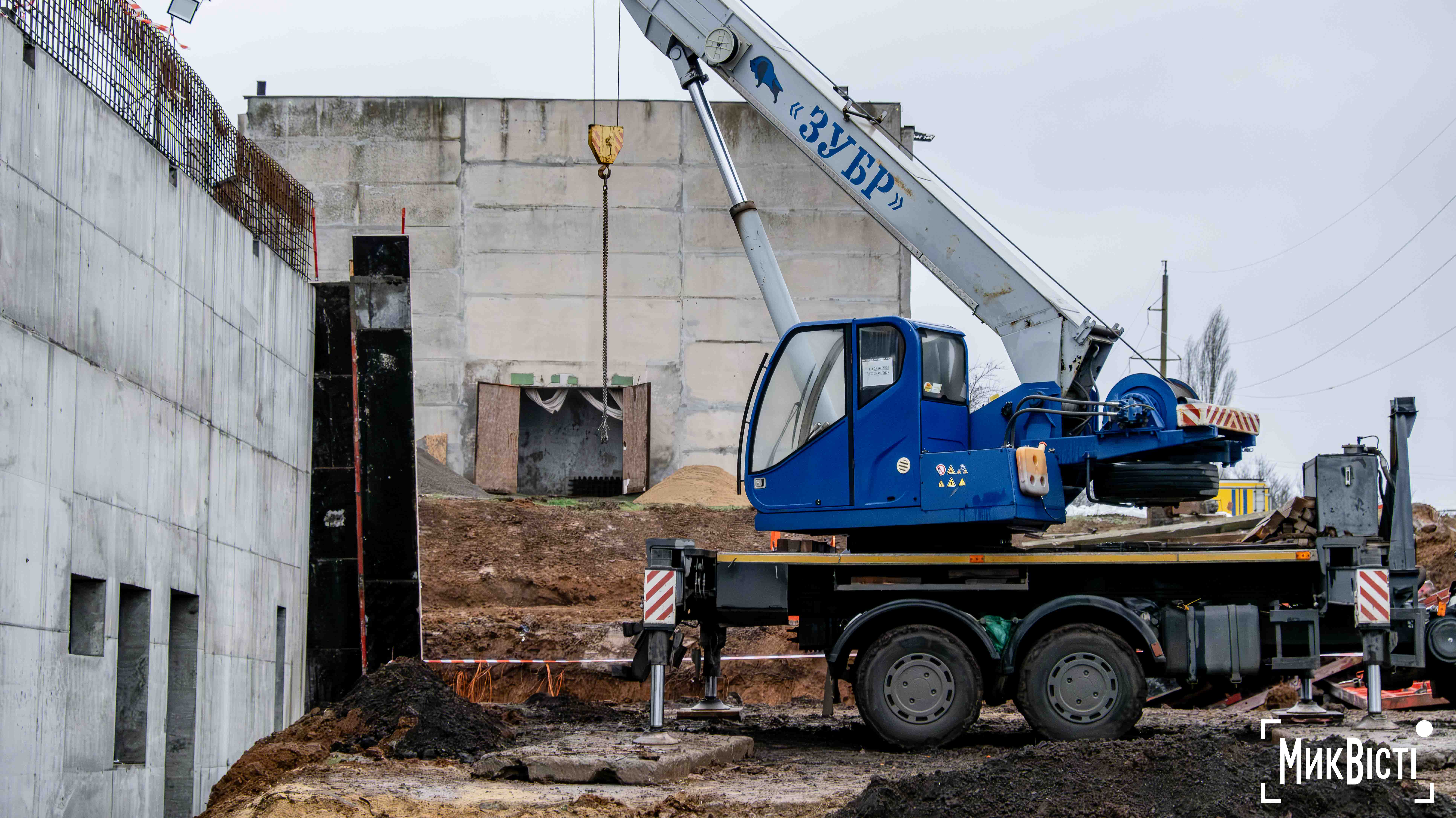 Construction of a wastewater treatment plant for Mykolaiv, photo NikVesti
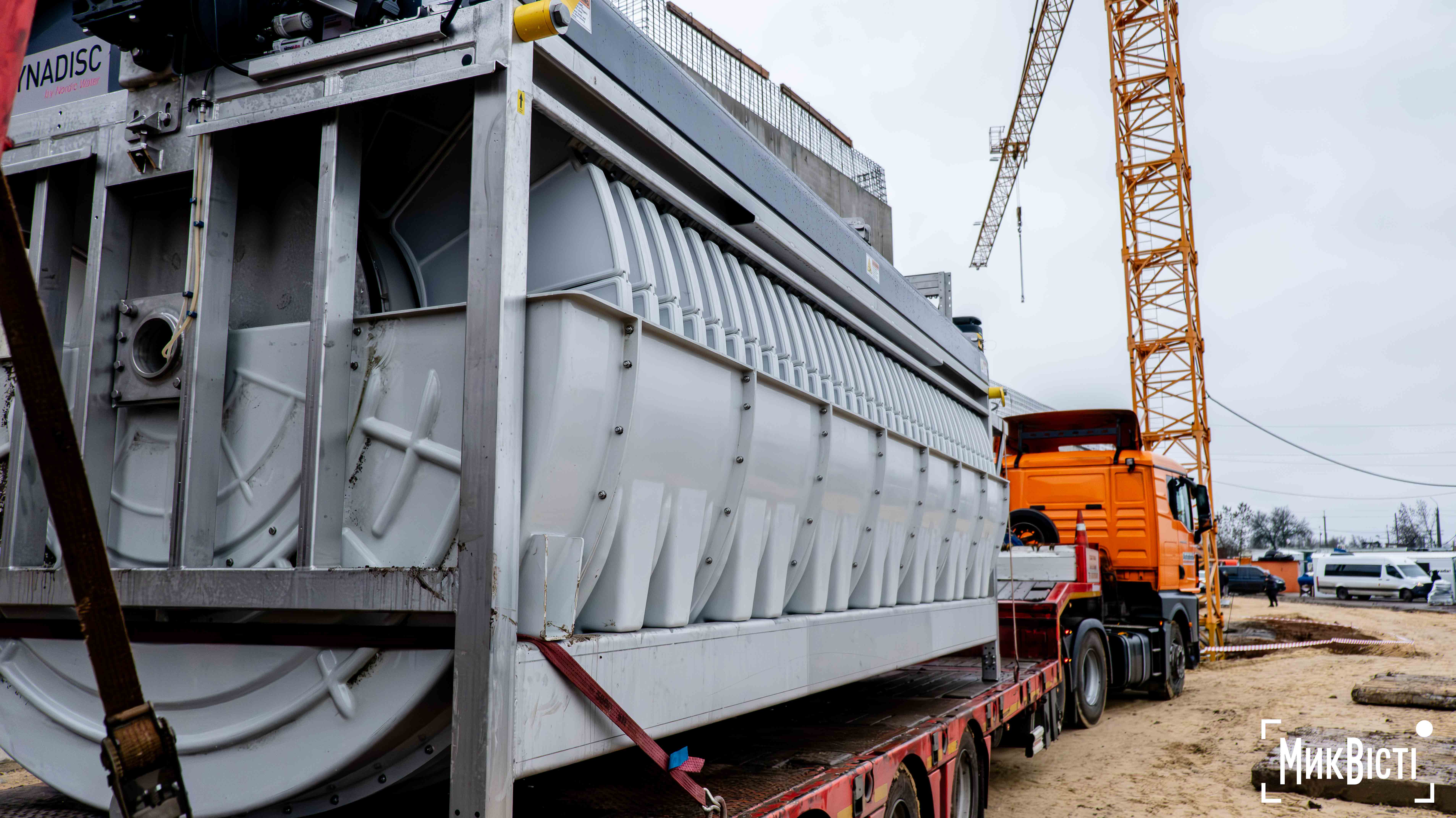 «Avtostrada» company equipment , photo NikVesti
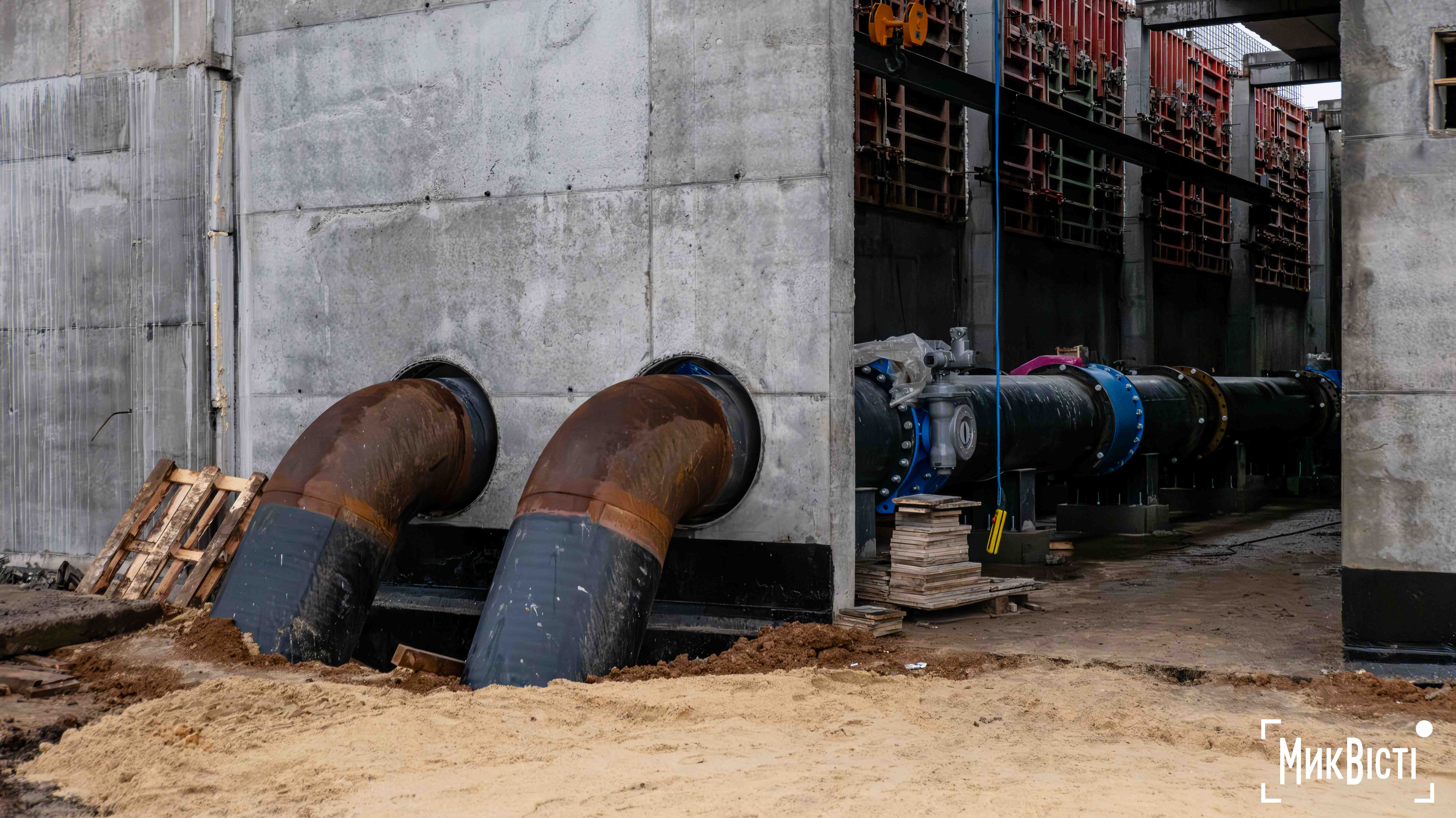 Construction of a water treatment plant for Mykolaiv, photo NikVesti
But in addition to mechanical microfilters, the new treatment facilities include
- pre-dosing of activated carbon, which adsorbs organic contaminants and removes odours and tastes;
- pH correction with sulphuric acid to ensure stable water parameters;
- oxidation and disinfection with permanganate or sodium hypochlorite;
- coagulation and flocculation, during which impurities are enlarged for further filtration;
- final disinfection and storage in tanks, after which the water is sent to the existing municipal wastewater treatment plant.
«The treatment system itself will be automatically controlled, monitoring 18 water quality parameters in real time and independently adjusting the amount of reagents, ensuring a stable result and optimal consumption of materials», explained in the RMA.
 The company's equipment «Avtostrada», photo NikVesti
Will residents of Mykolaiv pay more for water after the construction of the treatment plant?
Next, we went to the existing water treatment facilities of the water utility. The filtering material is being replaced, which should improve the level of water treatment. In particular, the water utility was provided with 2,800 tonnes of quartz sand to replace the filtering units. However, this process is complicated, as it requires manual reloading of about 100 tonnes of material. At the same time, the lining tiles in the filter tanks are being completely replaced.
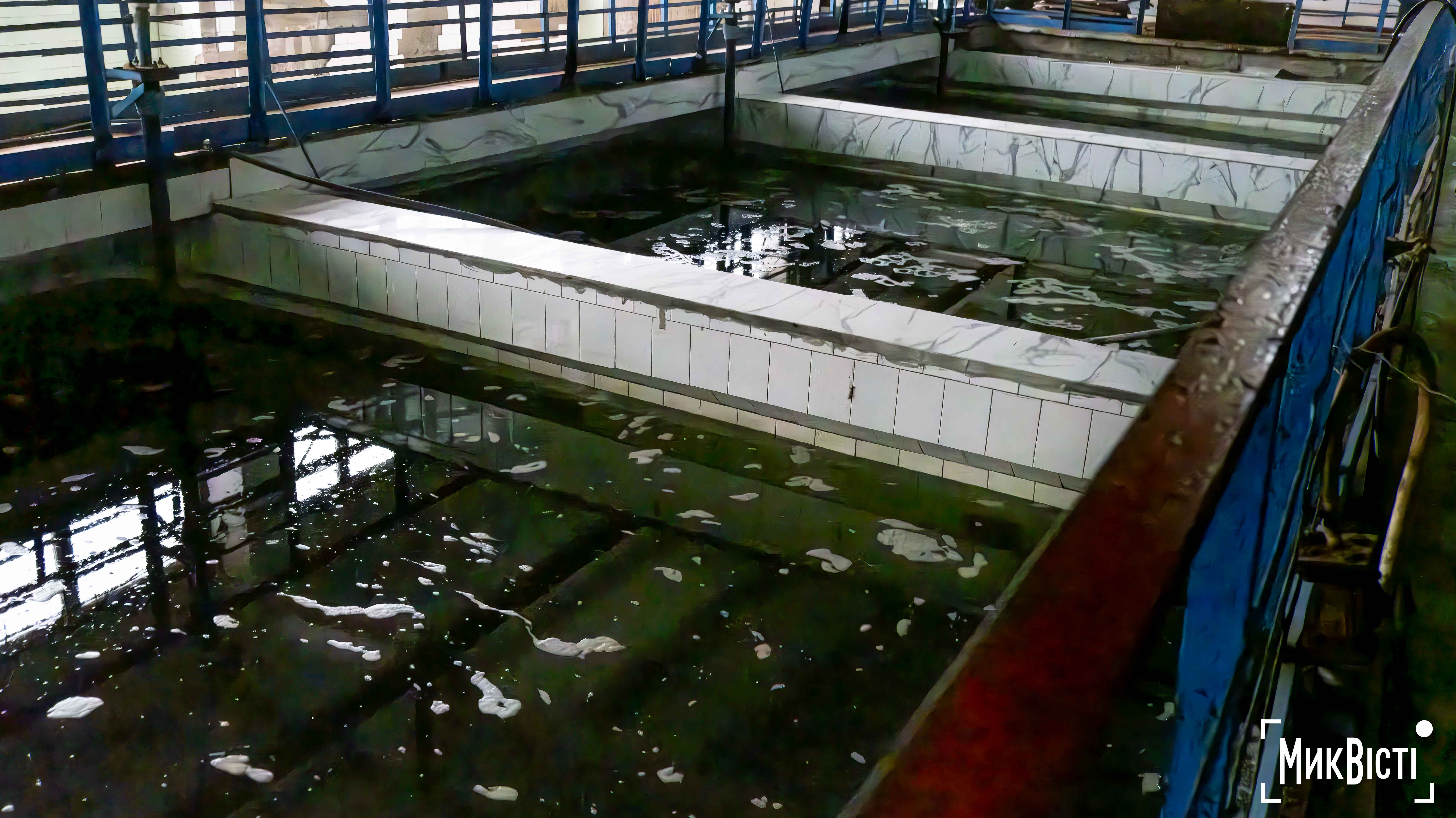 Mykolaivvodokanal's existing treatment plants, photo NikVesti
We were met there by Vasyl Telpis, acting general director of «Mykolaivvodokanal». According to him, the water quality is already close to the State Standards of Ukraine.
«We process all the water coming from New Odesa and supply it to the city. We are waiting for the new plant to be completed, because now the water almost meets the DSTU (State Standarts of Ukraine), but there are still two indicators that do not meet the established standards. I hope that when the construction of the treatment plant is completed, these indicators will be normal,» added Vasyl Telpis.
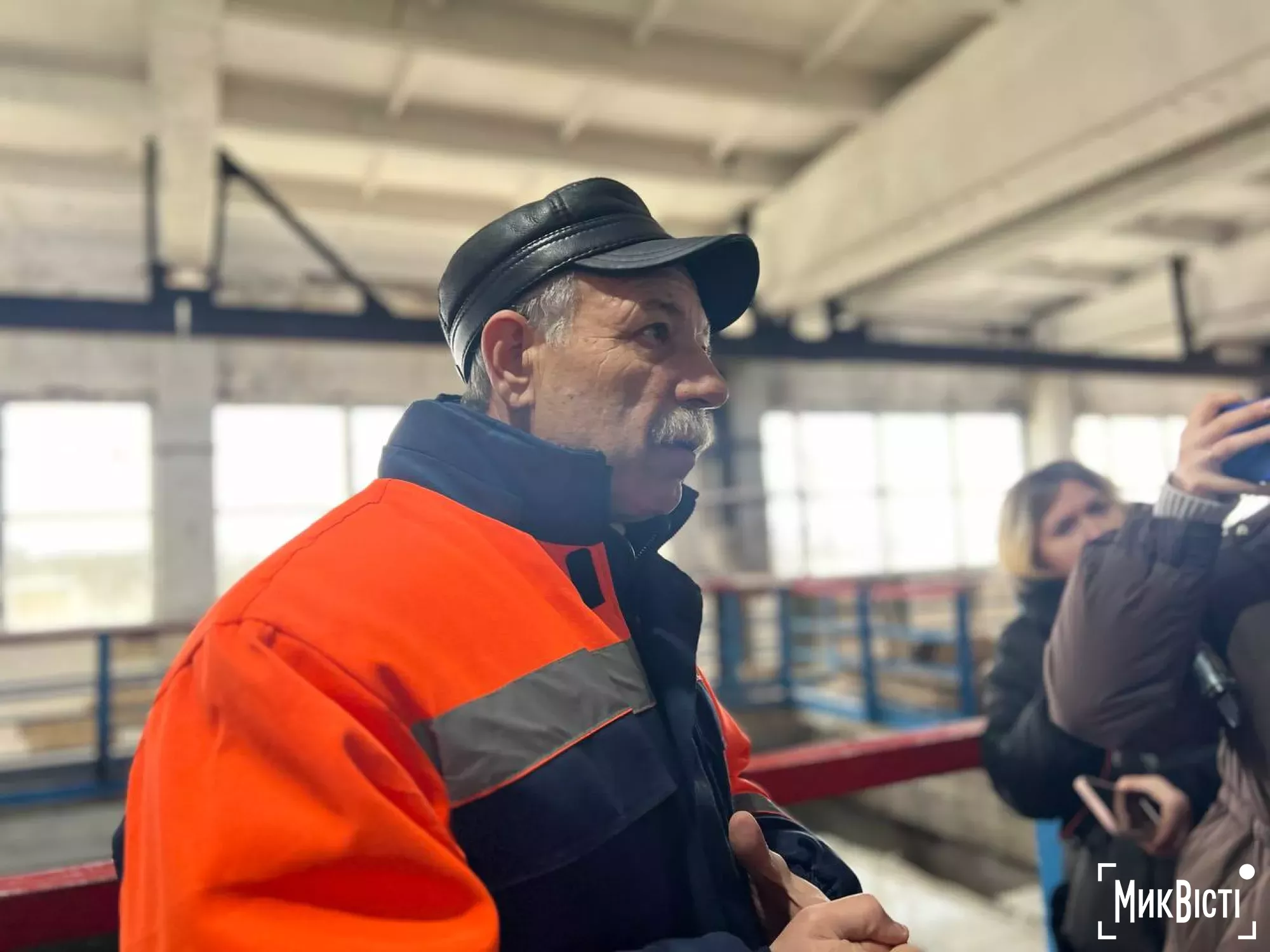 Acting General Director of «Mykolaivvodokanal» Vasyl Telpis, photo NikVesti
The head of the Mykolaiv Regional Military Administration, Vitalii Kim, asked the water utility to announce the preliminary cost of the water tariff. After that, the acting general director of the water utility said that it was difficult to do so at the moment.
«We can't tell you the exact tariff yet because we don't know how much reagents will be needed, and it also depends on the quality of the water. It also means additional electricity costs, because there will be a pump that will pump water here. Therefore, we will also have to make a technological map and regulations, and then we will see how much reagents we will spend per 1 cubic metre of water,» said Vasyl Telpis.
After that, Vitalii Kim told the water utility to calculate the approximate water tariff for December or he would set up a commission to deal with this issue.
«I will ask you to give me a calculation based on the current water quality so that we understand what kind of tariff we are going to get. You need to start calculating now, because if you don't make the calculation in January, I will create a commission that will calculate with you,» he said.
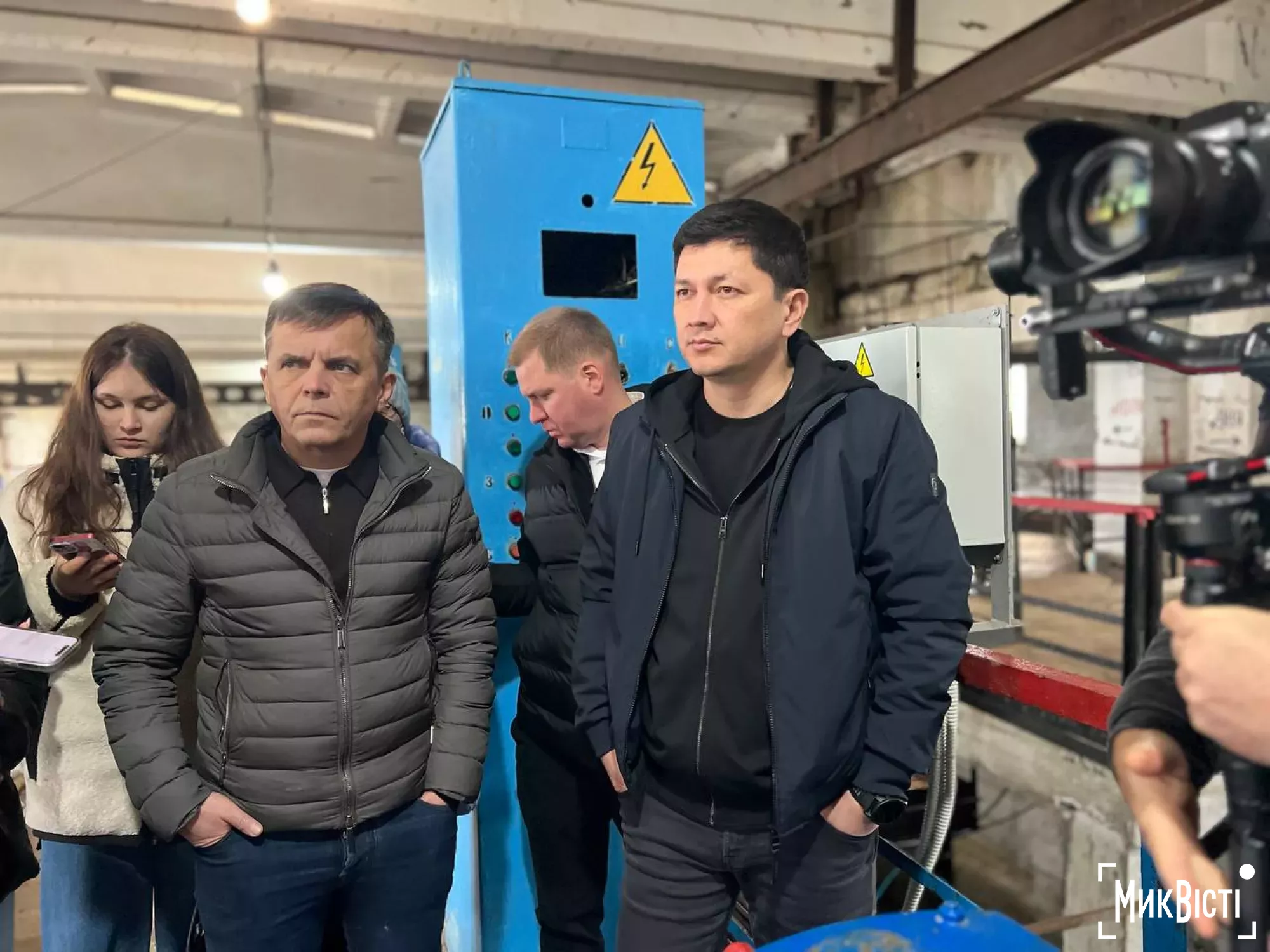 Head of the Mykolaiv Regional Military Administration Vitalii Kim and head of the State Agency for Reconstruction Serhii Sukhomlyn, photo by NikVesti
In response, Vasyl Telpis said that the water utility did have preliminary calculations of the tariff.
«We have already calculated it approximately. We haven't changed the tariff since 2021, it's the same as it is now. We have calculated all the costs, including electricity costs and so on, which have increased. As of today, a cubic metre of water will cost up to ₴100,» he said.
«I see. That's a lot. Give us a calculation. We will work with it,» replied Vitalii Kim.
Currently, Mykolaiv has a tariff that was set in January 2022. It amounts to 34.044 hryvnias per cubic metre of water: 17,532 hryvnias for water supply and 16,512 hryvnias for sewage.
Serhii Sukhomlyn, head of the State Agency for Reconstruction, immediately added that «the cost of water itself will be lower starting next year, when solar power plants» start operating. According to him, the cost of water will also be reduced by frequency converters and an automated operation system.
 Monitoring point of the pumping station, photo NikVesti
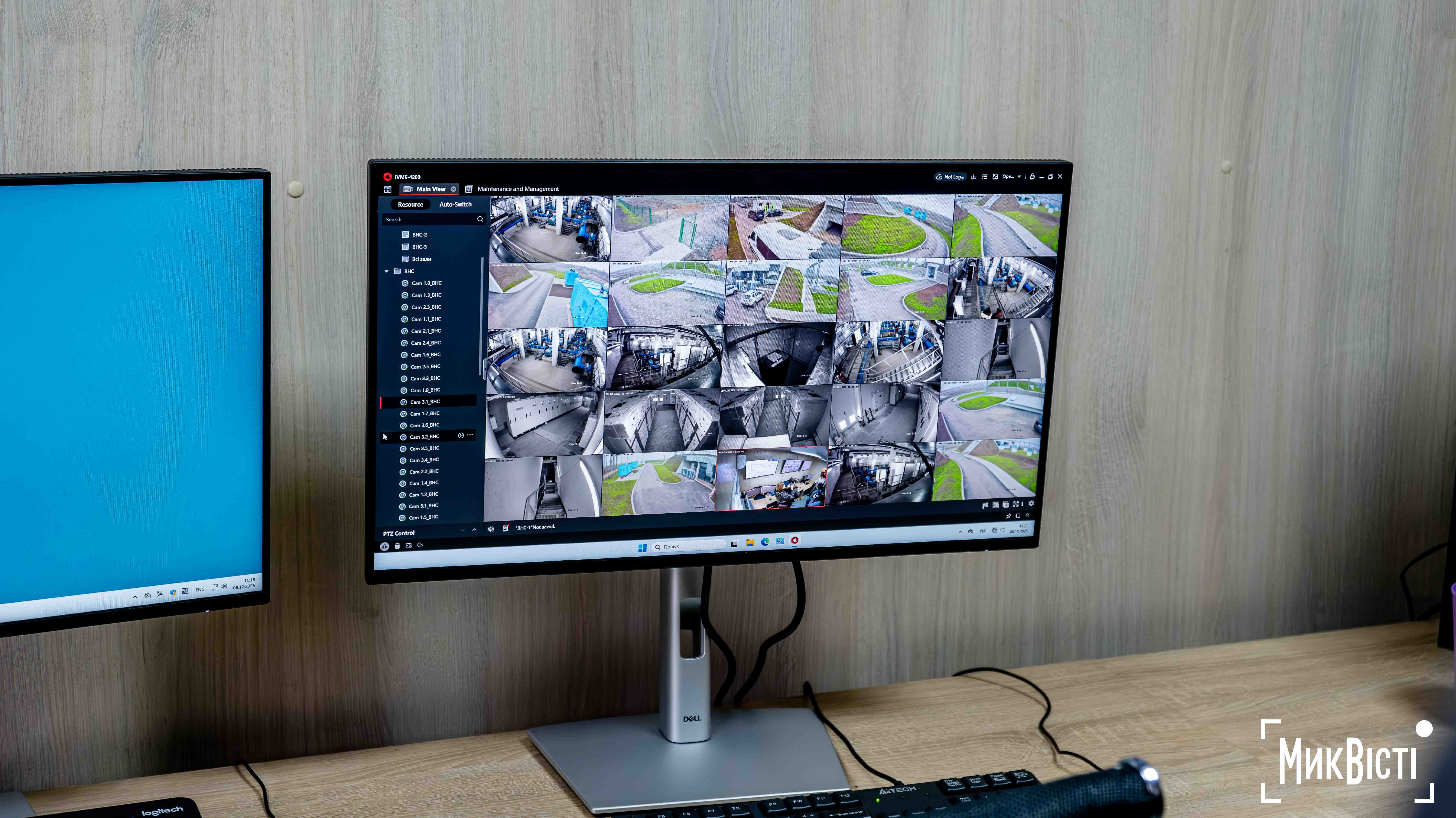 Monitoring point of the pumping station, photo NikVesti
The martial law period is prohibited from raising tariffs, Vitalii Kim reminded. He promised to do everything possible to ensure that Mykolaiv residents receive water at the lowest possible price.
«We, on our part, will make every effort to ensure that Mykolaiv residents receive water at the lowest possible price. This process consists of two blocks: technical and administrative. Technically, we will have the latest equipment, water supply and treatment facilities. Technically, all this will be done. The administrative part remains. And there is the reform of the water utility, where a supervisory board with international partners and anti-corruption representatives is being introduced, which will actually take into account and calculate the cost of water for Mykolaiv residents. I primarily see resources and reserves to reduce the price — this is inefficient management. This is not an insult to the people who work here. This is an old system of utility companies that includes these indicators in the calculation. We will work with this and continue to organise the municipal water utility,» said Vitalii Kim.
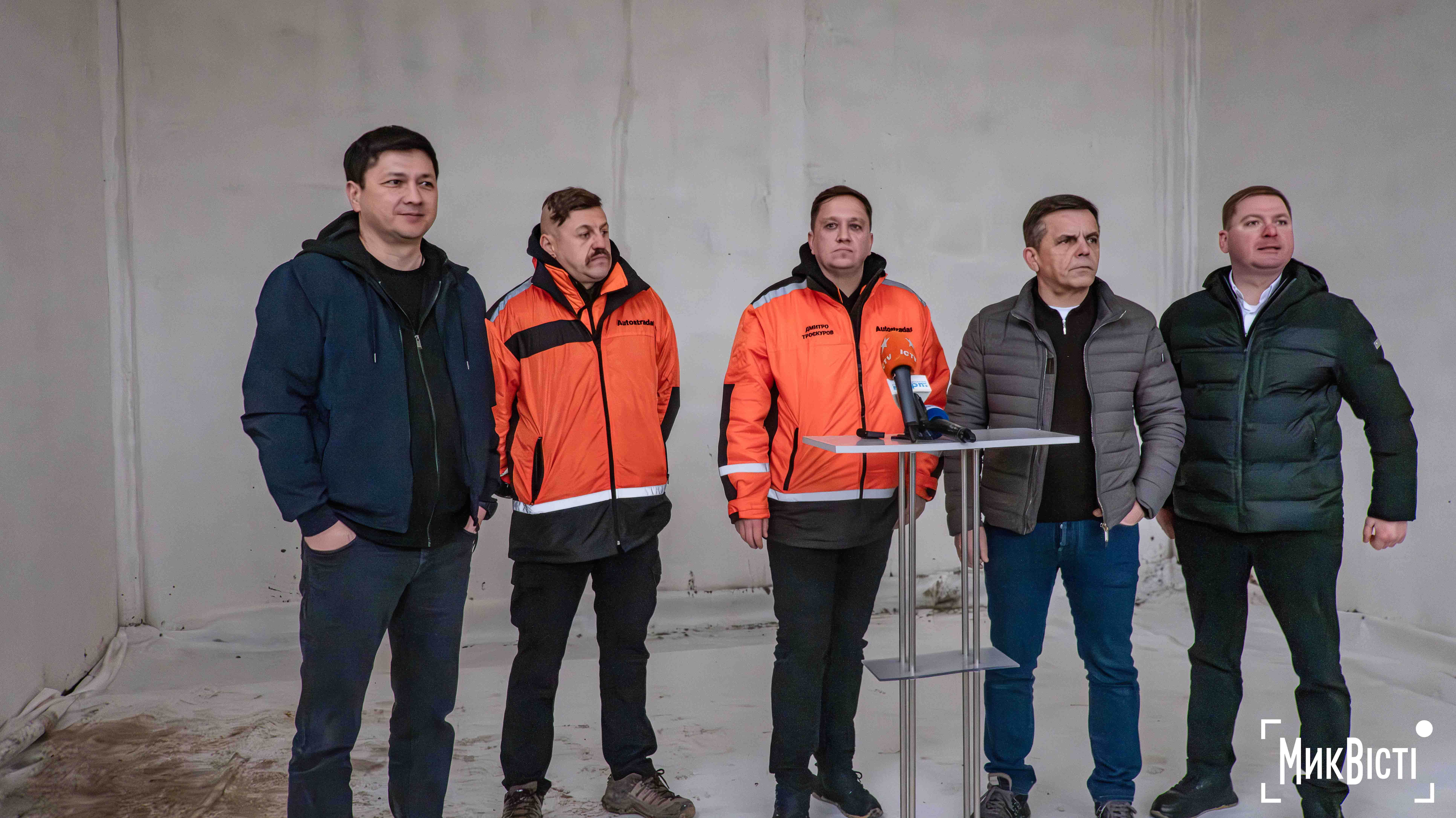 Briefing with Serhii Sukhomlyn, Head of the State Agency for Reconstruction, Vitalii Kim, Head of Mykolaiv Regional Water Authority, and representatives of the company «Avtostrada», photo NikVesti
Mykolaiv is promised an important change: starting in January, the city should receive water of much better quality, and from the end of March, it will have full-fledged drinking water from the taps after the launch of new treatment facilities. Technically, the state has done its best: a new water supply system, modern treatment facilities, energy-efficient solutions, and automation.
But the main intrigue for the townspeople is not only when, but also how much. The tariff issue is still open. Even the figures announced by «of up to 100 hryvnias per cubic metre» are only very preliminary calculations without a final technological map. One thing is clear: whatever the real cost of water, it is prohibited to raise the tariff during martial law.
So in the near future, Mykolaiv residents will probably feel a difference in quality, but not in bills. But after the war, the issue of water prices — taking into account the efficiency of the water utility, management and control — will become one of the key tests for the city authorities.
Yuliia Boichenko, NikVesti


This material was produced as part of the "Improving Ukrainian Media Resilience" project, implemented by the Fondation Hirondelle (Switzerland) and IRMI, the Institute for Regional Media and Information (Ukraine). The project is funded by Swiss Solidarity.