«It’s strange to read that the city is being called dirty by those who throw rubbish on the ground», Sienkevych told the people of Mykolaiv
- Alina Kvitko
-
•
-
21:00, 10 August, 2026
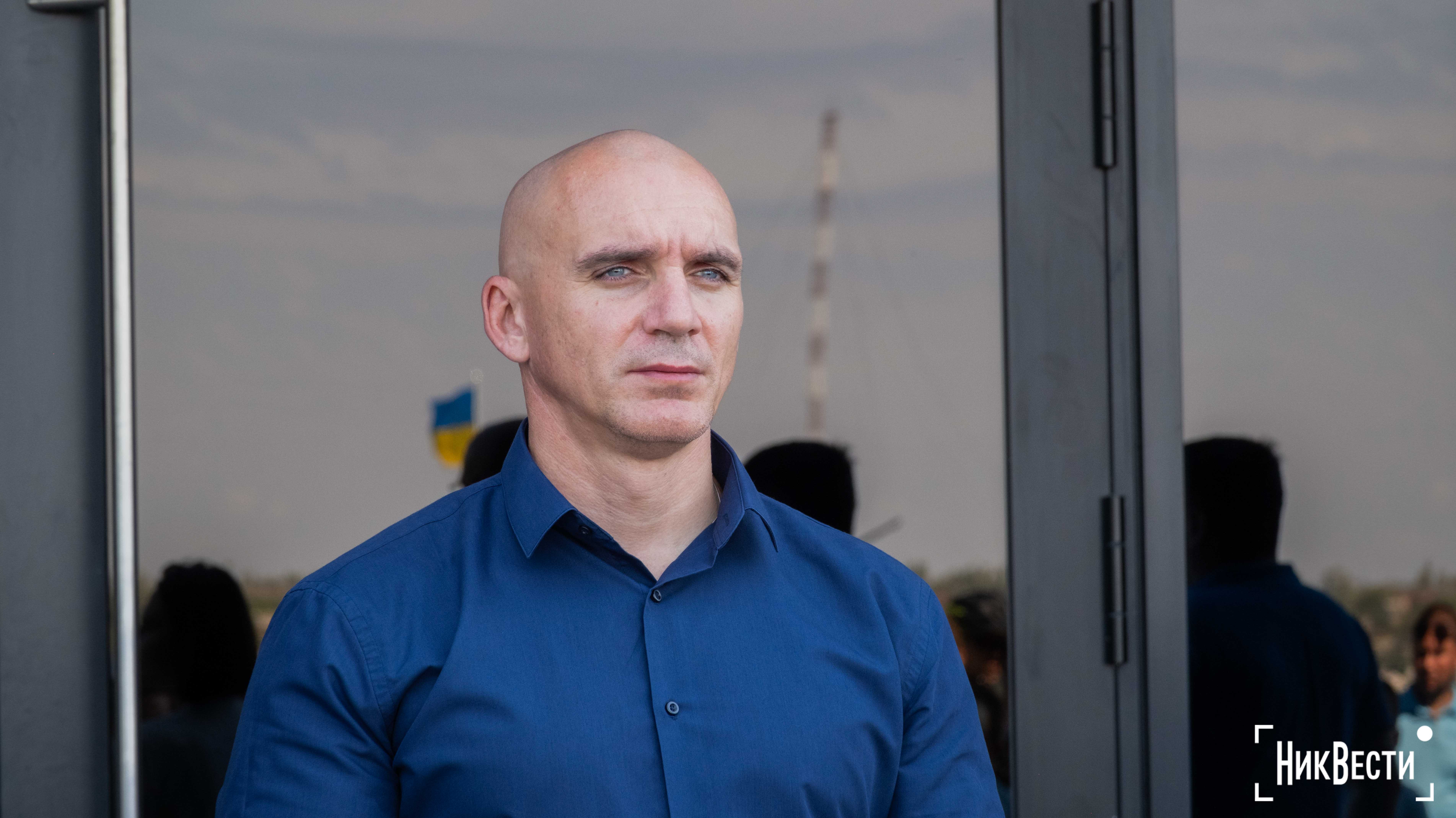 Oleksandr Sienkevych urged the people of Mykolaiv not to belittle their city: “Mykolaiv isn’t perfect, but it’s vibrant and unique.” Archive photo: NikVesti
The mayor of Mykolaiv, Oleksandr Sienkevych, inspired by a post about how residents talk about their own city, addressed the people of Mykolaiv. He urged them to criticise Mykolaiv’s problems, but not to disparage it.
The mayor shared his views on Facebook, reposting a message by Mykolaiv resident Inna Ziomsha.
She explained that she had seen a post on Threads from a woman planning to move to Mykolaiv, who had asked locals to recommend a neighbourhood to live in. According to her, residents began actively criticising the city in the comments.
Mykolaiv was called «the bottom of the barrel» and «the worst city in Ukraine»; people wrote that there is «nothing here», and also complained about the lack of places for leisure and entertainment.
«I came across a post by a young woman. She writes that she’s planning to move to Mykolaiv and is asking for advice on which neighbourhood to choose to live in. A normal, sincere question from someone who wants to hear the views of those who live here. I opened the comments. And you know… I wish I hadn’t; as they say, «the shit hit the fan». I haven’t seen such a concentration of contempt for one’s own city in a long time. In one thread, people were writing that Mykolaiv is «the bottom of the barrel», «the worst city in Ukraine», «there’s nothing here», «nowhere to have a drink, nowhere to relax, nowhere to dance, nowhere to sing karaoke». For some, it’s dirty. For others, it’s dreary. For some, the people aren’t right. For others, the authorities are to blame for everything — it seems, even when dinosaurs roamed the Earth the rain fell at the wrong time. And I read all this with just one question on my mind. People… if you hate the city you live in so much, why are you still here? No, this isn’t about saying you can’t criticise. Quite the opposite. We need to talk about the problems. We need to demand change. We need to care,» said Inna Ziomsha.
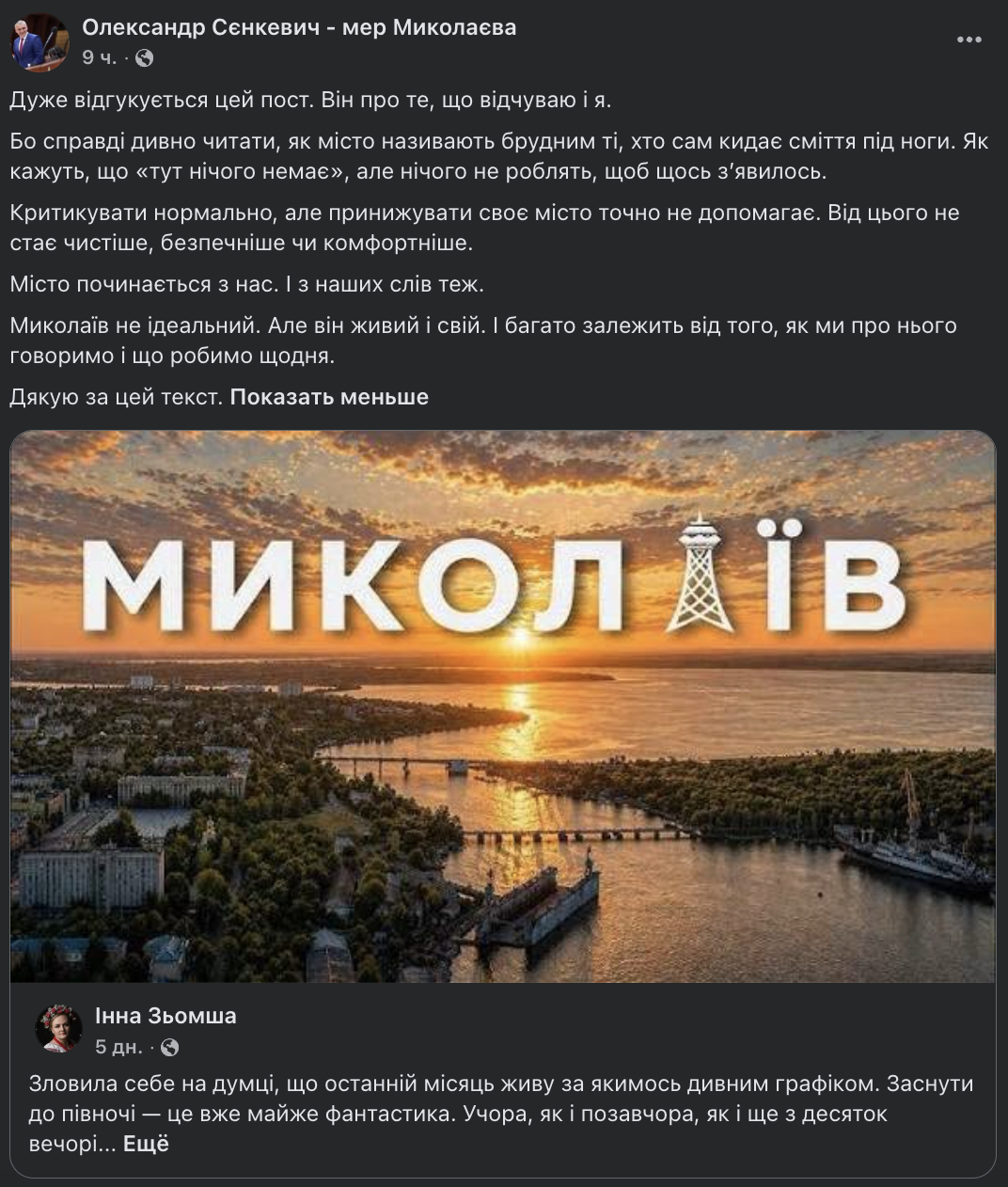 Screenshot of the mayor’s post from his Facebook page
Inna Ziomsha noted that it’s perfectly normal to criticise the city’s problems. At the same time, in her view, there’s a significant difference between criticism and humiliation.
«There is a huge gulf between criticism and humiliation. Because when, under a post by someone who wants to move here, dozens of locals themselves try to persuade them not to come, they are not taking aim at the authorities. Not at the roads. Not at officials. They’re attacking their own city,» wrote Inna Ziomsha.
She also emphasised that Mykolaiv has its problems, but at the same time remains a city of volunteers, children, entrepreneurs and people who continue to live and work here during the war.
«Loving your city doesn’t mean turning a blind eye to its shortcomings. Loving it means not allowing it to be turned into a rubbish tip, at least not in your own words. Because words build too. And words destroy too,» noted the author.
Oleksandr Sienkevych shared this post and wrote that it «really resonated» with him.
«Because it really is strange to read how the city is called dirty by those who themselves throw rubbish on the ground. How they say that «there’s nothing here», but do nothing to make something appear,» wrote the mayor.
According to him, Mykolaiv isn’t perfect, but it remains «alive and our own», and its future depends not only on the work of the authorities, but also on how the city’s residents themselves treat it and what they do every day.
«It’s fine to criticise, but belittling your own city certainly doesn’t help. It doesn’t make it any cleaner, safer or more comfortable. The city starts with us. And with our words, too. Mykolaiv isn’t perfect. But it’s vibrant and our own. And a lot depends on how we talk about it and what we do every day. Thank you for this post,» added the mayor.
As a reminder, NikVesti previously conducted a survey on cultural events in Mykolaivduring the war. It showed that 74 per cent of respondents believe the city needs cultural and symbolic events, but mainly in a safe and low-key format. There was the strongest support for small-scale events in different parts of the city, concerts held in a safe format, and events for children.
Separately, 84 per cent of respondents were in favour of a festive atmosphere at Christmas and New Year — with decorations, small Christmas trees and children’s events, but without large gatherings.