Domanivka launches pellet production at 700 tonnes per month to save on heating municipal facilities
- Alina Kvitko
-
•
-
12:08, 05 February, 2026
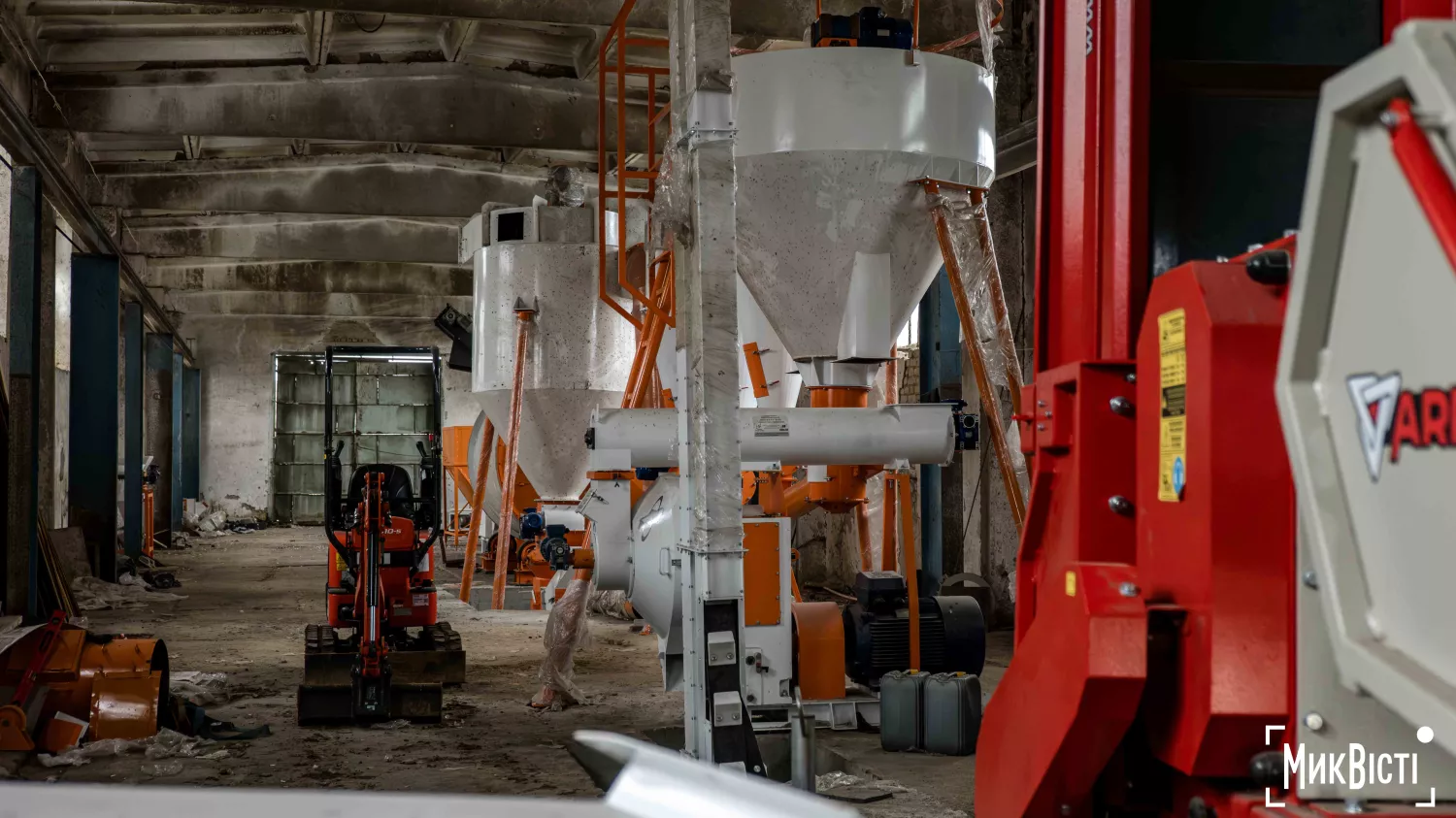 Equipment that will be used to produce solid fuel for the community. Photo: NikVesti
The Domanivska community is launching its own pellet production for heating municipal facilities, which will reduce heating costs and increase energy independence.
This was announced in a comment to NikVesti by Serhii Trostinetskyi, director of the Domanivka Agricultural and Fuel Company.
It should be noted that the community is implementing an ambitious plan to produce its own fuel, which was announced by the government back in 2023. At that time, Deputy Prime Minister for Recovery Oleksandr Kubrakov noted that this would allow Domanivka to save about 3.5 million hryvnias per year on heating public institutions alone.
Domanivka received a pellet production line with the support of Denmark. Its capacity is about 1 tonne per hour, or more than 700 tonnes per month. This volume is sufficient to supply schools, hospitals and other municipal facilities used by about 15,000 residents of the community.
«A logical idea arose: to provide the community with its own fuel. Together with the head and the team, we wrote a project, appealed to the regional military administration and received support. Our idea interested the Danes, our main sponsors, and we began implementation in 2023,» explains Serhii Trostinetskyi, head of the enterprise.
The community plans to grow and harvest the raw materials for the pellets itself — energy willow, miscanthus, as well as straw, reeds and wood residues. This «closed» cycle allows the community to be independent of suppliers and fuel market prices.
The community plans to sell the pellets that exceed its own needs to neighbouring communities. Preliminary agreements have already been reached with Pervomaisk. This should create about 10 jobs and bring additional revenue to the budget.
It should be noted that, at the same time, the community has modernised its medical infrastructure with the support of the German organisation GIZ. This was done as part of a special programme funded by the German government and the European Union. The local hospital and primary health care centre underwent major renovations, and energy-efficient windows, generators and a modular boiler room were installed.