Individual heating units to be installed in Mykolaiv by the end of 2028: NEFCO is seeking a contractor
-

- Yuliia BoichenkoReporter
-
 2000 +
This content has already been viewed by over 2,000 visitors
2000 +
This content has already been viewed by over 2,000 visitors
-
 Prefer on Google
-
2K
This content has already been viewed by over 2,000 visitors
-
Prefer on Google
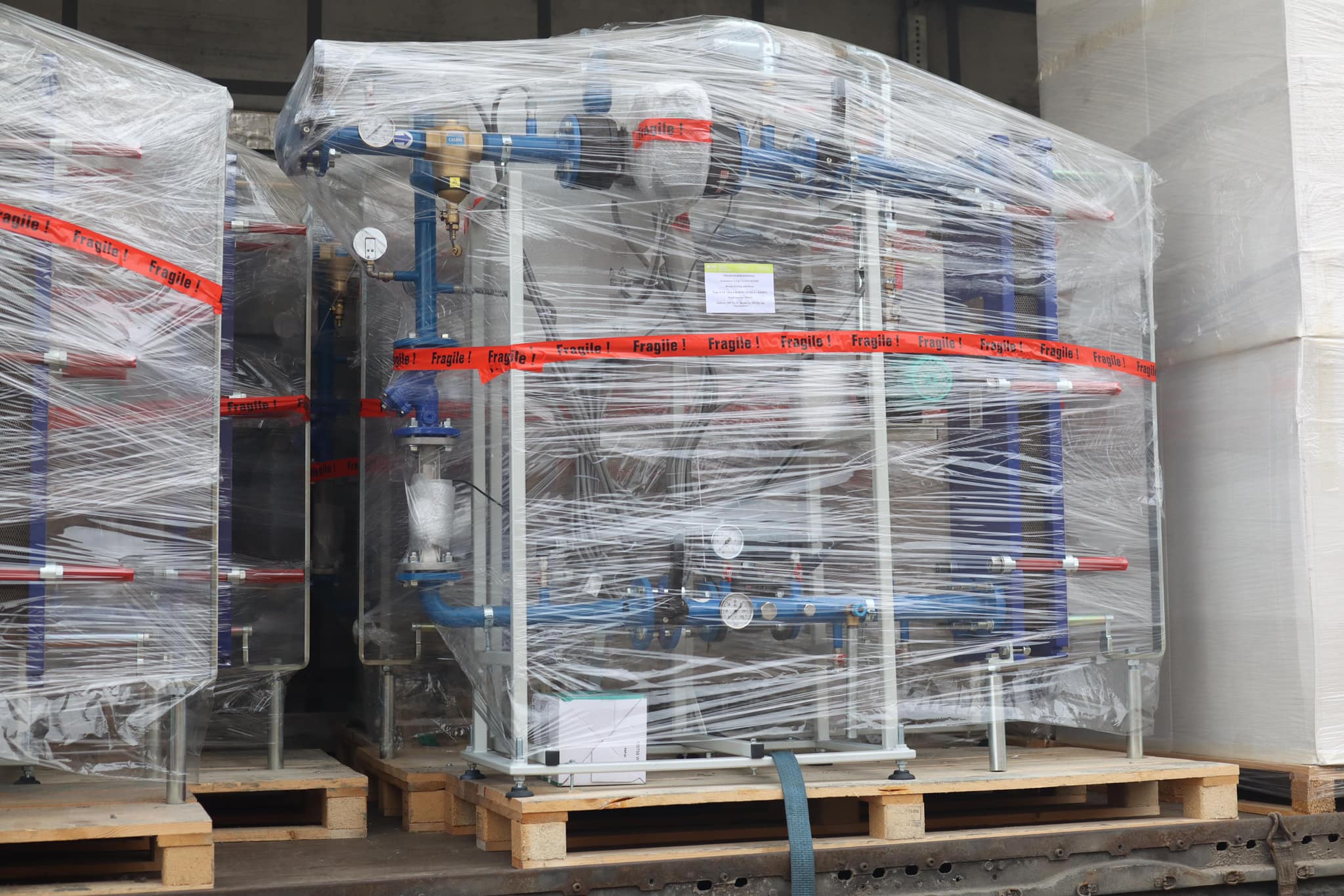 New individual heating units in Chernivtsi. Photo: Shpalta
The Nordic Environment Finance Corporation (NEFCO) is seeking a contractor to install individual heating substations in Mykolaiv. The work will be carried out using grant funding from the Danish government.
The process of submitting proposals from potential bidders is currently underway, NikVesti reports, citing relevant information on the NEFCO Procurement Portal.
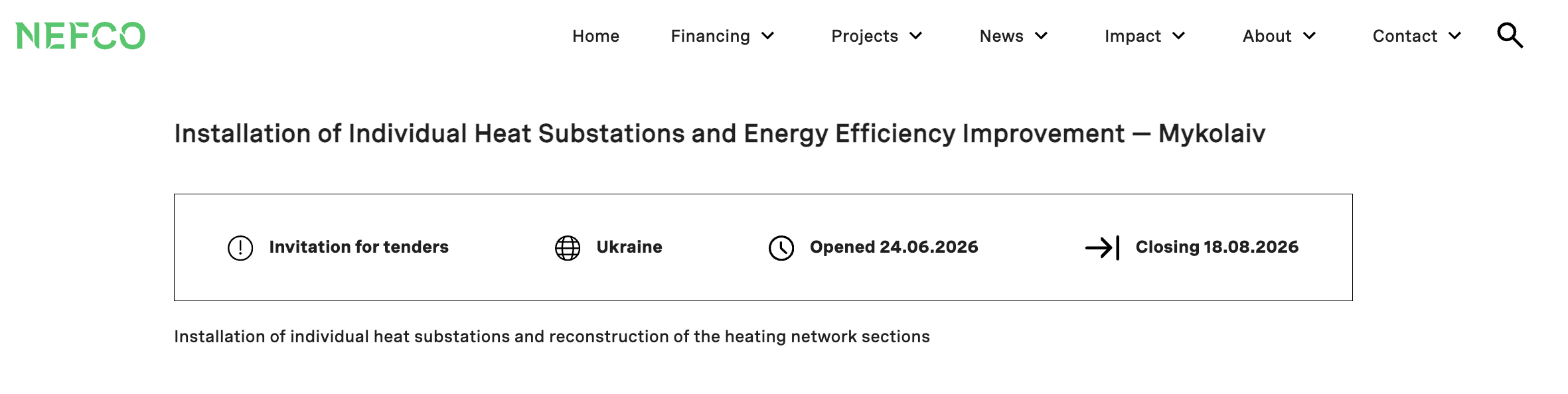 The Nordic Environment Finance Corporation has announced an international tender for the installation of individual heating units in Mykolaiv; screenshot from the NEFCO portal
The project client is listed as Mykolaivoblteploenergo. The procurement has been divided into three lots:
- installation of individual heating units in the boiler room area at 71 Bila Street;
- installation of individual heat distribution units in the boiler house area at 42 Samoilovych Street;
- reconstruction of part of the heating networks in these two heating districts.
For the first two lots, the contractor will work exclusively using Danish grant funds. The third lot will be financed through a combination of funds: 88 per cent from the grant and a further 12 per cent from the city budget.
Companies with experience in carrying out similar work on the modernisation of heating supply systems and the reconstruction of utility networks are eligible to submit tenders. A winner will be selected separately for each of the three lots.
Work is scheduled to begin in September 2026 and be completed by December 2028.
Tender proposals will be accepted until 18 August 2026 in electronic format in accordance with NEFCO’s procurement procedures.
It is worth noting that participants also submit their tender proposals outside the portal itself — they send them electronically by email. Therefore, it is not possible to view the list of companies participating in the tender and their proposals publicly.
We asked NEFCO why this particular model is used for procurement – where documentation is sent by email and bids are submitted outside the portal. There, NikVesti explained that «NEFCO’s policy requires confidentiality to prevent any influence on the tender committee and to avoid prohibited practices».
As a reminder, Denmark has provided €7.2 million for individual heating points (ITPs) for Mykolaiv. The first of these will begin to be installed in 2026, according to Mykola Lohvinov, director of Mykolaivoblteploenergo.
Read also the article by NikVesti entitled «URC-2025: Was Ukraine’s largest conference on reconstruction beneficial for the Mykolaiv region?», which discusses, among other things, the signing of a €7.2 million agreement with the international financial organisation the Nordic Environment Finance Corporation (NEFCO).
What is an IHP?
An individual heating point (IHP) is an automated device installed in a building that controls the supply of heat. It can:
- regulate the temperature depending on the weather (based on the outdoor temperature profile),
- ensure a more even heat distribution,
- save energy,
- provide hot water via a heat exchanger,
- have a built-in heat meter.
How does an individual heating point work?
An individual heating point receives heat from the district heating network, but «decides» for itself how much heat to supply to the building. It is equipped with temperature sensors, pressure regulators and pumps. This ensures that heat is supplied evenly, and residents do not suffer from overheating or the cold.
Why does an individual heat distribution point help save money?
An individual heat distribution point allows you to consume only as much heat as you actually need. If it gets warmer outside, the system automatically reduces the heat supply. This helps to avoid overspending and reduces bills by 15–30 per cent, depending on the season.
