Every child has the right to a family: how adoption and alternative care arrangements are being developed in Mykolaiv
- Darina Melnychuk
-
•
-
13:00, 13 March, 2026
The full-scale war in Ukraine has exacerbated the problem of protecting children who have been left without parental care. Some families have lost their homes, whilst others find themselves in difficult circumstances, meaning that an increasing number of children are in need of state support.
There are currently over 500 orphans and children deprived of parental care in the Mykolaiv region. At the same time, family-based care arrangements — adoption, foster care, family-type children’s homes and patronage — are considered the best for a child’s development.
In this article, NikVesti explains how the system of family-based care works in Mykolaiv, how many children are under the care of the child welfare service, what foster care entails, and why the issue of protecting children’s rights has become even more important during the war.
How a family from the Kherson region is raising nine children during the war
Vira and Oleksandr Kozhushko, a couple from the Kherson region, had been living abroad for a long time, but returned to their hometown of Beryslav on the eve of the full-scale invasion. As they had no children of their own, they decided to become a foster family and took in three girls.
Due to the full-scale war, the family spent nine months under occupation. After the liberation of Kherson at the end of 2022, they moved to a village in the Kherson region, but later realised that there were insufficient opportunities for the children’s development there, so they moved to Mykolaiv.
In Mykolaiv, the child welfare service suggested that the family set up a family-style children’s home and increase the number of children in their care. Vira and Oleksandr subsequently decided to take in six more children aged between one and twelve. Initially, the family were temporarily housed in a hostel, and later a house was purchased for them.
Vira explained that they managed to bond with the children very quickly. They had first met the children whilst they were still in hospital; they visited them regularly and gradually built a relationship based on trust.
«We went to meet the children, and we really liked them. From day one, it felt as though we’d known each other for a long time. We visited them in hospital whilst the paperwork was being sorted out, and we gradually grew close to one another. That’s when we finally decided to take the children into our family. Now they’re studying and living with us,» said Vira Kozhushko.
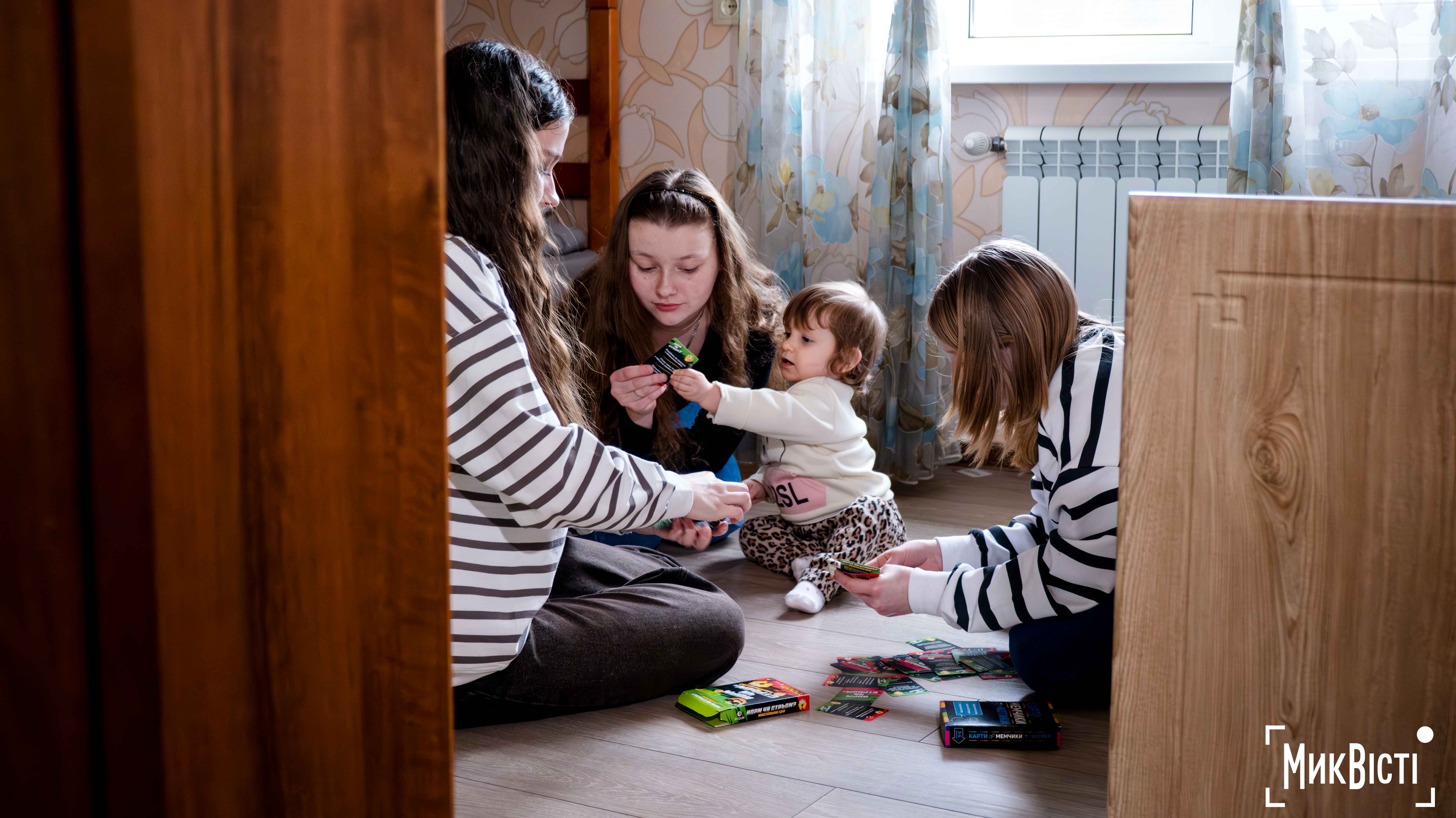 A family from the Kherson region bought a house in Mykolaiv to raise nine children, photo: NikVesti
The couple are currently raising nine children of various ages. According to Vira Kozhushko, there are always challenges in bringing up children, as each child requires an individual approach. At the same time, the family tries to organise their daily life so that everyone feels supported and cared for. The older children help the younger ones with their studies, spend time together, engage in creative activities and support one another.
The family has been living in their new home for over half a year. The property was purchased thanks to state funding and funds from the Mykolaiv city budget. The couple also receive a cash allowance as foster parents and social benefits to support their children.
Yuliia Kravchenko, Head of the Children’s Services Department at Mykolaiv City Council, explained that the purchase of homes for family-type children’s homes is funded by a state grant. According to her, if a family in the community is willing to set up a family-type children’s home, the city council submits an application for funding from the state budget. Once the grant has been received, a call for housing proposals is issued and a home is sought that meets the requirements for a large family to live in.
«A family-type children’s home is a family that takes on the responsibility of raising orphans and children deprived of parental care. If a family is prepared to take in between eight and ten children, we provide them with accommodation. We select homes that are in good condition, do not require repairs and are suitable for a large family to live in,» said Yuliia Kravchenko.
Once the family has moved in, the Children’s Services Department, in collaboration with social services, selects children who can be placed with this family. At the same time, the home is provided with the necessary furniture and appliances.
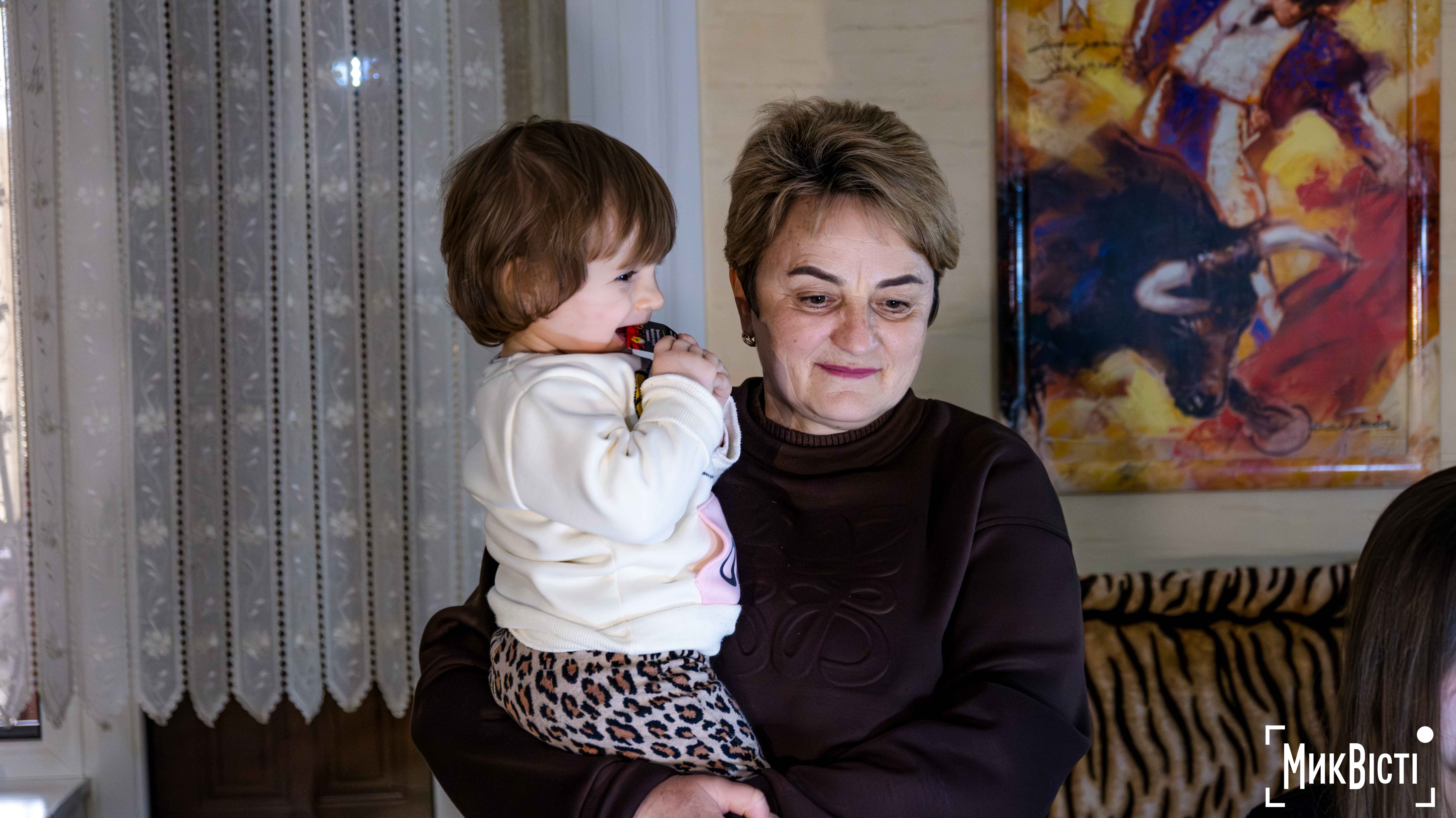 Vira Kozhushko, mother at a family-type children’s home, photo: NikVesti
Yuliia Kravchenko points out that before setting up a family-type children’s home, candidates undergo a vetting process. They submit medical certificates and proof of no criminal record, and also undergo compulsory training. Experience in bringing up children is desirable but not essential.
«We advise families at every stage and provide support in collaboration with the social services centre. At present, the need for such families remains acute, as the war has led to an increase in the number of children requiring state support,» she says.
In total, two houses were purchased in Mykolaiv in 2025 for large foster families evacuated from the Kherson region.
Yuliia Kravchenko also noted that if parents are unwilling to change their lifestyle and fail to provide their children with adequate conditions, the state may decide to remove the child to ensure their safety and protect their interests.
How many children in Mykolaiv are in the care of the child welfare service
As of February 2026, 837 children are registered with the Mykolaiv City Council’s Child Welfare Service.
Of these, 574 are orphans and children deprived of parental care who are on the primary register. A further 263 children find themselves in difficult life circumstances. There are currently 14 orphans and children deprived of parental care in children’s homes. These are children with medical conditions requiring constant medical supervision.
There are currently 6 foster families and 14 family-style children’s homes in Mykolaiv. The service notes that this is one of the highest figures in Ukraine. Families who decide to take children into their care receive comprehensive support — both from the state and the city authorities, as well as from charitable organisations.
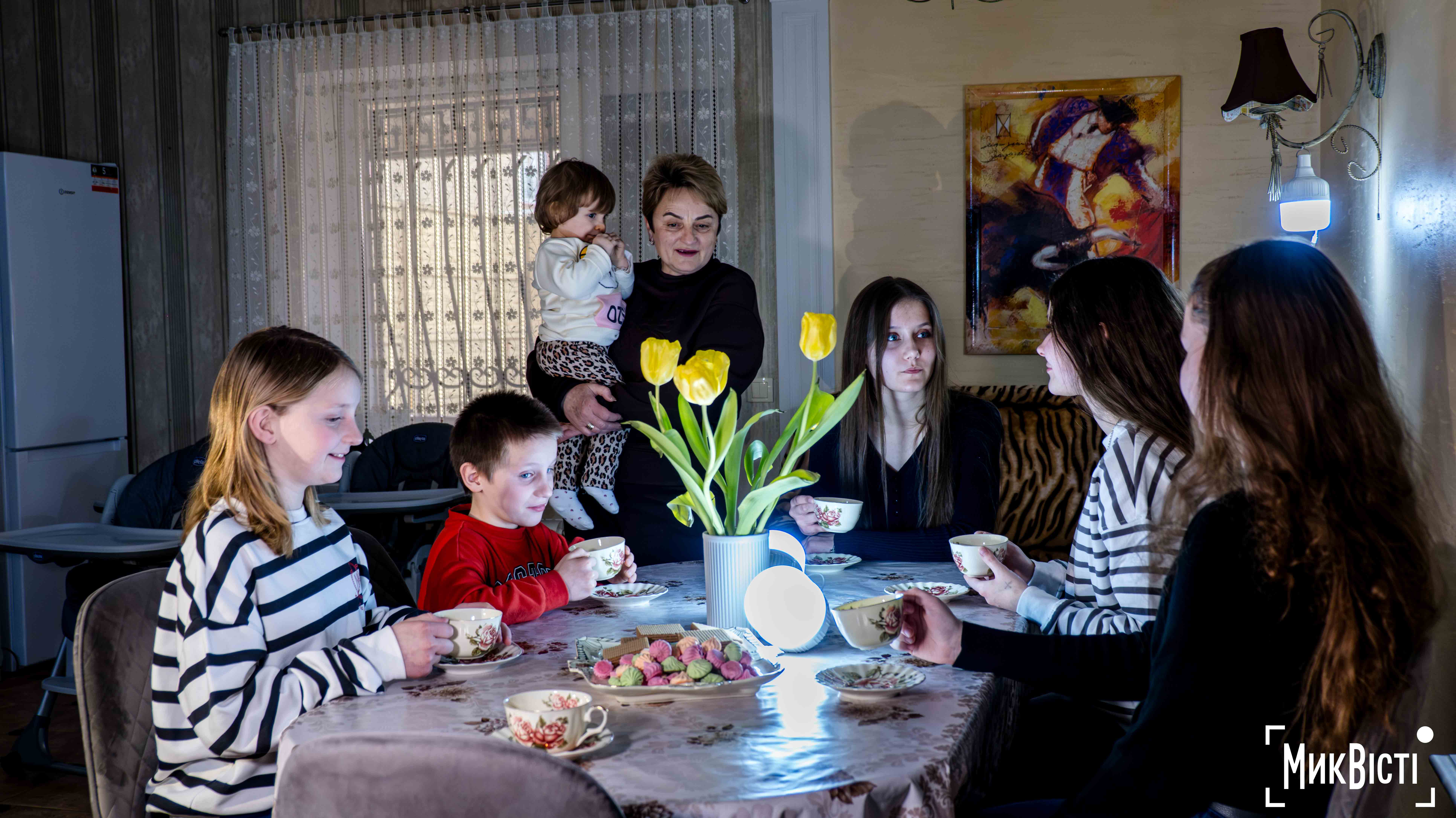 A family from the Kherson region was provided with a house in Mykolaiv to raise nine children, photo: NikVesti
In total, last year 101 children with the status of orphans or children deprived of parental care were placed in family-based care arrangements. Of these, five children were adopted by Ukrainian citizens, 74 were placed under guardianship, and a further 20 were placed with foster families and in family-type children’s homes.
Also, in 2025, 12 children were returned to their biological parents. Of these, 11 children had been in social and psychological rehabilitation centres, whilst one child had been at the Rivne Regional Specialised Children’s Home with a rehabilitation centre.
As of February 2026, the council’s child welfare service has 21 families on its register who wish to adopt a child.
What is foster care?
Foster care is a form of temporary support for children who, due to difficult life circumstances, are unable to live with their parents for a certain period of time. In such cases, the child is not sent to a residential care home or other institution, but is placed with a foster family. This is a person who, on a professional basis, takes the child into their home, providing them with a safe environment, care and support. Whilst the child is with such a family, social services work with their biological parents to help them overcome their difficulties and bring the child back home.
The main advantage of foster care is that the child remains in a family environment, within their own community, can attend a mainstream school or nursery, and maintain contact with relatives.
In Mykolaiv, this approach is already yielding results — four children have been successfully returned to the care of their parents or relatives.
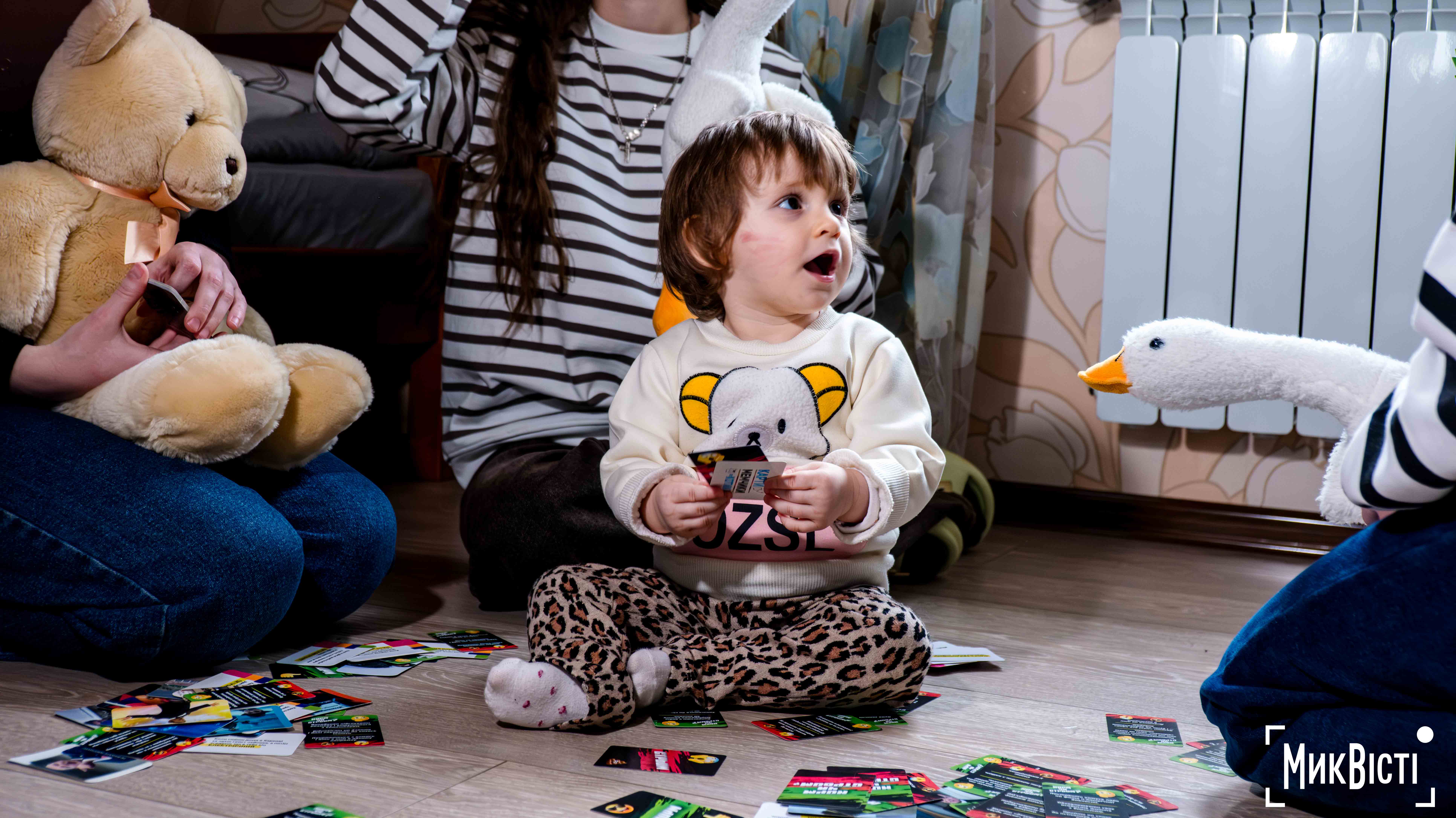 A family from the Kherson region has been provided with a house in Mykolaiv to raise nine children, photo: NikVesti
Foster care is a paid role. A foster carer receives three times the minimum wage — 25,941 hryvnias — whilst their assistant receives one minimum wage, 8,647 hryvnias.
In addition, the state pays social assistance for each child: from 7,000 hryvnias for children under 6, to 8,700 hryvnias for children aged 6 to 18, and up to 12,000 hryvnias for children with disabilities. You can work either as an individual or as a sole trader engaged in the relevant types of activity.
Any adult who is prepared to work professionally, has suitable living conditions — in particular, a separate room for the child and a bathroom in the home — and an adult assistant who will also undergo special training can become a foster carer. Foster care offers the opportunity to help a child safely navigate a difficult period in their life and preserve their chance of returning to their biological family.
Family-based care is an absolute priority
A child should grow up in a family — this is precisely what is stipulated by the international standards supported by the United Nations and UNICEF.
Spartak Gukasyan, a representative of the Verkhovna Rada Commissioner for Human Rights in the Mykolaiv region, explained that residential care can only be a last resort and a temporary solution. Therefore, for the Mykolaiv region, the development of family-based care is a strategic priority.
He explained that the child care system must gradually transition towards family-based care. After all, it is the family that provides a child with emotional stability, fosters a sense of attachment, reduces the risk of psychological trauma and helps prepare them for an independent adult life. However, foster parents often face a number of challenges.
According to him, foster parents effectively fulfil several roles at once — crisis counsellors, social workers and mentors for the children.
«Based on our assessments and research into this issue, the main difficulties are the psychological trauma suffered by the children, the difficulty of adaptation, bureaucratic procedures, a lack of specialised support and the need for long-term support for families,» noted Spartak Hukasian.
In addition, Vira Kozhushko, a mother at a family-style children’s home, says that in residential care homes, children often grow up with certain diagnoses made at an early age, and these conditions cannot always be cured. That is why families try to pay more attention to each child, to help them develop and overcome difficulties.
«In my opinion, family-based care is far better than residential care. In such institutions, children often grow up with certain diagnoses that are made at an early age, and this can affect the rest of their lives. But in a family, we try to help them flourish and give them the chance of a future. It’s hard work, and you need to be prepared for it. If you’re willing and feel you can cope, there’s no need to be afraid. You have to work with every child,» said Vira Kozhushko.
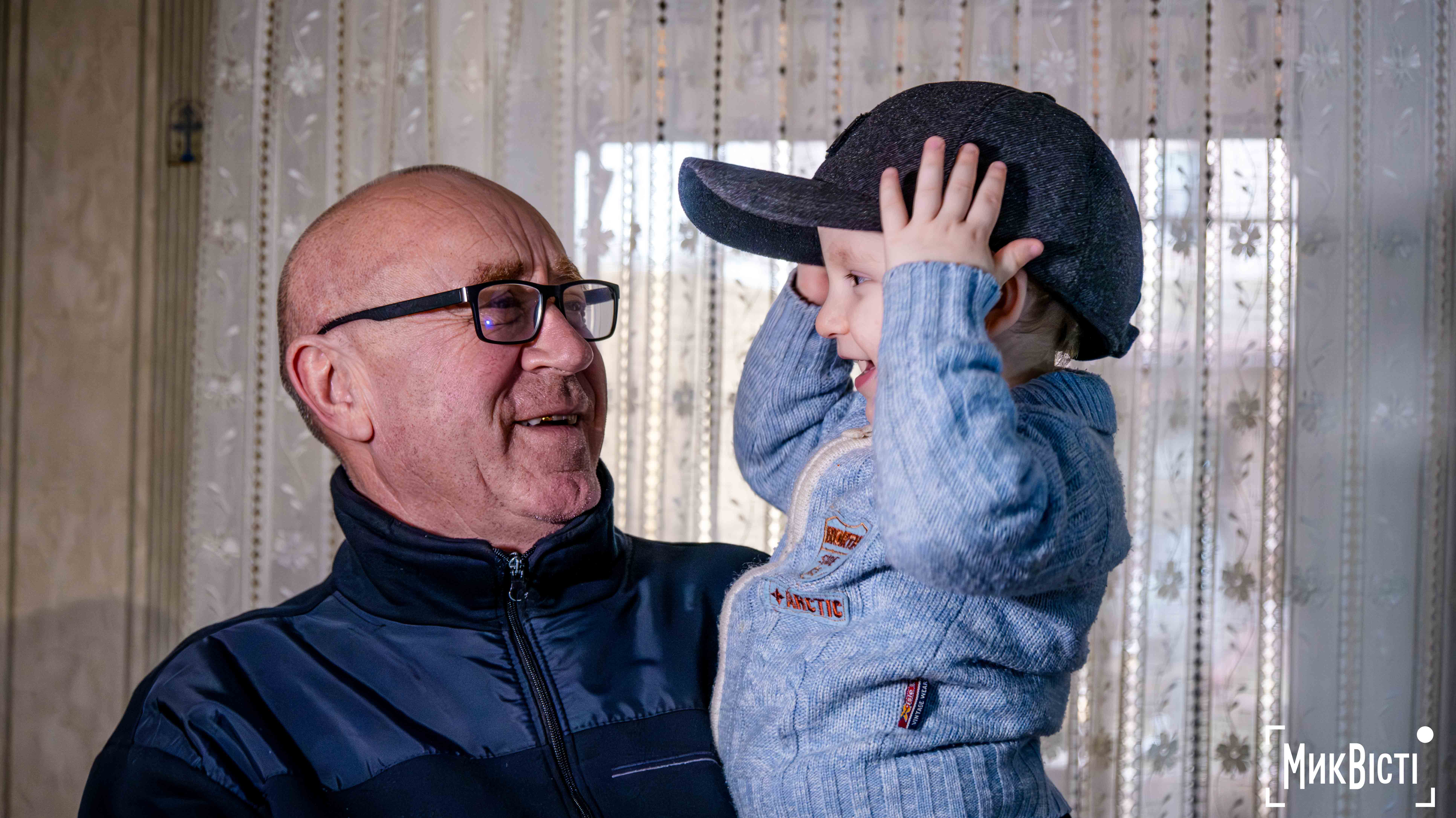 Oleksandr Kozhushko, father at the family-style children’s home, photo: NikVesti
She added that tutors were hired to support the development of the children in her care. They attended inclusive classes, where they were supported by special needs teachers and specialists from the inclusive centre. Subsequently, the commission re-assessed the children, and after about two years, some of the previously diagnosed conditions were successfully resolved.
Which children’s rights were violated during the full-scale war
During martial law in the Mykolaiv region, there was an increase in the number of cases of children’s rights being violated, particularly those who were left without parental care.
The rights most frequently violated are the rights to safety and life, family upbringing, adequate living conditions, education, and access to medical and psychological care.
«Orphans and children deprived of parental care remain particularly vulnerable. During our monitoring visits, we have observed that the war has increased the risks of children being placed in residential care institutions again, being moved without proper supervision, and being held in unsuitable conditions,» noted Spartak Hukasian, a representative of the Ombudsman.
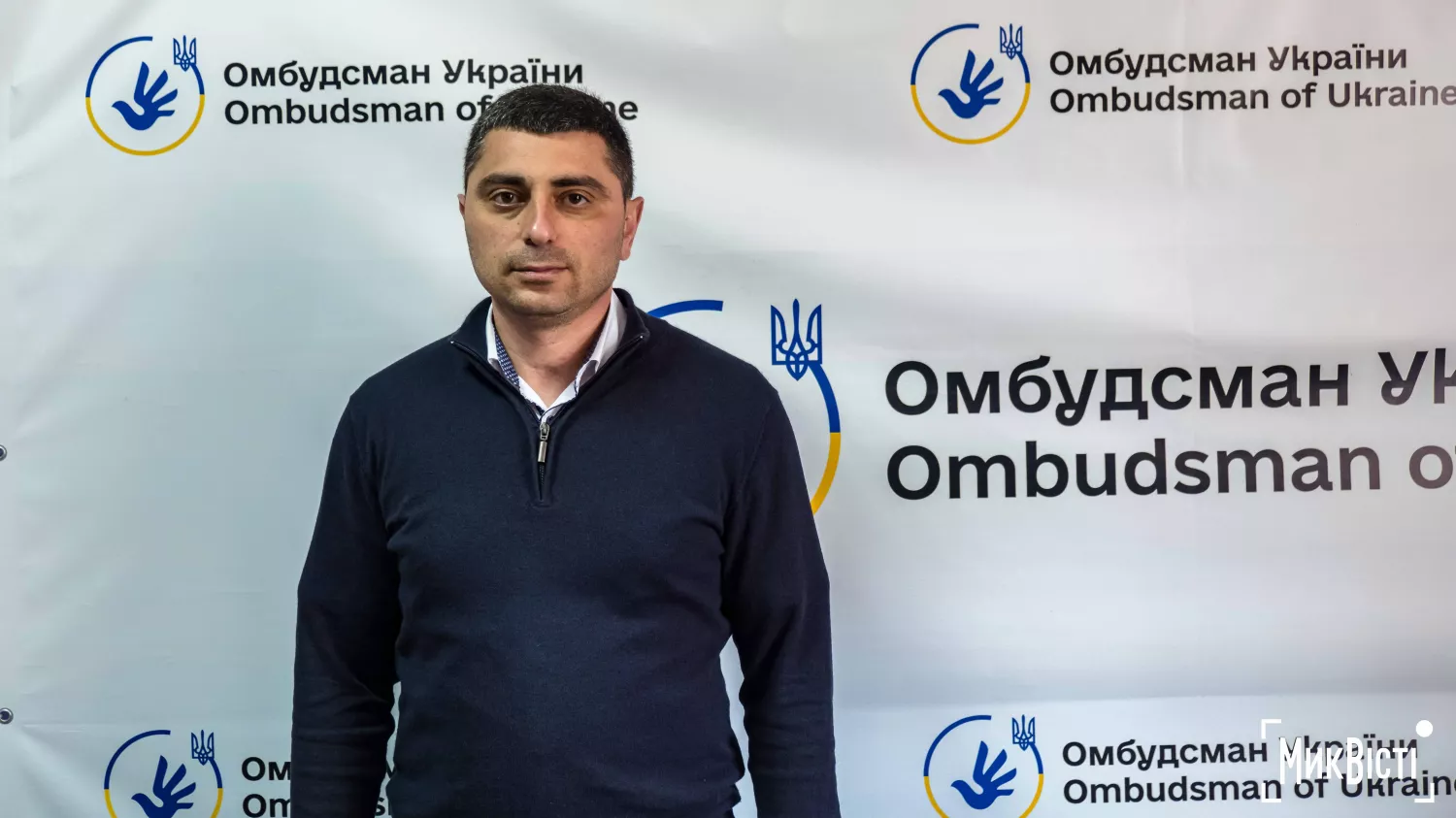 Spartak Hukasian, representative of the Verkhovna Rada Commissioner for Human Rights in the Mykolaiv region, photo: NikVesti
He recalled how, in February 2025, during an inspection of the Mykolaiv branch of the «Centre for Medical Rehabilitation and Palliative Care for Children», problems were identified regarding the conditions in which the children were being kept. In particular, there were shortcomings in the organisation of the space and the care provided to the children, as well as in ensuring conditions that met their needs. Following this, the children were transferred to specialised institutions in Rivne and Ternopil, where safer and more comfortable conditions were created for them.
A similar situation arose with the children at the Mykolaiv Centre for Social and Psychological Rehabilitation of Children. Due to safety concerns, they were temporarily accommodated at the Antonivskyi Art Lyceum. However, during the winter, the conditions there proved not entirely suitable for the long-term accommodation of children in need of rehabilitation. Consequently, they were subsequently transferred to the Zakarpattia region, where the children now live in safer and more stable conditions.
Prospects for the development of child protection in 2026
Yuliia Kravchenko, Head of the Children’s Services Department at Mykolaiv City Council, spoke about plans for the coming year in the field of child protection and the development of family-based care.
«We are very keen to ensure that children do not end up in shelters, but can live with their families whilst their parents overcome difficult life circumstances. The child’s safety is our priority,» said Yuliia Kravchenko.
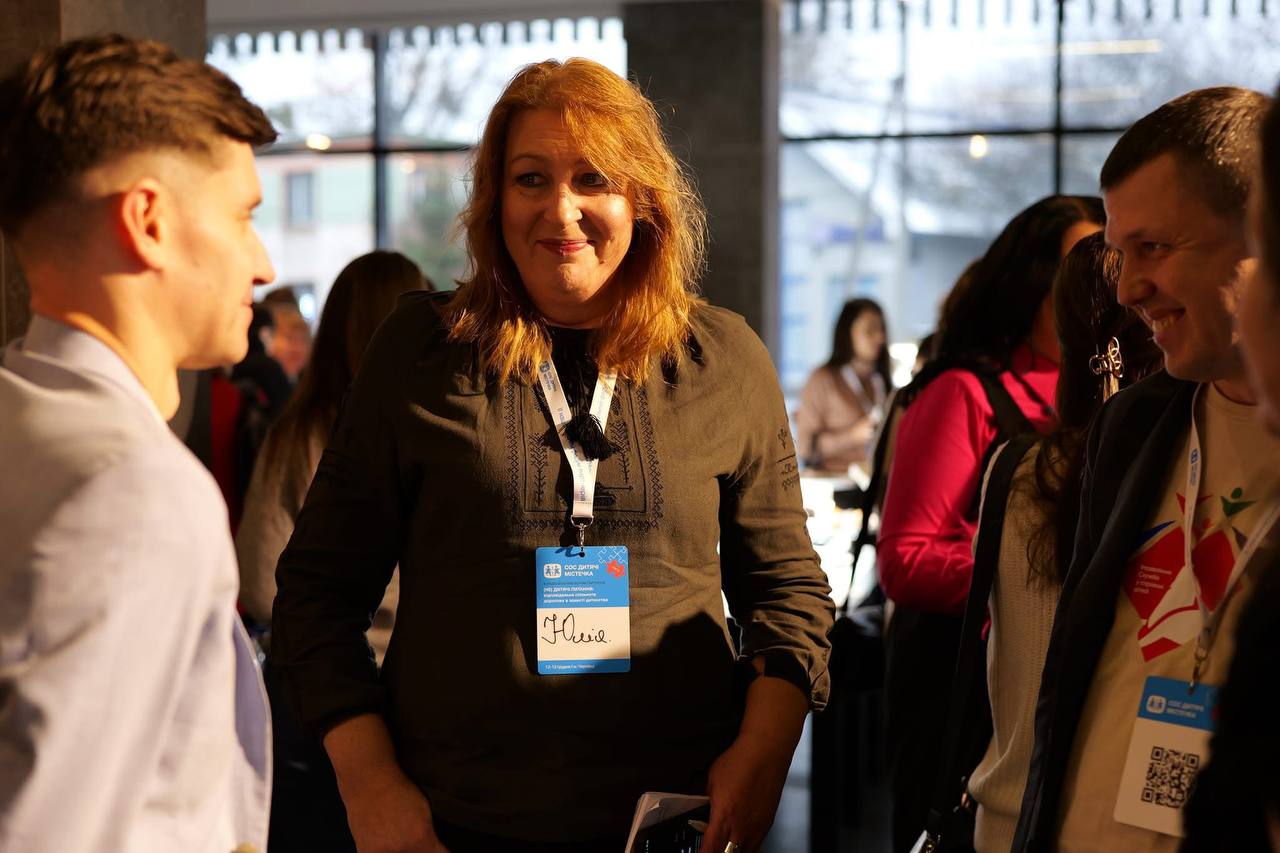 Yuliia Kravchenko, Head of the Children’s Services Department at Mykolaiv City Council, photo: Facebook/Yuliia Kravchenko
She noted that purchasing at least one house for a new family-type children’s home in 2026 would be an important step forward.
«Although we cannot yet plan a large-scale purchase of houses, acquiring at least one would be a positive step. We already have candidates from the city of Kherson who are waiting for the opportunity to move there and take in children,» she added.
In 2026, the children’s health programme will continue, with 16 million hryvnias earmarked from the local budget. Although the exact funding has not yet been approved, Yuliia Kravchenko hopes that the allocation will be at least on a par with last year’s level.
«The health programme is very convenient: the children are picked up from Mykolaiv and taken to Zakarpattia. This gives them the chance to rest and recharge their batteries,» explains the head of the service.
In conclusion, Yuliia Kravchenko emphasised that the main objective for 2026 is for children to live with their families, except in cases where staying with their family is unsafe.