“Unfortunately, all Russians are our enemies today.” The Mayor of Ochakiv arrives for questioning in a high treason case involving his advisor.
- Alisa Melikadamian
-
•
-
14:00, 13 February, 2026
For the third year running, the Zavodskyi District Court in Mykolaiv has been hearing the case of Eduard Shevchenko, the former commander of the 73rd Naval Centre of the Special Operations Forces. He has a track record of liberating Ukrainian towns in the combat zone in the east in 2014, state awards, service in the Navy and work on the Ochakiv City Council.
In January 2023, he was detained by the Security Service of Ukraine on suspicion of treason in the ‘government quarter’ building in the centre of Mykolaiv. The investigation explicitly stated that Shevchenko was working for Russian military intelligence and was supposed to recruit the mayor of Ochakiv to hand over the city.
On 12 February 2026, a panel of judges questioned the main witness in the case — the mayor, Eduard Shevchenko’s comrade, and his immediate superior, Serhiy Bychkov.
A NikVesti correspondent reports on what the witness said and at what stage the trial has reached.
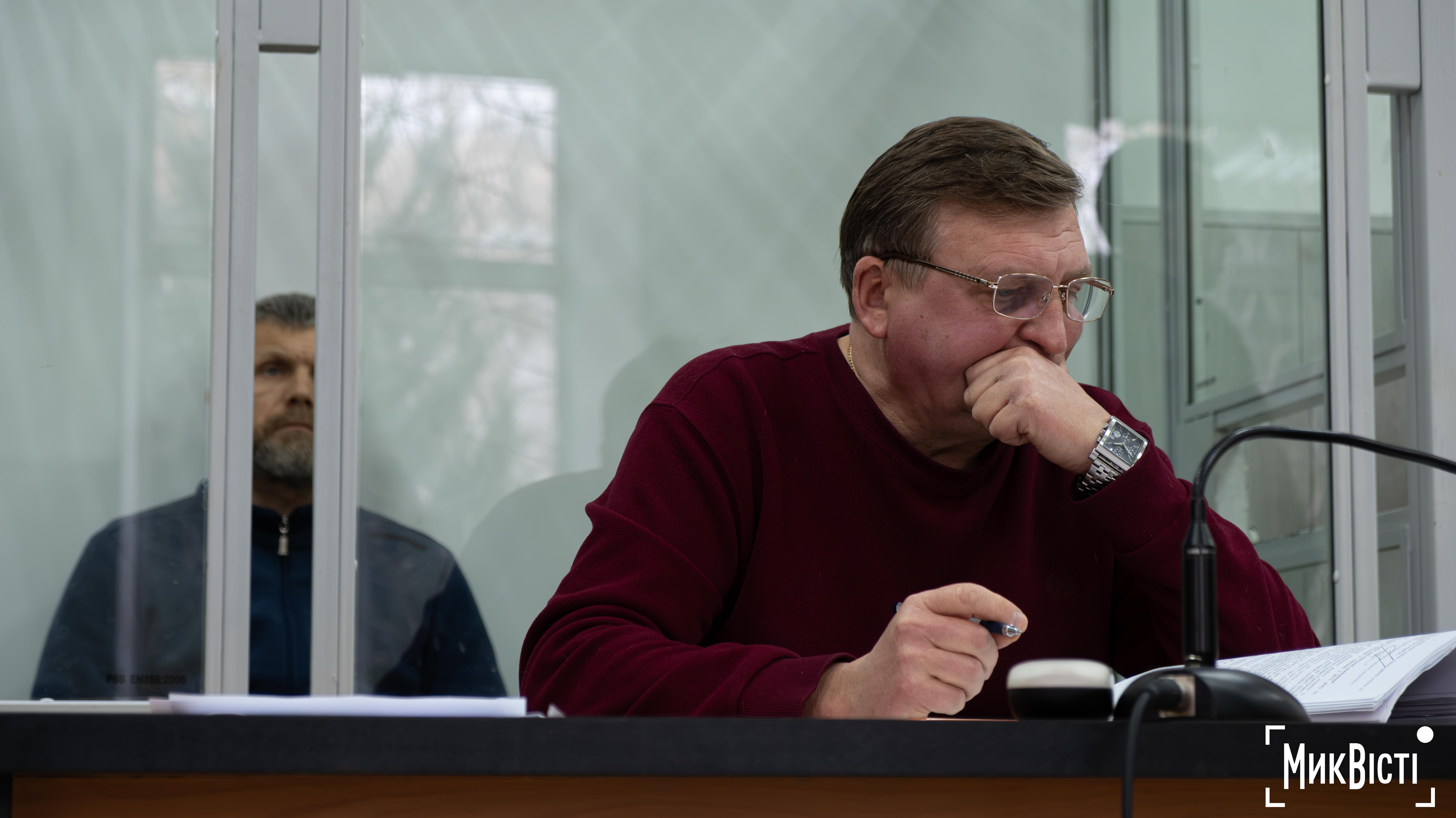 Lawyer Oleksandr Gerasimov and his client Eduard Shevchenko. Photo: Alisa Melik-Adamyan, NikVesti
Hobbling and leaning on a walking stick, Eduard Shevchenko entered the courtroom impassively, carrying a bundle of documents in his hands. He brings it with him to every hearing. Inside are case files, excerpts from laws he cites in his speeches, and notes he makes for himself in the detention centre, where he has been held for almost four years.
The escort allows those present to enter the courtroom, and only upon seeing his son among the crowd does Shevchenko’s expression visibly change, his eyes asking if his son is all right. The parties take their seats opposite one another, and behind them enter the judges Irina Bobrova, Inna Prytulyak and Vadym Gavrasienko.
“The witness is here; let’s proceed with the questioning,” Irina Bobrova said to the clerk, asking her to call in Serhiy Bychkov.
Yesterday’s examination was due to take place three hearings ago, but each time the court received statements regarding the mayor’s business trips, which prevented him from attending. In view of this, presiding judge Irina Bobrova issued a warrant for his compulsory attendance. However, during the court hearing, none of the judges even mentioned Sergei Bychkov’s systematic absences. The witness took the oath and the court proceeded with the questioning.
“Sergei. From that side”
Sergei Bychkov met Eduard Shevchenko in 2016, when the latter held the post of commander of the 73rd Special Operations Centre.
— I met Captain First Rank Shevchenko when he was commander of the 73rd Special Operations Centre in Ochakiv. When he retired on health grounds, he was hired by the Ochakiv City Council as head of the video surveillance department within the housing and utilities department. This was before the full-scale invasion, it was either 2020 or 2019,” said Serhiy Bychkov.
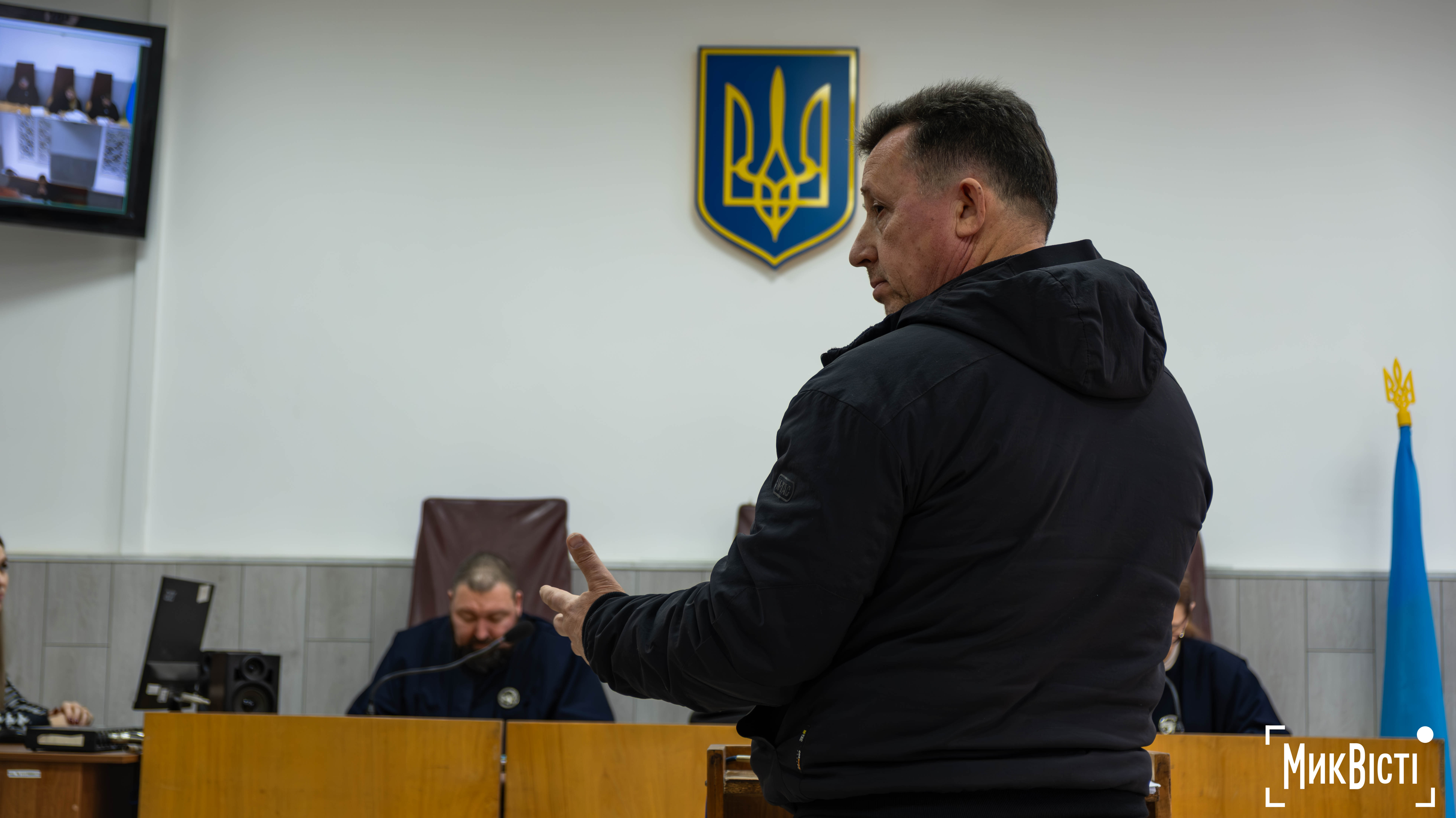 Serhiy Bychkov, mayor of Ochakiv, during questioning on 12 February. Photo: Alisa Melik-Adamyan, NikVesti
Prosecutor Anton Malyuk begins to clarify the details of events that took place during the war. In particular, regarding a conversation with Serhiy Kolesnikov. The prosecution claims that he is an officer of the Main Intelligence Directorate of the Russian Federation, with whom Shevchenko had been corresponding for years. In January 2023, the Russian military leadership, via Kolesnikov and Shevchenko, attempted to speak with Serhiy Bychkov and obtain confirmation that the city would be handed over to the Russians.
“Did Shevchenko personally suggest that you communicate with any representatives of the Russian Federation or their special services?” asked the prosecutor.
“No, he came into my office and asked for permission for a man named Sergei to call me and say that he was a representative of the Russian Federation,” replied the witness.
— Straight away?
— No, not straight away; he said: ‘There’s a matter to discuss, do you have time?’ I said: ‘Yes, I have time.’ He asked: ‘May I give your number to the person who wants to call you?’ I asked: ‘Who is it?’ He said: ‘It’s Sergei from over there; he’ll explain everything to you.’ I said: ‘No.’ Sorry, I don’t want to talk to anyone, because, well, there have already been attempts to contact me, and I’ve already had certain conversations with that side. This has nothing to do with Eduard Grigorovich.— How did Shevchenko react to that?
— He didn’t react at all; he just left.
Next, lawyer Oleksandr Gerasimov asked a few questions. In particular, how Shevchenko had proved himself in the city council.
— There were no complaints, because our work with him wasn’t limited to the duties he performed according to protocol. We also did a lot of work around the city that required a specialised, experienced professional.
— Was there anything in Shevchenko’s actions or conversations that might indicate he was acting in the interests of the Russian Federation? — the defence lawyer asked.
— No, — replied Bychkov.
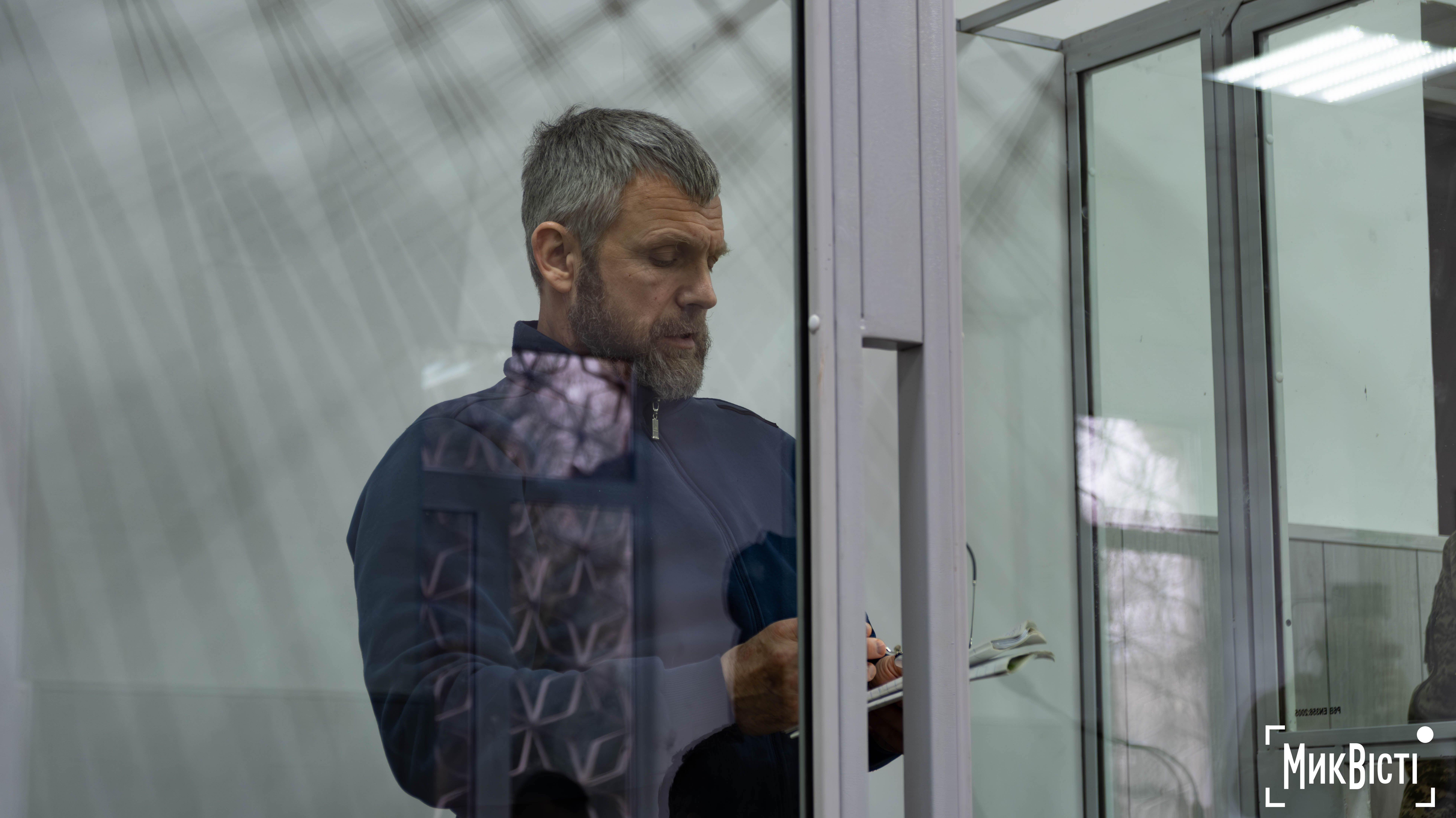 At Ochakiv City Hall, Shevchenko was responsible for security. Photo: Alisa Melik-Adamyan, NikVesti
The defence lawyer had no further questions, and the court gave the floor to Shevchenko. Holding onto the metal frame of the cell, he carefully stood up, took his notes and addressed Bychkov.
— Serhiy Mykolayovych, did I tell you during our conversation that this is a representative of the Russian Federation? — asked Eduard Shevchenko.
“Well, a Russian,” replied Bychkov.
“I said ‘Russian’, but not ‘representative of the Russian Federation’; I never said that.”
“Russian. We spoke Russian, so Russian.”
“I said that someone from a Russian number was asking for your phone number, whether to give it or not…”
— Yes.
Humanitarian aid delivery to occupied Kinburn
Eduard Shevchenko then asked Bychkov to tell the court what he was doing when the full-scale war began. The mayor began to answer somewhat flustered, saying that he hadn’t thought he would have to dwell on such questions.
— We delivered both pensions and humanitarian aid to the occupied territory. How, I won’t go into, because that’s not the point. We were collecting payments… — he began to reply.
“When you say ‘we’, who do you mean?” Judge Iryna Bobrova interrupted him.
— It was me, Eduard Grigorovich and a few other people who shouldn’t be here. They helped us. Eduard Grigorovich and I personally carried out cash collection from banks, because there was no one else to deliver funds to pensioners and refill ATMs in Ochakiv. For several months, the banks turned to us. Eduard Grigorovich was awarded a weapon; he had it with him. There were many issues related to the city’s security. Under his leadership, bottles containing flammable mixtures and all sorts of things we needed to defend the city were produced. I don’t know how to do that. I’m a civilian,” said Serhiy Bychkov.
Shevchenko asked the mayor to clarify whether he had indeed been involved and was aware of everything being sent to the Kinburn Spit as humanitarian aid. Which, in fact, Bychkov confirmed.
The defendant asked him to recall the fact that, during the invasion, the Main Intelligence Directorate had approached them with a request to transport to the occupied Kinburn Spit items that could “cause significant damage”.
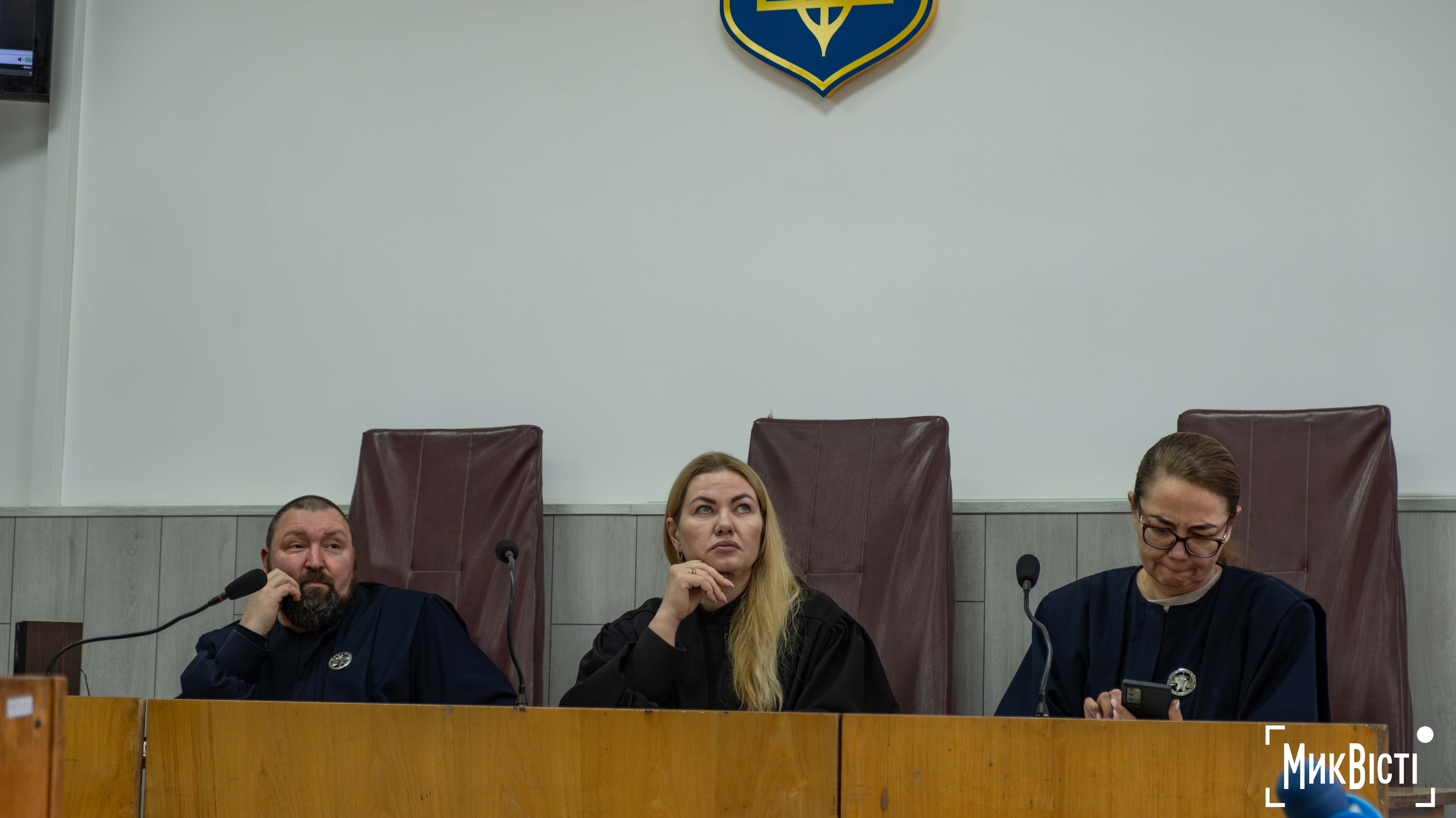 The case is being heard by a panel of judges: Iryna Bobrova, Inna Prytulyak and Vadym Gavrasienko. Photo: Alisa Melik-Adamyan, NikVesti
Bychkov did not go into details and replied briefly that everything necessary had been done.
“I’m some sort of a second-rate intelligence officer. I don’t even bother reporting on it,” said Shevchenko, addressing the prosecutor.
Serhiy Bychkov also confirmed that counter-intelligence representatives had been consulted regarding the military’s actions and the advance onto the Kinburn Spit.
— I told you that we met; there were a lot of emotions.
— Yes. You met, but without me.
— It’s a bit strange, too: the troops are planning to land to carry out special tasks. And some idiot of an intelligence officer by the name of Shevchenko forgets all about it.
Adopting a more emotional tone, Eduard Shevchenko asked Serhiy Bychkov to answer directly: had he suggested that Bychkov hand over Ochakiv to the Russians, and what would await the former special forces officer himself if the city were captured by the occupying forces?
— Did you suggest it outright, or between the lines?
— No, you didn’t. Another Russian military officer did.
— What did I personally tell you about what would happen to my family if they came in?
— To put it mildly, you said that things would go badly for your family, and that there might even be fatal consequences if they came. I didn’t ask you why, because I didn’t know what you’d been doing before that at the Special Operations Centre.
Recruiting the mayor
In 2023, when the Security Service of Ukraine issued a press release regarding the arrest of Eduard Shevchenko, it stated that Russian intelligence had tasked him with persuading the city council leadership to cooperate in exchange for a position for Bychkov under Russian rule. However, as the SBU reported, the mayor took a patriotic stance and informed the security services of the recruitment attempts.
“Do you even know what recruitment is?” Shevchenko asked Bychkov.
“No,” he replied.
“Recruitment is persuading a target to cooperate through bribery, intimidation or shared interests. Did I try to bribe you?”
— No.
“Did I intimidate you?”
“No,” replied Sergei Bychkov, stifling a laugh.
“Do you have any common interests with the Urus, or did I remind you of them?”
— No.
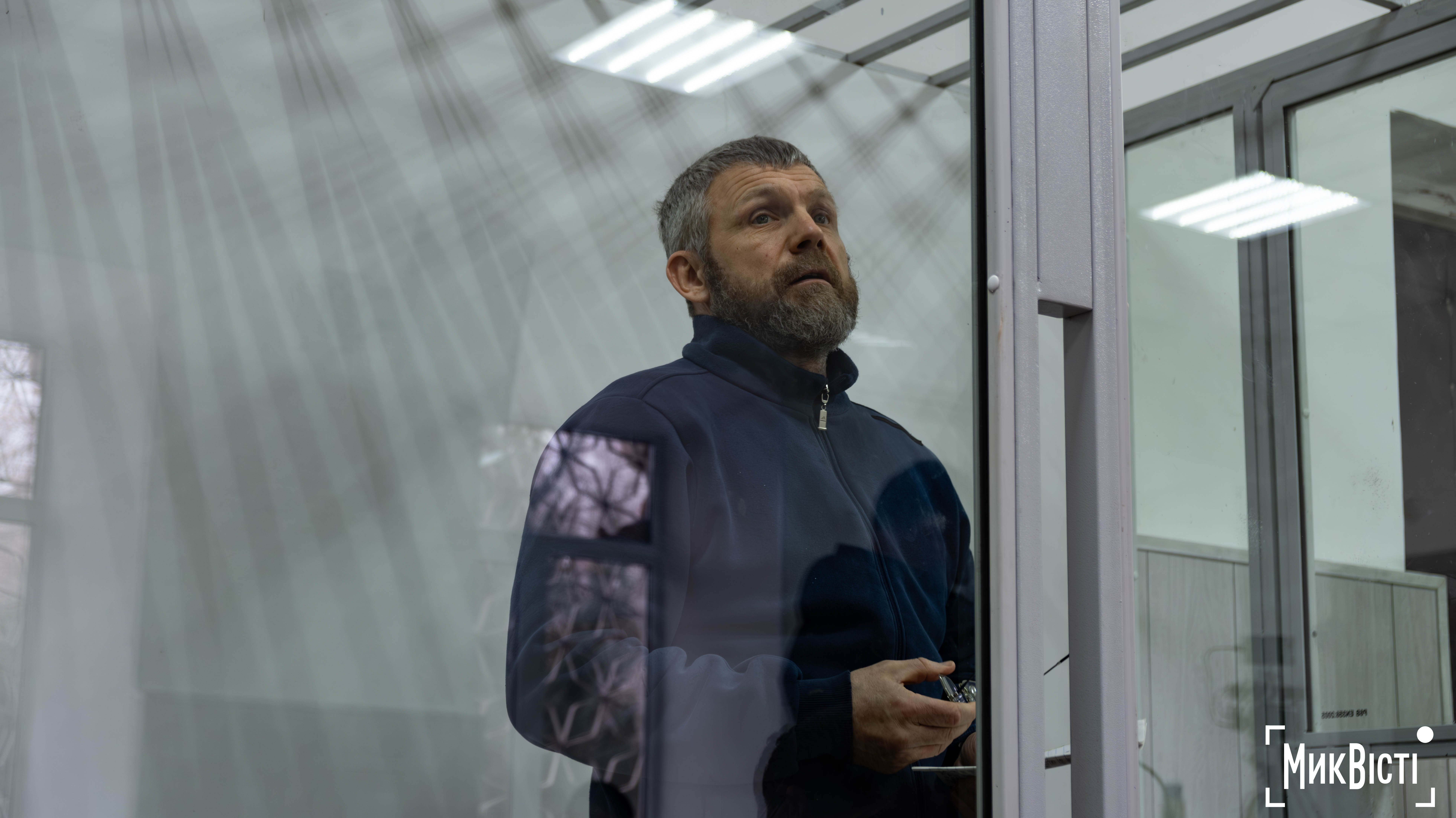 Eduard Shevchenko is accused of treason. Photo: Alisa Melik-Adamyan, NikVesti
The defendant asked Bychkov to recall his state of mind and describe the reactions he felt in the early days of the invasion. The mayor of Ochakiv recalled that Shevchenko had spoken of the impending deaths of large numbers of people, both civilians and military personnel. Furthermore, Shevchenko had offered to help evacuate the mayor’s family, which he had refused.
— In all the time we have known each other, from 2016 to 2023, can you name any of my actions that were aimed at subversive activity? — the defendant asked the witness.
— I’ve already said, no, I didn’t hear or see anything. On the contrary, I heard your telephone conversations with colleagues from the Special Operations Centre. You were talking to them, giving them some advice. You were guiding several people there over the phone... Well, unfortunately, several people died. That was in Mariupol, if you remember.
A call to Russia
The conversation between the Ochakiv officials and the Russians did take place after all. That was back in 2023, after consent had been given for confidential cooperation. According to the witness, he immediately agreed to the conversation and awaited Shevchenko’s approval.
The phone call had been planned in advance via messages. Serhiy Kolesnikov rang Bychkov’s personal number whilst he and Shevchenko were sitting together under SBU surveillance. Bychkov recalled being told that more influential figures in the GRU wished to speak with him — someone named Mykola Mykolayovych.
— He (Serhiy Kolesnikov — ed.) told me that I should think about how our conversation would go, what I could offer him, and he would tell me what he wanted from me.
“Did you offer him anything, set any conditions?” asked Anton Malyuk.
— Yes, I told him to stop the shelling. Well, that was the agreement. You know, it was all a game. So I told him to stop shelling the city, and then we’d talk about whoever you put forward.
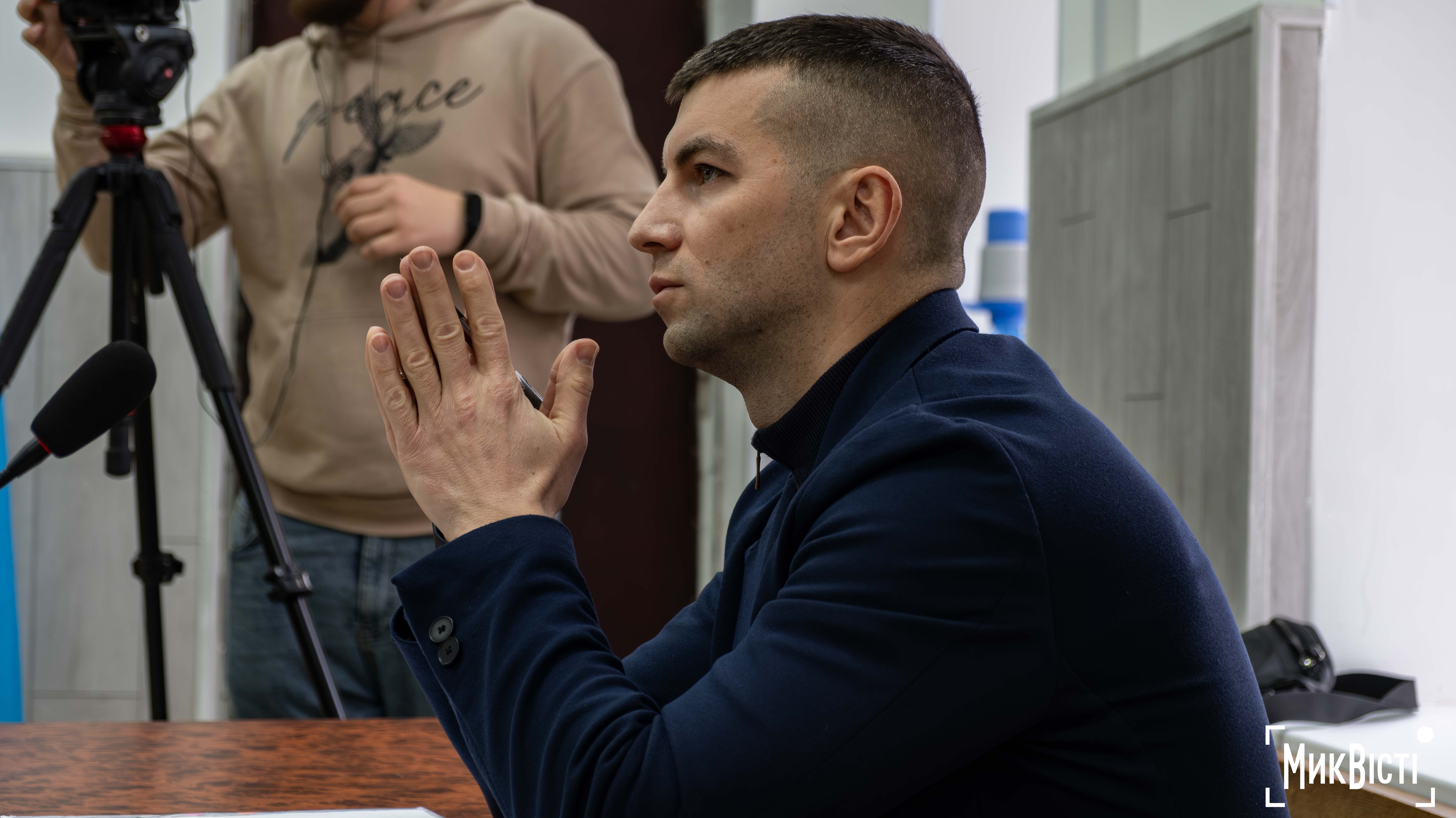 Anton Malyuk, prosecutor at the Mykolaiv Regional Prosecutor’s Office. Photo: Alisa Melik-Adamyan, NikVesti
Questions from the judges
After a twenty-minute examination of the witness, Judge Iryna Bobrova asked him to clarify whether she understood correctly that there had been only one conversation between Bychkov and Shevchenko, during which the latter had offered to put the Russians on the phone. However, the defendant shouted that he objected: he had asked for permission, not made an offer.
“That’s true. He asked if I could give permission for a person from Russia to call my personal number,” confirmed Serhiy Bychkov.
“And did he explain to you in any way who these Russians were?” asked Judge Inna Prytulyak.
— No, let me put it this way: I didn’t ask; I said no straight away and cut the conversation short. Well, perhaps not quite ‘no’—I added something else and said, ‘I won’t be getting involved in this.’ And that was it. And Eduard Grigorovich left. We didn’t return to this conversation until, well, what happened happened.
Judge Vadym Gavrasienko asked whether he had told anyone about this incident.
— Of course, I’m obliged to do so, because this isn’t the first attempt. The first attempt wasn’t from him, but from someone else. And I was chatting on WhatsApp with that person, and there was a conversation there too. I passed everything on to counter-intelligence, then took a polygraph test, if you’re interested. That’s why I wasn’t surprised by these proposals, because they exist, they’ve been made,” assured the mayor of Ochakiv.
The prosecutor asked why Bychkov hadn’t asked Shevchenko what the Russians wanted to talk to him about.
— I understood what would happen if I agreed to give my phone number, just to have a chat. It simply wouldn’t happen. I would have to report it to the authorities. I would then have to do something. I took a polygraph test after just one conversation. You know, I didn’t really enjoy that.
— So, based on the evidence you’ve provided, you regarded this Russian as an enemy, is that right?
— Unfortunately. Let me put it this way, Mr Prosecutor: unfortunately, we all regard Russians as enemies today. That’s the reality. And whoever you ask, any Russian there—he may be a good person, but they are our enemies because they are killing our children. How do you expect me to feel about that?
— Why ‘unfortunately’?, asked Vadym Gavrasienko.
— Because when people kill each other, it’s a pity. Well, that’s how I feel personally today. We’re already enemies. And it’ll be like that for many generations. We’ll never go back to how things were. If you’re interested in my personal opinion.
How was Shevchenko detained?
Security forces arrested Eduard Shevchenko on 23 January at the Mykolaiv Regional Military Administration. That day, he and Serhiy Bychkov had travelled to the city; the mayor had brought some documents to the Regional Military Administration, and staff informed him that a decision had been made to arrest Shevchenko.
“He was in the car at the time, and I was in the administration,” recalled Serhiy Bychkov.
Later, Eduard Shevchenko himself entered the building, where he was served with a notice of suspicion by the SBU.
This concluded the questioning of Serhiy Bychkov. On that day, the court also questioned an SBU operative who had carried out covert investigative activities during the arrest.
The defence also requested the questioning of Igor Maloga and Oleg Butsky, who have been convicted in Ukraine. The prosecutor objected, noting that the defence had not provided adequate grounds for the motion. The court did not grant it.
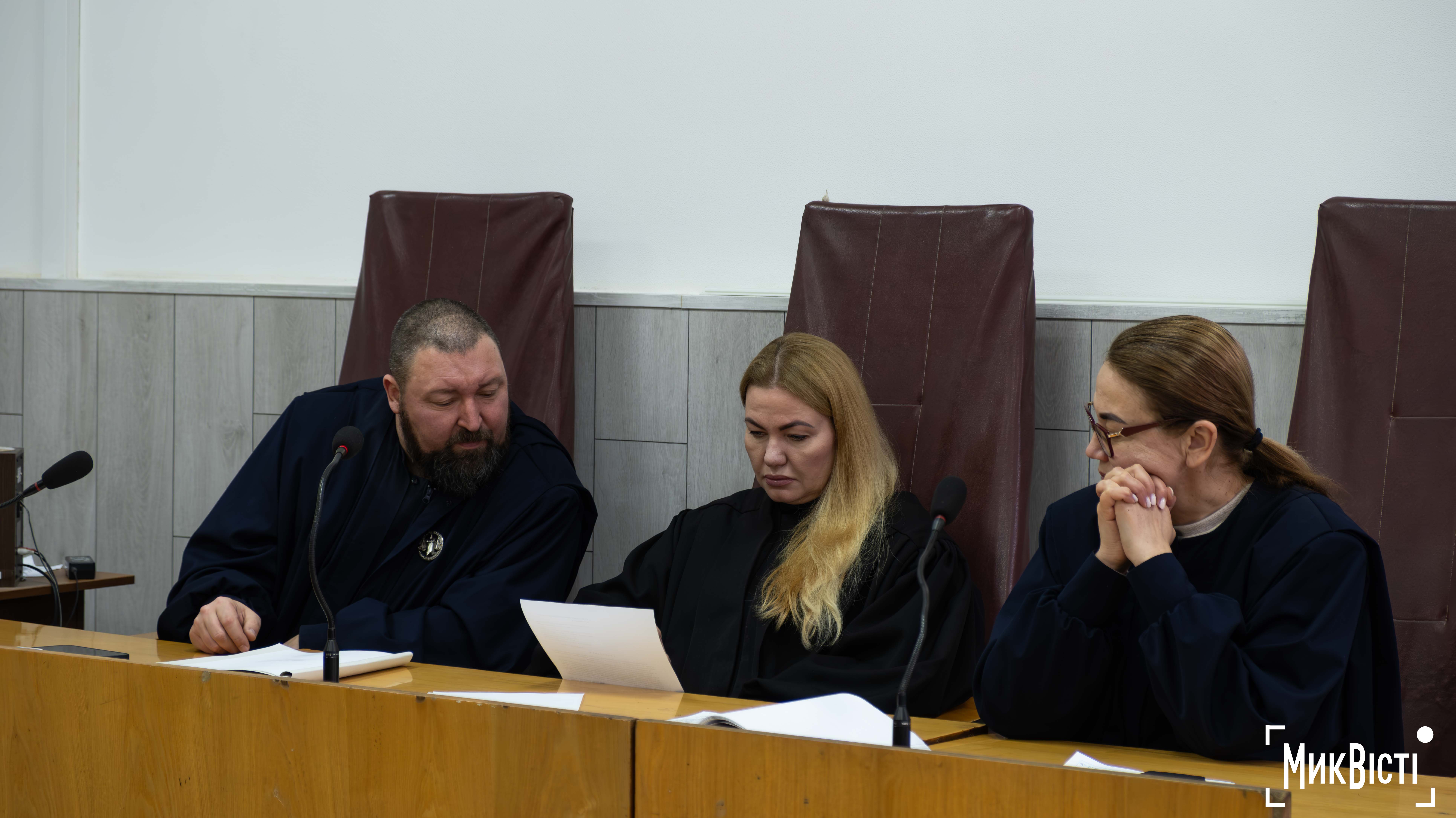 The judges are examining the motion filed by Eduard Shevchenko’s defence lawyer. Photo: Alisa Melik-Adamyan, NikVesti
The next hearing in the case will take place on 26 February.
Alisa Melik-Adamyan, “NikVesti”